
You have emptied the incubator tray, the last chicks are dry, and there are still a few eggs sitting there like quiet stones. You feel a bit disappointed and maybe a little guilty. You also want to know one simple thing right now: what should you do with those unhatched eggs so they are safe, clean, and out of your way.
This guide walks you through that moment. You will see when the hatch is truly over, how to decide what you want to do with the unhatched eggs, where to store them for a short time, how to open them for learning if you choose, and how to throw them out without making a mess or taking risks for your family, students, or flock.
If you already suspect that your machine is part of the problem, you can later step back and look at different egg incubator options for home and classroom use in one place. For now, we will deal with the tray of eggs that is in front of you.
After hatch day: how do you know the hatch is really over?
Most new keepers are afraid of giving up too soon. They worry that there might still be a late chick inside one of those eggs. At the same time, they may have read warnings about “exploders” and bacteria. So they sit in the middle, not sure when to call the hatch done.
Normal hatch timing for chicken eggs
For chicken eggs in a small forced-air incubator, the usual hatch time is about 21 days after you set the eggs. Many chicks will pip and hatch on day 21. Some healthy late birds may come on day 22 or even day 23, especially if your room runs a little cool or your temperature has been a bit low.
If all the eggs were set on the same day and you still see no new pips or movement by the end of day 23, the hatch is usually over. Past that point, the chances of a live chick inside a silent egg are very small, and the odds of rot and gas inside the shell start to climb.
Simple signs that you can stop waiting
You do not need fancy tools to make the final call. You can look for a few clear signs:
-
Most of the active chicks have already hatched and are dry and walking well.
-
You have not seen any new pips or progress for 24 hours or more.
-
The remaining eggs have no movement, no sound, and no change in the shell.
If you have been watching closely and none of the remaining eggs show life by the end of day 23 for chickens, you can treat the hatch as complete and move the unhatched eggs out of the warm incubator.
Why you should not leave unhatched eggs in the incubator too long
Warmth and time are the two things that help chicks grow. Those same two things also help bacteria grow and break down an egg that is no longer developing. When you leave clearly unhatched eggs in a hot, moist space, you raise the risk that they will leak, smell bad, or even burst.
A rotten “exploder” can spray the inside of your incubator with foul liquid. That is not just a cleaning job. It can also spread germs to any chicks that are still drying or to the next batch of eggs. So once you know the hatch is done, it is kinder to your equipment and your nose to move the unhatched eggs out instead of keeping them warm “just in case.”
Decide what you want to do with your unhatched eggs
Not every keeper has the same goal with unhatched eggs. Before you think about where to put them, you should decide why you are keeping them for a short time. That choice will change how you store them and how long you keep them around.
When you only care about a clean incubator
Sometimes you only want a tidy machine and a fresh start. Maybe this was a small test hatch. Maybe you already know what went wrong. In that case, you do not need to keep the unhatched eggs for long. You can move them out of the incubator, place them in a small container or bag, and plan to throw them away on the same day or the next trash pick-up day.
For this group, storage is very short term. Your focus is on keeping smells and leaks under control until you can put the eggs in the outside bin or another safe disposal spot.
When you want to learn from the batch
If this was an important hatch for you, the unhatched eggs can still teach you something. Many experienced keepers like to open a few eggs to see how far the embryos got. That “break-out” check can show patterns: very early loss, late loss, clear eggs with no growth, or something in between.
To do this, you will need to keep some eggs for a short time so you can open them in a safe place when you have the headspace and a bit of privacy. Your storage plan should keep the eggs cool, contained, and out of sight until you are ready to look.
When you are running a classroom project
In a classroom, you are not only thinking about the eggs. You are also thinking about your students. Some kids are excited about every science detail. Others may feel sad or upset if they see a late embryo that did not make it.
As the teacher, you can still collect the unhatched eggs for a short time and decide later whether to open them. You may choose to check them first on your own in a prep room. Then you can decide what to show as part of the lesson and what to keep private. This is still part of handling the eggs in a safe and respectful way.
Safe short-term storage: where to put unhatched eggs right after incubation
Once the eggs leave the incubator, they stop being “future chicks” and become something else: warm organic waste that can leak and smell if you ignore it. Short-term storage is about getting those eggs out of the hot machine and into a place where they cannot bother anyone until you throw them away or open them for review.
The big rules for storing unhatched eggs
You can keep your plan very simple if you follow a few clear rules:
-
Keep the eggs cool, not hot. Room temperature or a bit cooler is fine. Do not keep them near heaters, stoves, or full sun.
-
Keep them sealed. Put them in a plastic bag, a bucket with a lid, or a box lined with a trash bag. This keeps smells and drips inside.
-
Keep them away from food. Do not store unhatched eggs near anything you plan to eat or cook.
-
Keep them away from kids and pets. Curious hands and noses do not mix well with eggs that might leak.
Those four rules cover most home and small homestead situations. You do not need special chemicals or equipment. You just need a cool, quiet corner and something that closes.
Good places and bad places in a normal home or homestead
When you stand there with a tray of eggs, it helps to picture your space like a simple map: “good zones” and “risky zones.” Here is a basic guide you can use.
Better short-term storage spots
-
A cool corner of the garage or mudroom, in a sealed box or bucket.
-
A storage room or pantry shelf that does not hold open food and that kids cannot reach.
-
A locked outdoor shed or feed room, if the weather is mild and animals cannot get in.
Risky or poor storage spots
-
Kitchen counters or the dining table. These areas are too close to food and dishes.
-
Inside the main household fridge next to groceries. That raises the risk of cross-contamination.
-
Open trash cans inside the house, where pets and small children can reach them.
-
Right beside a heat source or sunny window, where eggs can warm up again and rot faster.
If the garbage truck does not come until morning, it is better to keep sealed eggs in a cool indoor or garage corner overnight, then move the whole bag to the outside bin early the next day.
Special notes for classrooms and shared spaces
In a classroom, you may not have a garage or shed. You may also share the room with other teachers and students. In that case, treat unhatched eggs like any other biological waste from a science lab.
-
Place the eggs in a sealed bag or container as soon as you remove them from the incubator.
-
Store the container in a staff-only area such as a prep room, teacher office, or locked cupboard.
-
Follow your school’s guidelines for disposing of animal materials. When in doubt, ask the science lead or admin office.
The main goal is simple. Students should not stumble across a bag of old eggs on a windowsill a week later. You keep control of the eggs, the smell, and the story you tell about what happened in this hatch.
How to store unhatched eggs if you want to open them later
Opening unhatched eggs is not for everyone. Some keepers never do it. Others see it as a useful way to learn and improve. If you decide you want to check the eggs, you need to plan both where you will store them and where you will open them.
How long you can safely wait before you open them
Once the hatch is over, it is best to open any eggs you want to study within a day or two. The longer you wait, the more the contents break down and the stronger the smell becomes. Waiting a full week rarely teaches you more. It usually just makes the experience harder to handle.
So treat egg break-out like any other barn chore. Pick a day and time when you feel calm, you have a bit of privacy, and you can clean up right away. Until then, keep the eggs sealed and cool as described in the storage section.
The best place and setup for doing an egg break-out
You do not need special tools to open unhatched eggs, but you should choose the right place. A garage workbench, a covered outdoor table, or a utility sink area is much better than your kitchen counter.
Before you start, set things up like this:
-
Lay down a thick layer of newspaper or a trash bag on the work surface.
-
Have a second trash bag or lidded bucket ready for shells and contents.
-
Wear disposable gloves if you have them, or wash your hands well afterwards.
-
Keep some paper towels and a mild cleaner nearby for the final wipe-down.
Open only as many eggs as you need to see a pattern. Often three to five is enough to give you a clear idea of whether your problem is very early loss, late loss, or no development at all. You do not have to open every single egg.
Extra care for teachers: what to show and what to keep private
For classroom projects, an egg break-out can be a powerful teaching tool, but it needs care. Younger students may be fine seeing a very early embryo that never developed beyond a blood ring. Many will not be ready to see a nearly full-term chick that died late in the shell.
A simple way to handle this is to do a first pass on your own in a prep area. You can note what you see and take photos or drawings if that helps your lesson. Then you can choose which examples are appropriate to show and how much detail to share. The goal is to respect the life that did not make it while still helping students understand how hatching works.
Safe disposal options for unhatched eggs at home and on a small homestead
At some point, every unhatched egg becomes trash. How you throw it away depends on where you live and what options you have. The best method is the one that keeps smells, flies, and animals under control and fits your local rules.
Simple disposal methods that work in most towns
For many backyard keepers, the easiest option is sealed household trash. Place the eggs in a strong trash bag, tie it well, and put it straight into an outdoor bin with a lid. If you are worried about smells, you can double-bag them.
In rural areas with farm-style waste rules, some people also bury small numbers of eggs in a remote part of the property where dogs and wildlife cannot dig them up. If you choose this path, dig deep enough, cover well, and avoid any area used for garden crops.
Composting and burying: when it makes sense and when it does not
Whole eggs do not always do well in open compost piles. They can attract pests and break in messy ways. If you want to compost, it is better to break the eggs first and mix the contents well into the pile, then crush the shells and bury them deeper inside.
Always think about your climate and your neighbors. In hot weather, egg waste can turn foul very fast. If you are not sure you can keep smells down, sealed trash is often the kinder choice for everyone.
Why you should not eat unhatched eggs from the incubator
Some people ask if they can eat eggs that never hatched. It is a fair question, especially when feed prices are high. The simple answer is no. Once an egg has spent three weeks in a warm, moist incubator, it is no longer a safe food in the usual sense.
Heat and time change the inside of the egg. They give bacteria a chance to grow. Even if an egg looks normal when you crack it, you cannot see every risk with your eyes or nose. For that reason, it is safer to keep incubated eggs completely out of your family’s food chain and treat them as waste to be handled and discarded.
When lots of unhatched eggs mean it is time to review your incubator setup
Every hatch will leave you with a few unhatched eggs. That is normal. But if you see the same picture every time you lift the lid – a big pile of unhatched eggs and only a handful of chicks – it is a sign that you should look deeper than storage and disposal.
Check the pattern: one bad hatch or an ongoing problem
Start by asking a simple question: is this a one-off bad hatch, or has this been happening batch after batch. If this is your first attempt and many eggs stayed clear with no veins, the issue may be egg fertility, not the machine. If this is your third or fourth batch with poor results, the incubator setup moves higher on the suspect list.
When you do an egg break-out, pay attention to where development stopped. Mostly clear eggs point to fertility or storage problems before the set. Many early blood rings may point to strong temperature swings. Many fully formed chicks that never pip may point to late humidity or turning problems.
Common setup issues that create many unhatched eggs
In real backyards and classrooms, a few mistakes crop up again and again. People put the incubator near a drafty window or a heater vent. They trust a cheap room thermometer instead of the one in the machine. They top up water only when they happen to remember. They mean well, but the eggs see a different story.
Temperature that runs too low can delay the hatch and leave you with weak chicks and late losses. Temperature that runs too high can cause early death or deformities. Humidity that swings wildly can dry embryos out or drown them. Forgetting to turn hand-turned eggs often enough can leave chicks stuck on one side of the shell and unable to hatch.
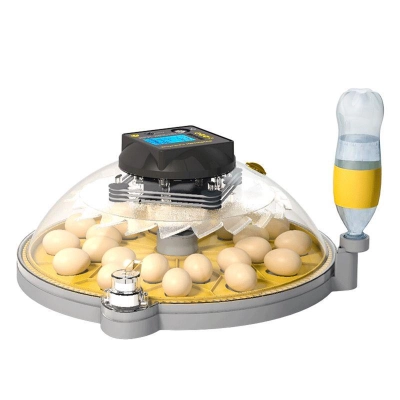
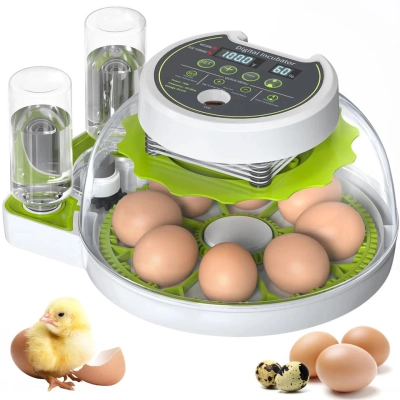
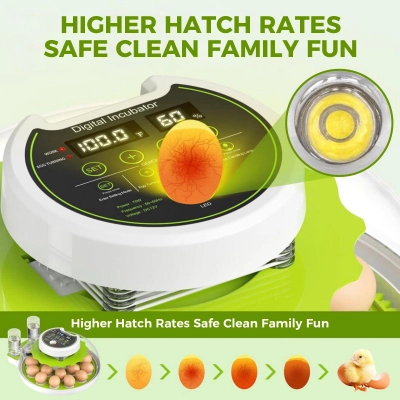
If this sounds like your routine, it might be time to let the machine do more of the steady work. A digital automatic egg incubator for home and classroom use can handle turning on a timer and keep temperature and humidity in a tighter range for you. That does not replace careful watching, but it does mean fewer late-night checks and fewer trays full of unhatched eggs.
Learn more from your results before the next hatch
Once you have cleared out this batch and cleaned the machine, it is worth taking half an hour to look back over your notes, your break-out findings, and your setup. If your incubator barely hatched any eggs this time, you can walk through a step-by-step checklist for what to do when your incubator is not hatching eggs at all and fix the biggest issues before you set the next tray.
If you are close to where you want to be but still lose more eggs than you like, you can also track down the most common causes behind hatching failures and fine-tune your routine. That way, each batch of unhatched eggs becomes a little smaller, and each hatch teaches you something useful instead of just filling one more trash bag.
FAQ: quick answers about unhatched eggs
Can you eat unhatched eggs after incubation?
No. Eggs that have been through a full incubation cycle are not safe to eat. They have been kept warm and moist for weeks, which is perfect for bacteria. Treat them as waste, not food.
Is it safe to keep unhatched eggs in your house?
You can keep unhatched eggs indoors for a short time if they are sealed, kept cool, and stored away from food, kids, and pets. Plan to dispose of them within a couple of days.
How long can you keep unhatched eggs before they become risky?
It is best to discard or open unhatched eggs within one to two days after you end the hatch. After that, the chances of strong odor and bacterial growth go up, even if the eggs look fine from the outside.

0 Comments