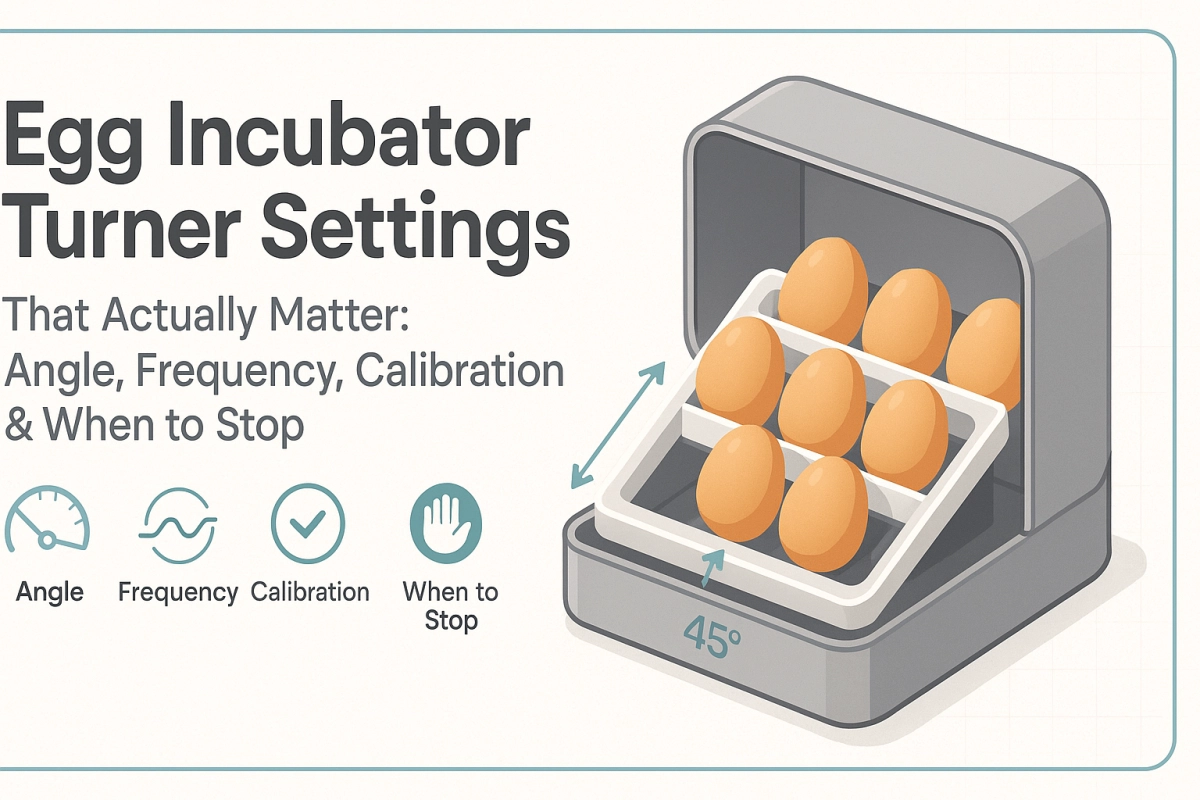
You want your egg incubator turner to work well. The right settings help each egg grow the same and hatch on time. Most experts recommend these:
|
Setting |
Recommended Value |
|---|---|
|
Turning Angle |
38°–45° per side (total ≈90°) |
|
Frequency |
3–5 times/day (manual) or every 60–120 minutes (automatic) |
|
Calibration |
Check tray angle and timer before use |
|
When to Stop |
3 days before hatch date |
-
A larger angle around 43–45° per side is the common standard for chicken eggs; angles up to 60–70° are discussed mainly for large eggs like geese/ducks and are not a general chicken setting.
-
Turning eggs often stops embryos from sticking and helps them grow strong.
-
Always check your egg incubator turner before you start a new batch.
Key Takeaways
-
Set the turning angle between 38° and 45° on each side. This helps embryos grow well and more chicks hatch.
-
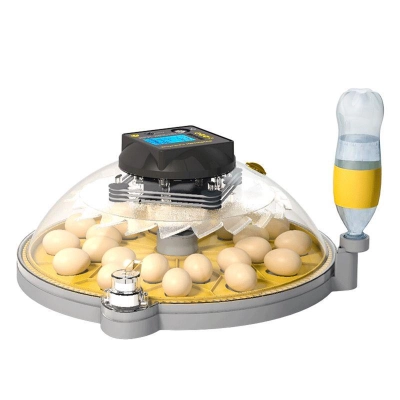
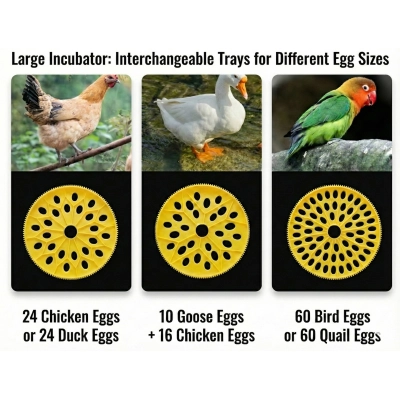
Turn eggs at least 3 to 5 times every day (manual), or use an automatic schedule of 60–120 minutes per turn. For small eggs and mixed clutches, an automatic egg incubator — 3 trays for birds and quail keeps spacing even and humidity stable . Higher frequencies can help in some setups; results vary by species and stage.
-
Always check your incubator before you use it. Make sure the angle and timer are set right for the best hatching.
-
Stop turning eggs three days before they should hatch. This lets chicks get into the right spot to hatch.
-
Keep humidity at 65% during the lockdown time. Maintain fresh air—do not close vents just to raise humidity; increase water surface area instead.
Why Turn Eggs
Preventing Sticking
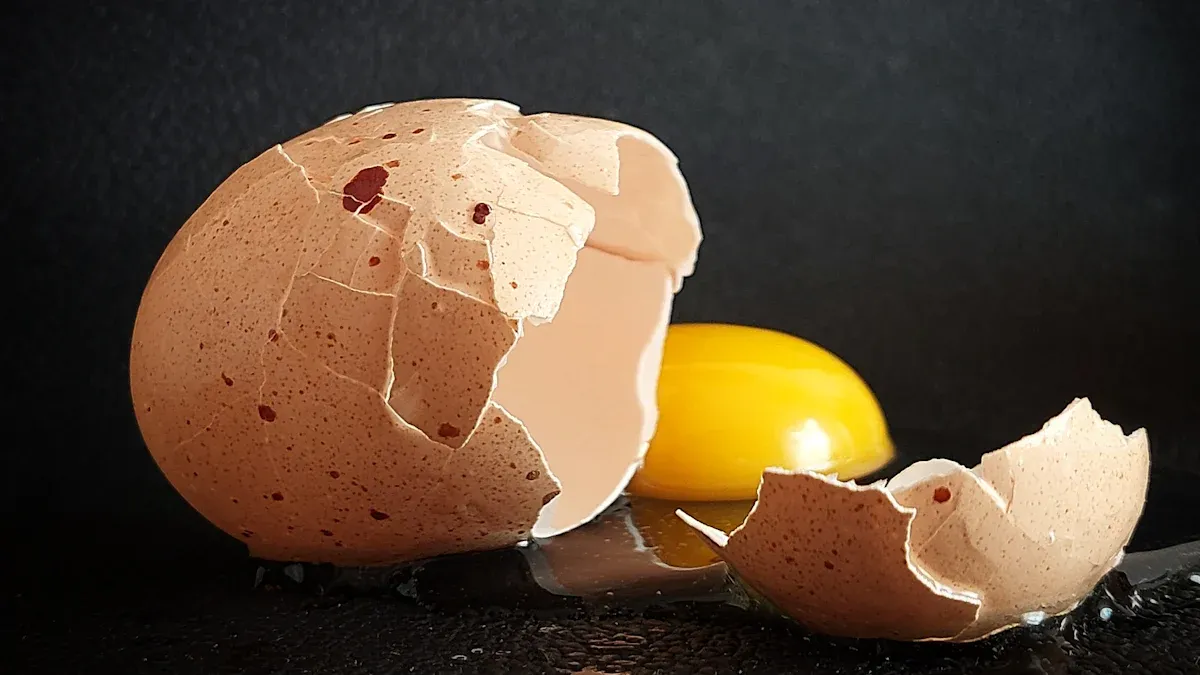
You need to turn eggs during incubation to keep the embryo from sticking to the shell membrane. If you leave an egg in one position for too long, the embryo can attach to the membrane. This can stop the chick from growing well or even make it impossible for the chick to hatch. Turning the eggs helps the embryo move and develop in the right place. You should stop turning the eggs during the last three days before hatching because the chicks are getting ready to break out of their shells.
Even Development
Turning eggs is also important for even development. When you use an egg incubator turner or an automatic egg incubator, you help each egg get the same amount of heat and air. This makes sure that all the chicks grow at the same rate. Studies show that not turning eggs during the first week can cause more embryos to be in the wrong position and increase the number of chicks that do not survive. The table below shows what researchers have found:
|
Study Reference |
Findings |
|---|---|
|
Lundy, 1969; Baggott et al., 2002 |
Lack of turning leads to mal-positioned embryos and higher mortality. |
|
Elibol and Brake, 2004 |
Not turning in the first week increases mal-positioned embryos and deaths. |
|
New, 1957 |
Days 3-7 are critical; no turning lowers hatchability and growth. |
|
Deeming, 1989 |
Not turning during key times reduces hatchability. |
|
Pearson et al., 1996 |
Not turning between days 12-19 hurts oxygen use and growth. |
|
Tona et al., 2003a/b |
Turning affects metabolism, hatching time, and hatchability. |
Common Mistakes
Many people make mistakes when using an incubator. Some forget to check the temperature or humidity. Others do not turn the eggs often enough or use too small an angle. These mistakes can cause hard-boiled eggs, chicks that do not hatch, or uneven growth. To avoid these problems:
-
Always check and calibrate your incubator’s temperature and humidity.
-
Use a hygrometer for better humidity control.
-
Turn eggs at least three times a day, and make sure the angle is about 43°–45°.
Tip: Consistent turning and the right angle help you get more healthy chicks from each batch.
Egg Incubator Turner Angle
Turning Angle
You need to understand how different egg incubator turners move eggs. Most home incubators use a tray-tilting method. This means the tray tilts left and right, moving the eggs gently. Commercial machines often use a rolling method, where the eggs roll on their sides. Each method describes the turning angle in a different way.
-
Tray-tilting turners measure the angle as the tilt from the center to each side.
-
Rolling turners describe the angle as the total rotation the egg makes as it rolls.
For most poultry, the best turning angle is 43°–45° to each side. This gives a total swing of about 90°. You should never let the turning angle drop below 38°. Angles below 35° can cause problems. If you use a small tabletop incubator, try to set the angle as close to 45° as possible. This helps every egg develop in the right position.
Tip: A larger turning angle helps prevent embryos from sticking to the shell and lowers the risk of late deaths.
Adjusting Angle
You can set the turning angle by adjusting the mechanism on your egg incubator turner. Many machines have a knob or lever for this. Always check the angle before starting a new batch of eggs. Use a simple protractor or angle finder to measure the tilt. Place the tool on the tray and tilt it to one side, then to the other. Write down the angle for each side. Make sure both sides match and reach at least 38°, but aim for 43°–45°.
-
Check the angle with every new batch.
-
Adjust the mechanism if the angle is too small.
-
Use a level surface for accurate measurement.
-
Mark the tray’s left/right extreme positions and take photos 6–8 hours apart to confirm full travel and no skipped turns.
If you use a rolling turner, watch the eggs as they move. Make sure they roll smoothly and do not twist too much. Too much twisting can affect the yolk and the embryo.
Angle Issues
If you set the turning angle too low, you may see more problems with your hatch. Angles below 35° can lead to embryos in the wrong position. This can cause deformities or even death before hatching. Studies show that a turning angle of only 15° leads to higher embryo loss than a 45° angle. You may also see fewer chicks hatch and lower chick quality if the angle is not right.
-
Incorrect turning angles increase embryo death rates.
-
Malpositions and deformities become more common.
-
Hatch rates drop when the angle is too small.
You should always check your egg incubator turner for proper angle. A good turning angle keeps embryos healthy and helps you get more chicks from each batch.
Turning Frequency
Manual vs Automatic
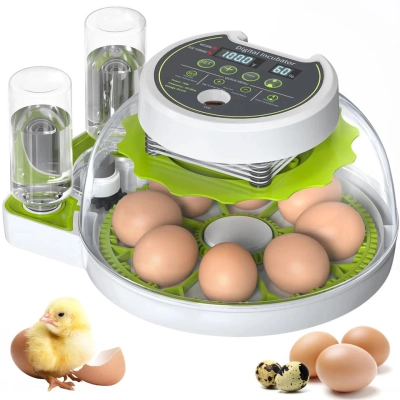
You can turn eggs by hand or use a machine. Manual turning means you open the incubator and move each egg. You need to do this several times every day. This works for small groups of eggs. It takes time and you might forget to turn them. Automatic egg incubator turners use a motor to move eggs on a schedule. These machines turn eggs even at night. They help keep the temperature and humidity steady. You do not have to open the incubator as much. For an overview of capacities and control styles, browse our egg incubators .
Here is a quick comparison:
|
Type of Turner |
Recommended Turning Schedule |
|---|---|
|
Manual |
At least 3 times per day |
|
Automatic |
Every 60–120 minutes |
-
Manual turning needs your time and focus.
-
It is hard to keep up, especially at night.
-
Automatic turners use a timer and turn eggs every 60 to 120 minutes.
-
They stop the yolk from sticking and keep the air and heat steady.
Note: Automatic turners are best for big batches or if you do not want to miss a turn.
Frequency Targets
Turning eggs often is very important for your egg incubator turner. Start turning eggs once the incubator is at the right temperature. If you turn eggs by hand, do it 3–5 times each day. Try to turn them at least once during the night. Never let an egg stay in one spot for more than 8 hours. If you use an automatic egg incubator, set it to turn eggs every 60–120 minutes. Turning more often can help, but make sure your device runs reliably.
The table below shows how turning eggs more often helps chicks hatch and stay healthy:
|
Turning Frequency (times/day) |
Hatchability (%) |
Early Mortality (%) |
Late Mortality (%) |
|---|---|---|---|
|
24 |
91.84 |
2.84 |
3.57 |
|
12 |
85.23 |
14.31 |
8.05 |
|
6 |
76.33 |
N/A |
N/A |
|
3 |
72.14 |
N/A |
N/A |
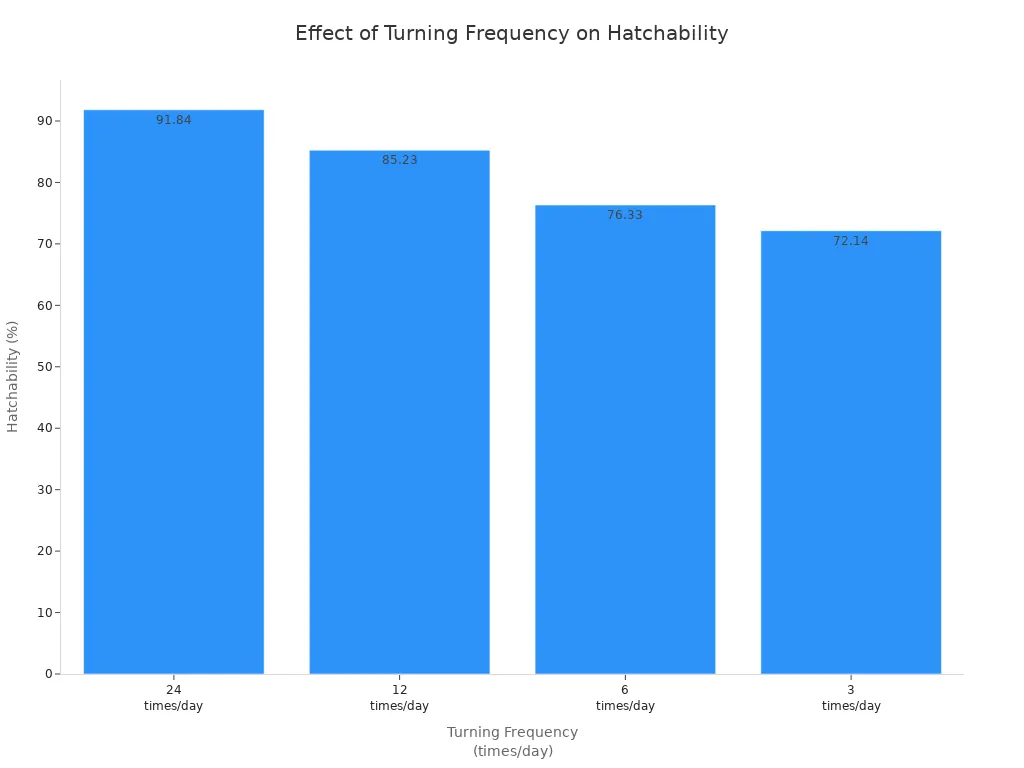
You can see that turning eggs more often helps more chicks hatch. Commercial machines may turn eggs every hour or even more. This keeps embryos healthy and helps chicks grow at the same speed.
Notes: The frequency advantages shown above come from controlled settings and specific poultry lines; outcomes can vary by species, equipment, and day of incubation.
Too Little or Too Much
If you do not turn eggs enough, many problems can happen. The embryo can stick to the shell membrane and die. Missing turns or turning unevenly can make chicks grow in the wrong spot. This can cause deformities or make hatching hard. Research shows that turning eggs only three times a day causes more embryo deaths. Hatchability drops when you turn eggs less than six times a day.
Turning eggs too much is not common. But you should not turn eggs in just one direction. Always turn eggs gently back and forth. Stop turning eggs two to three days before hatching. This helps prevent injuries or wrong positions. Turning eggs regularly also helps the embryo get fresh nutrients and oxygen. This supports normal growth.
Here are some common problems if you do not turn eggs the right way:
|
Consequence |
Description |
|---|---|
|
Adhesion of embryo |
Turning stops the embryo from sticking to the shell membrane. |
|
Chalaza damage |
Turning in one direction can hurt the chalaza and harm the embryo. |
|
Hatching issues |
Stop turning before hatch to avoid injuries or wrong positions. |
|
Nutrient access |
Turning helps the embryo get nutrients and oxygen. |
|
Development support |
Turning helps normal growth and protein transfer. |
Tip: Set a reminder if you turn eggs by hand or use an automatic egg incubator. This helps you keep turning eggs on time and get more healthy chicks.
Automatic Egg Incubator Calibration

Getting the right calibration for your egg incubator turner helps you hatch more healthy chicks. You want to make sure both the angle and the timer work as they should. Here is a simple checklist to guide you:
-
Use a phone inclinometer or angle finder to measure the tray tilt. Aim for 38–45° per side.
-
Adjust the linkage or motor if the angle is too small or uneven.
-
Calibrate the timer so the turner cycles every 60 minutes. Some models allow 90–120 minutes.
-
Set the angle for the largest egg if you have mixed sizes. For finch, budgie, or cockatiel eggs, a bird egg incubator provides secure small-egg trays and steadier airflow.
-
Run the automatic egg incubator empty for at least 24 hours before adding eggs.
-
Check that the temperature stays at 99.5°F (37.6°C) and humidity at 50–55% for the first 17 days.
-
Calibrate your thermometer and hygrometer before each batch.
-
Record the actual number of turns per day and compare it to your settings.
-
Mark the left/right end points on the tray rails so you can quickly see full travel during spot checks.
Angle Calibration
You need to check the turning angle before every batch. Place your phone inclinometer or angle finder on the tray. Tilt the tray to one side, then the other. Write down the readings. Both sides should reach at least 38°, but 43–45° is best. If you see a smaller angle, adjust the linkage or motor. Always set the angle for the largest egg in your batch. This helps every egg get the right movement.
Timer Calibration
Timer calibration makes sure your eggs turn on schedule. Watch the turning motor and listen for smooth operation. Set the timer for 60-minute cycles, or 90–120 minutes if your model allows. Record the turning times for a full day. Check that the turner does not skip any cycles. If you find a problem, adjust the timer or replace it.
Testing Performance
After calibration, test your egg incubator turner before adding eggs. Run the machine empty for 24 hours. Watch the temperature and humidity. Make sure the turning system works smoothly and does not make strange noises. Use this table to help you check each step:
|
Best Practice |
Description |
|---|---|
|
Monitor conditions |
Keep temperature and humidity stable during the test cycle. |
|
Check turning system |
Make sure the turner moves smoothly and evenly. |
|
Listen for unusual sounds |
Notice any odd noises from the fan or motor. |
|
Maintain turning frequency |
Increase turns during the first week for best results. |
|
Avoid skipping turns |
Never miss a turn, especially in the first 10 days. |
Tip: Careful calibration and testing help you avoid problems and give every egg the best chance to hatch.
When to Stop Turning
Lockdown Period
You need to stop turning your eggs three days before the expected hatch date. This time is called the lockdown period. During lockdown, you help the chicks get ready to hatch by making a few important changes:
-
Raise the humidity in your incubator to at least 65%. This helps the chicks break through the shell.
-
Close the incubator lid and avoid opening it. An automatic egg incubator — 3 trays for birds and quail helps maintain steady ≥65% RH without crowding . This keeps the temperature and humidity steady.
-
Finish all mechanical adjustments before lockdown begins.
-
Ensure adequate ventilation throughout lockdown—do not reduce vents to boost humidity.
Tip: Lockdown gives the chicks the best chance to hatch safely and reduces stress on the eggs.
Stop Days by Species
Different birds have different incubation times. You should always stop turning eggs three days before the expected hatch. Here is a quick guide for common species:
|
Species |
Total Incubation Days |
Stop Turning On Day |
Lockdown Starts |
|---|---|---|---|
|
Chicken |
21 |
18 |
Day 18 |
|
Coturnix Quail |
17–18 |
14 |
Day 14 |
|
Turkey |
28 |
25 |
Day 25 |
|
Duck |
28 |
25 |
Day 25 |
|
Bantam Chicken |
19–20 |
16–17 |
Day 16–17 |
Note: For bantam chicken eggs, stop turning one or two days earlier because they hatch sooner.
Why Stop Turning
You stop turning eggs during lockdown for several reasons:
-
The embryo needs to position itself for hatching. Stopping turning helps the chick move into the right spot.
-
Important changes happen inside the egg. The chick starts to breathe air and gets ready to break the shell.
-
The chorio-allantoic membrane grows and helps the chick get enough oxygen and lose extra moisture.
-
If you keep turning, the chick may not hatch in the right position or may not get enough air.
Follow these steps before lockdown:
-
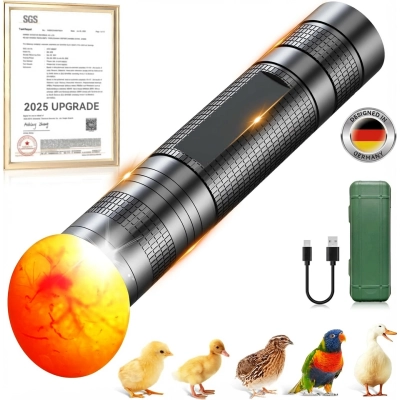
Candle the eggs to check for development.
-
Stop turning the eggs.
-
Raise the humidity to 65%.
-
Make sure water sources are safe for chicks.
-
Close the incubator lid and do not open it until hatching is done.
Remember: Stopping turning at the right time helps every chick hatch strong and healthy.
Egg Troubleshooting
Turner Stuck
A stuck turner can stop your eggs from getting the movement they need. You might notice the tray does not move or hear odd noises. Common causes include a jammed tray, a blocked motor, or too many eggs packed together. To fix this, check for any objects blocking the tray. Make sure the turner is plugged in and the power supply works. If you use an automatic turner, listen for grinding noises or strange smells. These signs often mean the motor needs replacement. While waiting for repairs, turn the eggs by hand at least three times a day to keep the embryos healthy.
Tip: Always check that eggs are spaced evenly and the tray moves freely before starting incubation.
Uneven Turning
Uneven turning can lead to poor development. You want every egg to get the same movement. Follow these steps to troubleshoot:
-
Make sure the turner is plugged in and check its movement every hour.
-
If the turner does not move after several hours, look for signs of a defective motor, such as grinding noises or odors.
-
If you find a problem with the motor, turn the eggs by hand until you can replace the motor.
If the tray reaches the end position but the angle is too small, adjust the linkage or limit bolts. Use a protractor or angle finder to measure the tray tilt.
Hatching Issues
Sometimes, chicks struggle to hatch or the membranes look dry. Slow external pipping or dry membranes often mean the humidity is too low during lockdown. Raise the humidity to at least 65% relative humidity and check that the incubator has enough ventilation. This helps chicks break through the shell more easily.
Missed Turns
Missing turns can harm embryo development. You should always turn eggs at least three times daily. If you miss a night turn, add a timer or switch to an automatic turner. You can also set a reminder to turn eggs before bed, keeping the stationary time under eight hours. The table below shows key points for proper turning:
|
Recommendation |
Details |
|---|---|
|
Turn Frequency |
Turn eggs at least 3 times daily |
|
Egg Position |
Set eggs with the small end down |
|
Pre-Hatching |
Do not turn eggs within 3 days of hatching |
Note: Consistent turning and correct positioning help you achieve better hatch rates.
Quick Reference
Fast Tips
You want to set up your egg incubator turner for the best results. Use this quick guide to check your settings and boost your hatch rates.
Key Settings Table by Species
|
Species |
Incub. Period |
Temp (°F/°C) |
Humidity (Incubation) |
Humidity (Last 3 days) |
Stop Turning |
|---|---|---|---|---|---|
|
Chicken |
21 days |
99.5 / 37.5 |
45–55% |
65–75% |
Day 18 |
|
Japanese Quail |
16–18 days |
99.5 / 37.5 |
45–55% |
65–75% |
Day 14–15 |
|
Turkey |
28 days |
99.5 / 37.5 |
45–55% |
65–75% |
Day 25–26 |
|
Ducks |
28 days |
99.5 / 37.5 |
45–55% |
65–75% |
Day 25–26 |
|
Geese |
28–35 days |
99.5 / 37.5 |
45–55% (cool/mist late) |
65–75% |
Last 3 days |
|
Muscovy Duck |
35 days |
99.5 / 37.5 |
45–55% (cool/mist late) |
70–80% |
Day 32 |
Fast Tips for Success
-
Keep the turning angle between 38–45° per side (about 90° total).
-
Turn eggs 3–5 times daily by hand, or set automatic turners to cycle every 60 minutes.
-
Measure tray angle and timer before each batch. Run the incubator empty for at least 24 hours to check performance.
-
Stop turning eggs three days before hatch (chicken day 18, quail day 14, turkey/duck day 25–26).
-
Raise humidity to at least 65% during lockdown. Add sponges or use food coloring in water channels to monitor humidity, and keep vents open for fresh air.
-
Clean eggs before setting. Sanitize the incubator weekly with 3% hydrogen peroxide.
-
Place eggs with the small end down. Increase ventilation and avoid opening the incubator during lockdown.
A poultry keeper reached a 100% hatch rate by using an automatic turner, keeping temperature steady at 99.5°F, and maintaining proper humidity. Clean eggs and regular sanitizing made a big difference.
Use these tips and the table above to set up your incubator turner quickly and confidently. 🐣
You can get more chicks to hatch if you set the turning angle right, turn eggs on a regular schedule, check your incubator settings, and stop turning at the right time. These steps help every chick grow strong.
-
Fewer chicks hatch if you use the wrong temperature or forget to turn eggs.
-
The best way is to use a 38–45° angle and turn eggs often and evenly.
Automatic egg turners make hatching easier and help you get better results. For more ideas, look at the quick reference and troubleshooting parts. Many guides say that using automatic turners and checking your settings helps more chicks hatch.
Data authenticity note: temperatures, angles, frequencies, and stop-days summarized here reflect common poultry-science findings and extension-style guidance. To keep this page clean we include no external links; detailed source descriptions are available on request.
FAQ
How often should you turn eggs in an incubator?
You should turn eggs at least 3–5 times each day by hand. If you use an automatic turner, set it to turn every 60–120 minutes. Turning eggs regularly helps embryos grow evenly and prevents sticking.
What is the best turning angle for eggs?
Aim for a turning angle of 38–45° to each side. This means the tray tilts about 90° total. A larger angle is mainly discussed for large eggs like geese/ducks, not as a general chicken setting.
When do you stop turning eggs before hatching?
Stop turning eggs three days before the expected hatch date. For chickens, stop on day 18. For quail, stop on day 14. For turkeys and ducks, stop on day 25 or 26.
How do you check if your incubator turner is working correctly?
Use a phone inclinometer or angle finder to measure the tray tilt. Run the incubator empty for 24 hours. Make sure the turner moves smoothly and turns eggs at the right intervals.
What should you do if you miss a turn at night?
Add a timer or switch to an automatic turner. If you turn eggs by hand, do one turn before bed. Try not to let eggs stay in one position for more than eight hours.



0 Comments