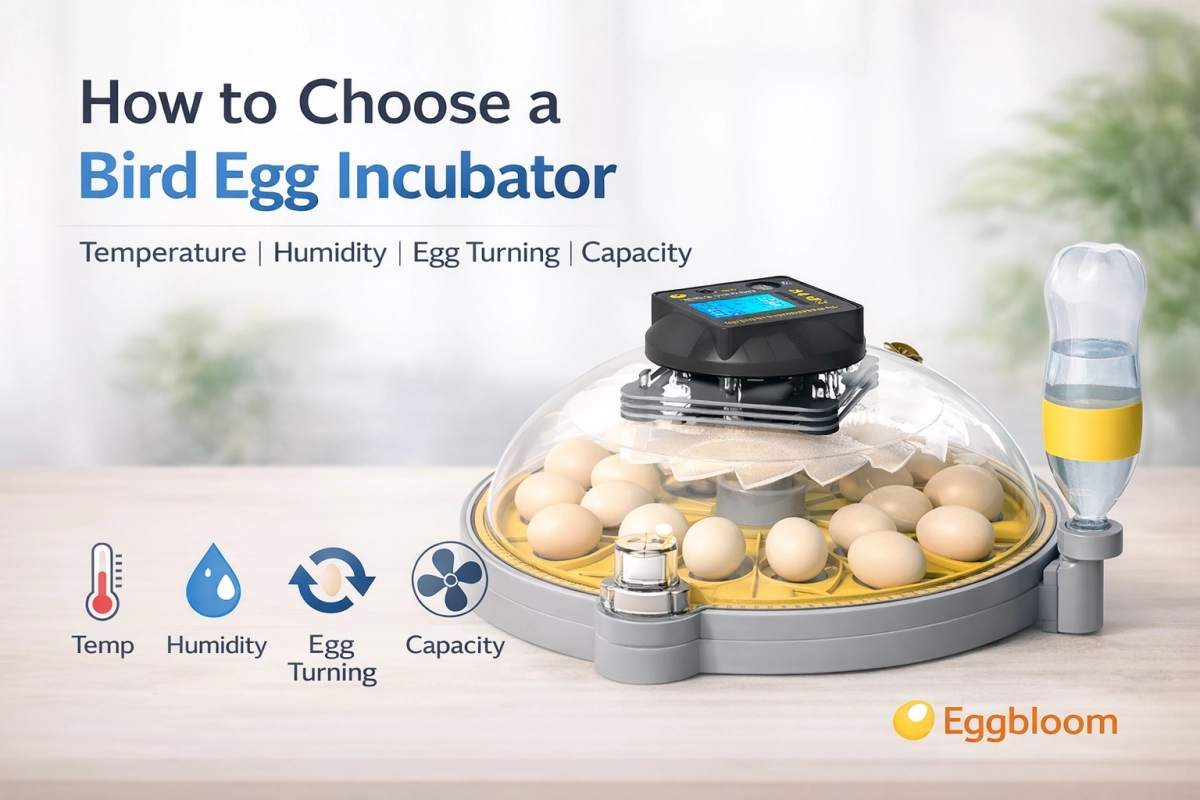
You want your pet bird eggs to hatch, and you want the process to feel safe and simple. We can do that. This guide helps you choose a bird egg incubator that fits your bird, your egg size, and your daily routine.
-
You can start by using our resource library. It lets you compare bird egg incubator options without guessing.
-
You should treat each bird species like its own little weather system. A finch egg can dry out faster. A pigeon egg can cool down faster when the room swings. A parrot egg often needs steady conditions for many days.
We will walk with you through airflow, heat, humidity, turning, and the quiet days near hatch. You will know what to watch. You will also know what to leave alone.
Key Takeaways
-
You should match the tray and turning style to your egg size. You should aim for steady heat at egg height. You should keep humidity steady and adjust it with real signs, not hope. You should stop turning for lockdown and keep the lid shut. You should pick controls that you can repeat every day.
Know Your Bird Eggs First
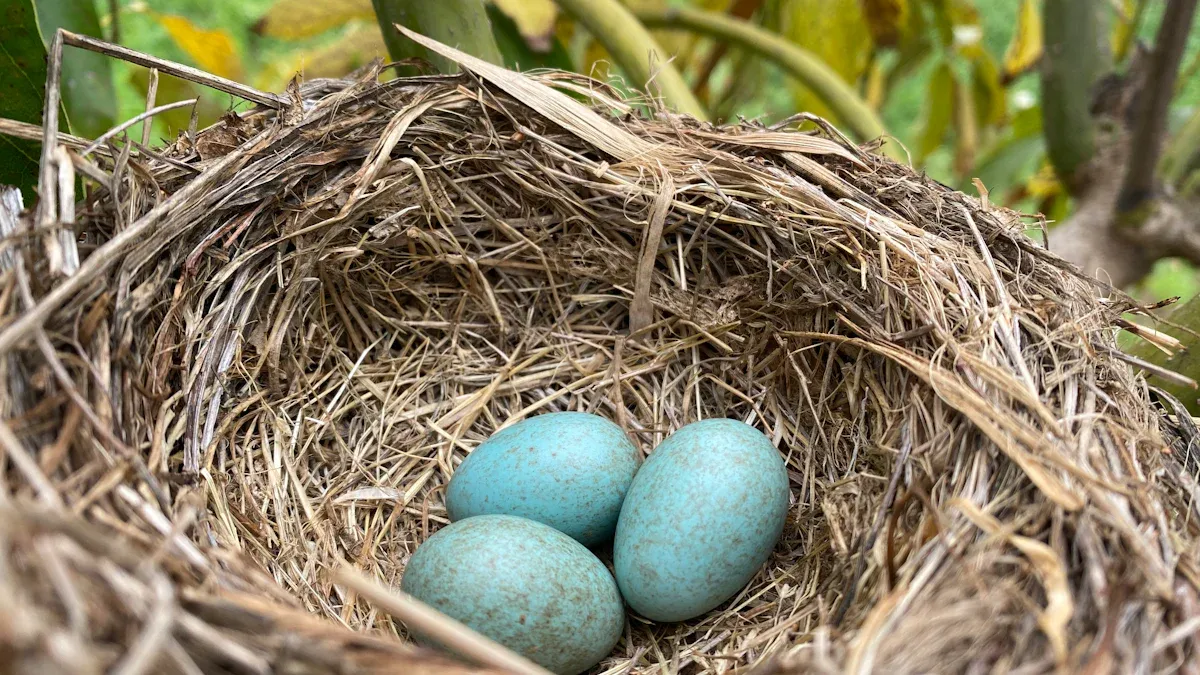
Pet Bird Groups and Incubation Needs
You should name your bird before you name your incubator. Parrots, pigeons, doves, and finches can all hatch in an incubator, but their eggs do not behave the same. Small eggs lose moisture faster. Larger eggs need more space and a gentler roll. You should choose a setup that fits the eggs you actually have.
Tip: You should write your bird species and the expected hatch window on a note, and you should tape it to the lid. That note keeps you calm when you feel tempted to change settings.
This quick table lists common pet parrot groups. You can use it as a starting signpost, not as a promise.
|
Parrot Species |
Humidity Range (%) |
Incubation Period (Days) |
|---|---|---|
|
Macaws |
38 - 42 |
24 - 26 |
|
African Grey Parrots |
N/A |
28 - 30 |
|
Amazons |
38 - 42 |
N/A |
|
Lovebirds |
N/A |
N/A |
Quick Egg Fit Checklist
You should check a few things before you buy an egg incubator:
-
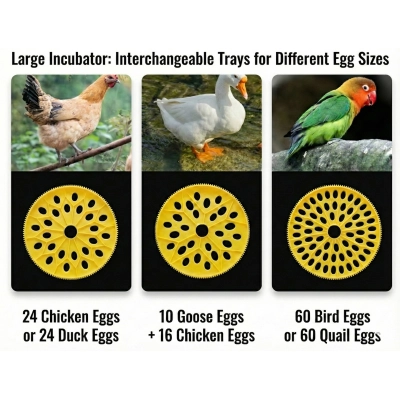
Egg size: You should pick trays that hold each egg snug, like a cup that supports it without pinching.
-
Clutch size: You should pick capacity for your usual clutch, plus a little breathing room so air can still move.
-
Home setup: You should place the incubator in a calm room with steady power and no direct sun.
A good fit keeps eggs from bumping each other. A good fit also keeps heat and moisture even across the tray.
Forced-Air vs Still-Air for Small Eggs
Airflow is the unseen hand inside the incubator. A fan spreads heat and moisture like a gentle breeze. No fan lets warm air sit high and cool air sit low, like a hot attic and a cool floor. This table shows the basic difference.
|
Feature |
Forced Air (Fan) |
Still Air |
|---|---|---|
|
Temperature |
Uniform / Consistent |
Layered / Varies by height |
|
Humidity (RH) |
Uniform / Easy to measure |
Layered / Hard to measure |
|
Ease of Use |
Easier / Less monitoring |
More complex / Requires skill |
|
Best For |
Beginners, large hatches |
Experts, natural simulation |
|
Cost |
Generally higher |
Generally lower |
Most pet bird keepers do better with a forced-air incubator because it holds a steadier little climate around every egg.
Bird Egg Incubator Features That Matter
A low price does not hatch chicks. Steady control does. You should look for features that keep heat, humidity, and turning steady in a normal home or classroom. The table below shows the features that matter most.
|
Feature |
Description |
|---|---|
|
Temperature Control |
Needed to keep the right environment for each bird. |
|
Humidity |
Very important for good egg growth and hatching. |
|
Egg Rotation |
Helps copy how birds turn eggs in nature. |
Temperature Control and Calibration
Eggs grow best when heat stays steady at egg level. Many forced-air incubator guides aim for about 99.5–100.5°F (37.5–38.1°C) at egg height. Still-air boxes often need a higher reading at egg height because warm air stacks up. You should check your display with a second calibrated digital thermometer placed at egg height. You should change settings in small steps, and you should give the incubator time to settle.
Humidity Management for Pet Birds
Humidity is the feel of the air inside the box. It is the difference between a dry winter room and a sticky summer day. The shell needs the right moisture balance, so the chick can breathe, move, and unzip the shell at hatch.
-
You can use the humidity number as a guide, but you should also watch the egg during candling. The air cell should grow over time, and that change tells you if moisture is leaving the egg as it should.
-
Low humidity can dry the inner membrane. That dry membrane can hold the chick like a tight glove.
-
High humidity can leave the chick with too little air space at the end. That chick can run out of room and strength.
Egg Turning and Viewing Windows
Turning keeps the growing chick from resting in one spot for too long. You should turn eggs gently and often during the main part of incubation, or you should let an automatic turner do it for you. You should stop turning for lockdown near the end of your species hatch window. You should not open the lid during lockdown. A viewing window lets you look without dumping heat and moisture.
Pet Bird Incubator Settings and Troubleshooting
Recommended Settings by Species
Settings are not one-size for pet birds. You should start with a trusted chart for your bird, then you should confirm it with real signs like air cell growth and steady progress at candling.
This table shows safe starting ideas and what you should check for each group.
|
Bird Species |
Temperature (°C/°F) |
Humidity (%) |
Incubation Days |
|---|---|---|---|
|
Macaw |
37.5–38.1°C / 99.5–100.5°F (forced-air start) |
Start mid-range, then adjust by air cell and candling |
Varies by species. Use a trusted species chart. |
|
African Grey Parrot |
37.5–38.1°C / 99.5–100.5°F (forced-air start) |
Start mid-range, then adjust by air cell and candling |
Varies by species. Use a trusted species chart. |
|
Amazon Parrot |
37.5–38.1°C / 99.5–100.5°F (forced-air start) |
Start mid-range, then adjust by air cell and candling |
Varies by species. Use a trusted species chart. |
|
Lovebird |
37.5–38.1°C / 99.5–100.5°F (forced-air start) |
Start mid-range, then adjust by air cell and candling |
Varies by species. Use a trusted species chart. |
|
Finch |
37.5–38.1°C / 99.5–100.5°F (forced-air start) |
Start mid-range, then adjust by air cell and candling |
Varies by species. Use a trusted species chart. |
|
Pigeon |
37.5–38.1°C / 99.5–100.5°F (forced-air start) |
Start mid-range, then adjust by air cell and candling |
Varies by species. Use a trusted species chart. |
Tip: You should treat any chart as a starting line. You should follow your species guide and breeder or vet advice when you have it.
Adjusting for Uncommon Birds
Some pet birds do not show up in simple charts. You can start with the closest match, then you should adjust based on what the eggs show you. You should make small changes. You should avoid big swings.
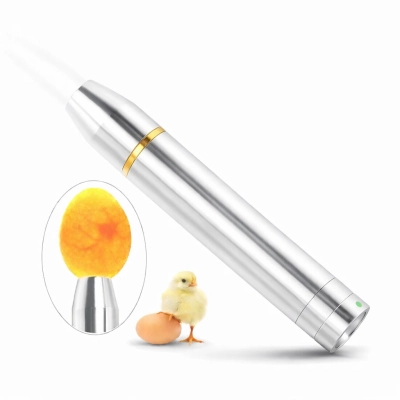
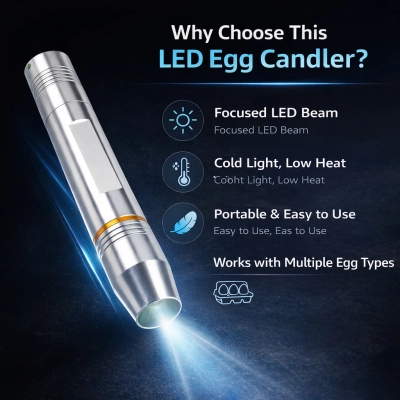
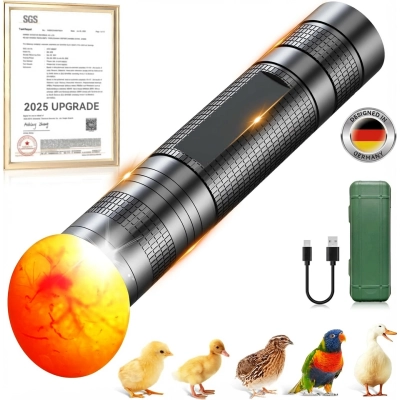
You can candle in a dark room with a bright light. When the egg is healthy, you often see red veins that spread like a spider web. As hatch gets closer, the air cell usually looks bigger and it can tilt. Those signs tell you that the chick is using oxygen and getting ready.
If candling looks off, you should check your thermometer and hygrometer placement before you blame the eggs. A bad sensor spot can trick you.
Troubleshooting Common Hatching Issues
You can run a good incubator and still hit bumps. That is normal. You can solve most problems when you stay calm and you change one thing at a time. This table lists common issues and simple fixes.
|
Hatching Issue |
Likely Cause(s) |
Solution(s) |
|---|---|---|
|
No chicks hatch, no embryo development |
Infertility, infection, wrong settings, parent health |
Check egg viability, disinfect incubator, check settings |
|
No chicks hatch, early embryo death |
Infection, power failure, wrong temperature |
Sterilize incubator, check power and temperature |
|
Late stage 'death in shell' |
Humidity too high |
Lower humidity levels |
|
Chicks hatch early, deformities |
Temperature too high |
Lower temperature in small steps |
|
Chicks hatch late |
Temperature too low, eggs stored too long |
Raise temperature in small steps, and shorten storage time |
|
Hatch dates spread out |
Different storage times, temperature variation |
Limit storage time, check temperature variation |
|
Poor results overall |
Wrong settings, poor parent health, bad egg turning |
Improve parent health, check settings, review air cell size and your humidity routine |
You can use these do and do not reminders when hatch feels late or chicks look weak:
-
You should keep temperature and humidity steady.
-
You should start with clean eggs and a clean incubator.
-
You should wash and dry trays and water channels after each hatch.
-
You should double-check your sensors at egg height.
-
You should not bang the table or move the incubator when eggs are inside.
You can feel anxious when you hear a faint peep and you see no crack. That feeling is normal. You should breathe and wait. You should only adjust settings after you confirm a real problem with your tools.
A steady routine protects eggs more than perfect numbers. When you keep heat stable, keep humidity stable, and keep handling gentle, you give chicks their best chance.
Choosing the Right Egg Incubator
Buyer Decision Map for Pet Bird Owners
You want features that solve real problems, not fancy extras. This table links common worries to the feature that helps.
|
Feature |
Problem Solved |
|---|---|
|
Precision temperature control |
Prevents weak or deformed chicks |
|
Automatic egg turning |
Reduces risk of sticky chicks |
|
Humidity control |
Avoids dehydration or sticky hatching |
|
Viewing window |
Lets you monitor eggs without losing heat |
|
Overheat protection |
Keeps eggs safe from temperature spikes |
|
Stable base |
Prevents accidental tipping |
Tip: If kids will use the incubator, you should pick a stable base and simple controls. You should also keep cords out of reach.
Comparing Models for Home and Classroom
You should pick an incubator type that matches your space and your goals. This table compares the common types and who they fit.
|
Incubator Type |
Egg Capacity |
Functionality Levels |
Pricing Range |
Ideal User |
|---|---|---|---|---|
|
Mini Incubators |
1-12 eggs |
Basic to automated |
$20 - $400+ |
Schools, science projects |
|
Tabletop Incubators |
1-130 eggs |
Basic to automated |
$50 - $1000+ |
Home breeders |
|
Cabinet Incubators |
130+ eggs |
Basic to automated |
$600 - $5000 |
Small farm breeders |
Teachers often do best with a clear-view incubator that is easy to clean and hard to tip. That setup lets students watch without constant lid opening.
|
Incubator Model |
Key Features |
Suitability |
|---|---|---|
|
Clear-view classroom incubator |
Easy to set up, easy to clean, wide viewing window |
Classroom and demos |
|
Simple tabletop incubator |
Basic controls, optional turner, flexible capacity |
Home hobby breeders |
Safety features like overheat protection and a stable base protect eggs and protect hands.
Top Picks for Small and Medium Birds
You do not need the fanciest box. You need the box that stays steady for your eggs. These picks follow that idea:
-
Pick for one breeding pair
-
It turns eggs for you, so you do not lose sleep.
-
It holds steady heat with a fan, so every corner feels the same.
-
It has a clear lid, so you can look without opening.
-
It fits small clutches in soft trays.
-
-
Pick for small to medium clutches
-
It shows humidity clearly, so you can repeat your routine.
-
It makes candling simple, so you can see veins and air cell changes.
-
It turns eggs gently on a schedule.
-
It works well when you have more than a handful of eggs.
-
-
Pick for bigger home setups
-
It holds temperature steady even when the room swings.
-
Some bigger setups can work with backup power, so a short outage hurts less.
-
It makes sense when you run several pairs.
-
The small chart below is a simple way to compare what matters. You should focus on stability, turning, and humidity control.
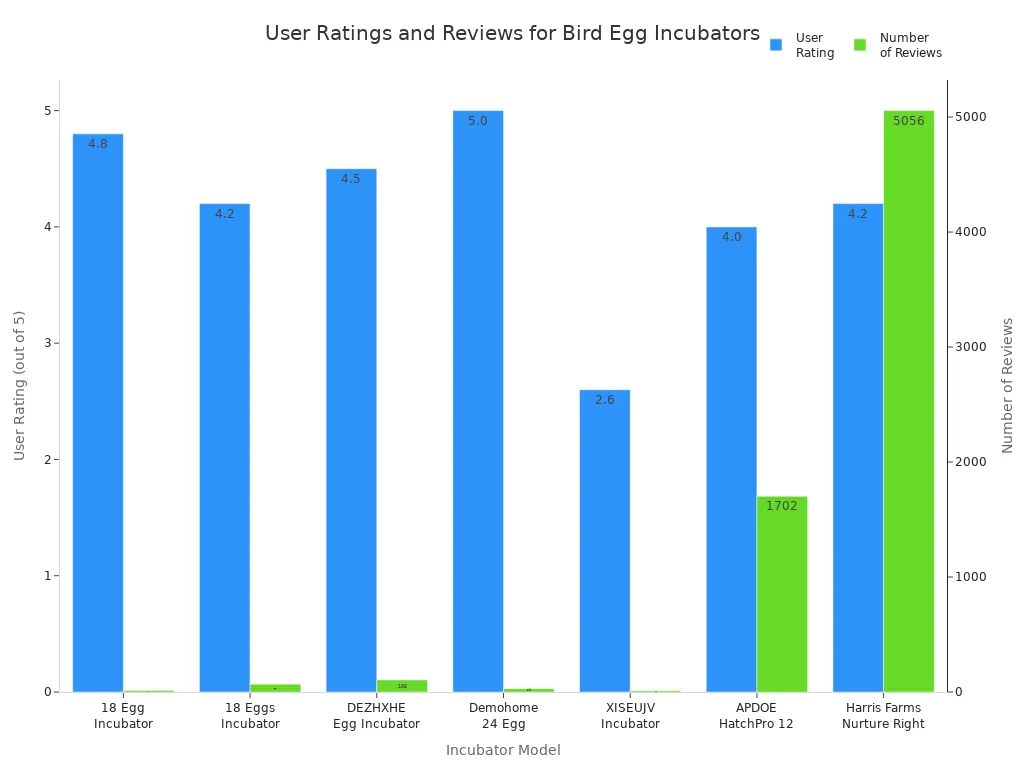
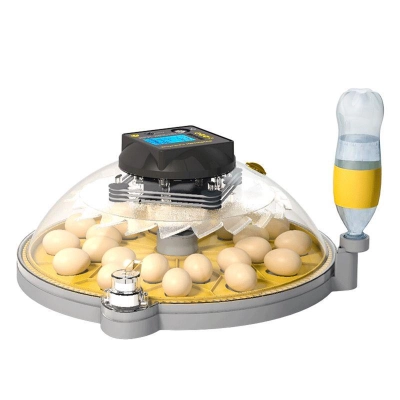
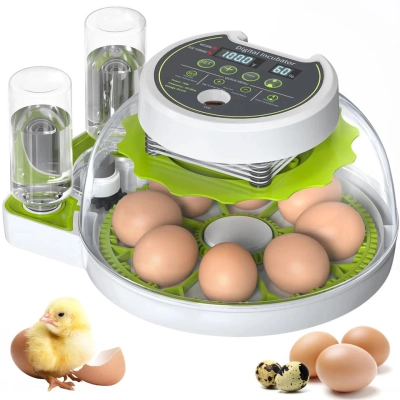
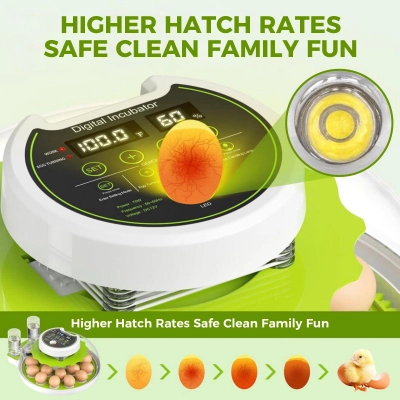
If turning and humidity keep wearing you out, you can use the Automatic Egg Incubator with 3 Trays. It gives you steady airflow, automatic turning, and a setup that fits small pet bird clutches.
You can help your eggs hatch well when you keep a few habits steady:
-
You should run the incubator empty for a full day, so you can see that it holds steady.
-
You should aim for about 99.5–100.5°F in a forced-air incubator at egg height. You should follow your species guide if it says otherwise.
-
You should add water in small, repeatable amounts, and you should avoid big swings.
-
You should candle in a dark room. You should look for a warm glow and veins that spread like a spider web.
-
When the hatch window starts, you should stop turning and raise humidity. You should not open the lid.
You can learn faster when you talk with other bird keepers. You can also write down what you changed, so the next clutch feels calmer.
FAQ
How do you know if your incubator is set to the right temperature?
You should trust the egg’s level, not the air near the lid. You should place a second calibrated digital thermometer at egg height, and you should compare it to the incubator display. You should aim for steady heat in a forced-air incubator, usually around 99.5–100.5°F at egg height. If you want a simple breakdown of incubator styles and where to measure, you can read egg incubator types.
What should you do if eggs are not hatching on time?
You can feel worried when the hatch window comes and the eggs stay quiet. That feeling is normal. You should check temperature and humidity stability, and you should look at the air cell during candling. You should avoid rushing to help the chick, because help can harm when timing is wrong. If you hatch parrots, you can also read our Parrot egg incubator guide. If you hatch pigeons, you can read our Hatching pigeon eggs guide.
How often should you turn pet bird eggs in the incubator?
You should turn eggs gently and often during the main part of incubation. An automatic turner can keep the rhythm steady when you are asleep or at work. You should stop turning for lockdown near the end of your species hatch window, and you should keep the lid shut.
Why do chicks sometimes stick to the shell or hatch weak?
A chick can stick when humidity runs too low, or when turning is not steady. A chick can also look weak when temperature swings up and down. You should focus on steady heat, steady humidity, and gentle turning. You should also clean and dry the incubator after each hatch.
Can you open the incubator to check eggs during incubation?
You should use the viewing window when you can. Every lid opening dumps heat and moisture, and small eggs feel that fast. If you must open the lid, you should be quick and gentle. You should never open the lid during lockdown and active hatch.

0 Comments