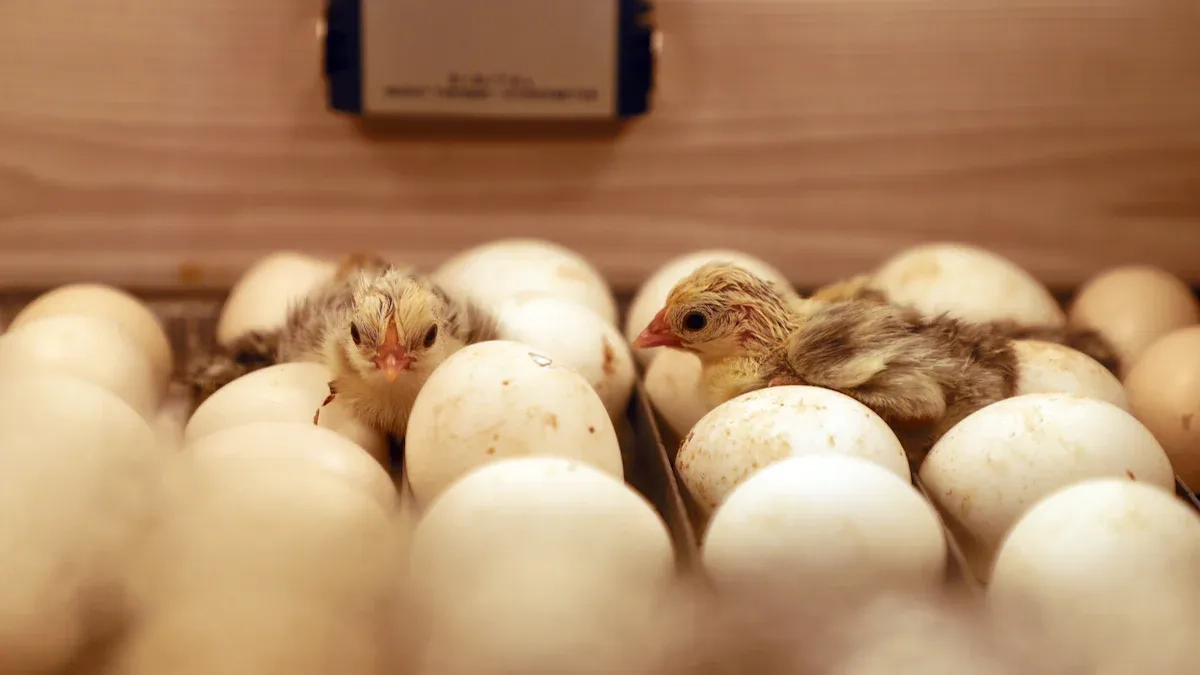
Most chicks hatch on their own and should be allowed to do so whenever possible. But if a chick has made an external pip, shows little or no progress for 18–24 hours, and the membrane has turned dry, white, or tight, careful assistance may be necessary. The key is to help only when the chick is truly stuck—not simply taking a normal rest during hatch.
If you are not sure whether poor hatch conditions may be contributing to the problem, review a proper incubator temperature and humidity setup before intervening.
Quick Answer: Should You Help a Chick Hatch?
You should only consider helping a chick hatch if all or most of the following are true:
- The chick has already made an external pip
- There has been little or no progress for 18–24 hours
- The membrane looks dry, white, or tight
- The chick has become weak, quiet, or less responsive
- The shell may be partially zipped, but progress has stopped
You should not help yet if:
- There is no external pip
- The membrane is still soft, moist, and translucent
- The chick is still peeping, moving, or making slow progress
- You can see bright red blood vessels
- There is any active bleeding
If you are unsure how to raise moisture safely without causing bigger swings, here is how to keep humidity stable in your incubator during hatch.
What Is Assisted Hatching?
Assisted hatching means giving a chick minimal, controlled help to finish hatching after it has already started the process but can no longer make progress on its own.
The goal is not to force the chick out of the shell. The goal is to:
- Prevent the membranes from drying and trapping the chick
- Protect the chick while it finishes absorbing blood and yolk
- Reduce the risk of injury caused by premature or rough intervention
Done correctly, assisted hatching is a slow, cautious process. Done too early, it can cause severe bleeding, yolk sac damage, or death.
When to Help a Chick Hatch
Normal Hatching Can Be Slow
A chick does not always hatch in one smooth push. After the first external pip, many chicks rest for long periods before continuing. Some may take 12–24 hours to finish hatching, and a few may take even longer if development is slightly delayed.
That means time alone is not enough to decide whether to help.
You must also watch for:
- Whether the chick is still moving
- Whether it is still peeping or breathing well
- Whether the membrane looks moist or has dried out
- Whether the crack is slowly expanding or completely stalled
Slow does not always mean stuck. A chick that is resting but still active may still hatch normally.
Signs a Chick May Need Help
A chick may need assistance if you notice several of these signs together:
- External pip with no progress for 18–24 hours or more
- Membrane has turned white, dry, or leathery
- The chick was active earlier but is now weak or silent
- The shell is partly zipped, but progress has stopped for hours
- The chick appears trapped by tight membranes
If you see a long pip time, a dry membrane, and a chick that seems to be fading instead of staying active, that is when assisted hatching may be appropriate.
When You Should NOT Help
There are situations where helping too soon is more dangerous than waiting.
Do Not Assist Yet If:
- The chick has not made an external pip
- The chick has only internally pipped
- The membrane still looks moist and healthy
- The chick is still actively peeping or shifting position
- The egg appears underdeveloped and not ready to hatch
Stop Immediately If You See:
- Bright red, branching blood vessels
- Fresh blood or active bleeding
- A large, unabsorbed yolk sac
- Clear signs that the chick is not yet ready to separate from the membrane
If any of these are present, return the egg to the incubator, keep humidity up, and wait before checking again.
Fast Decision Chart: Help Now or Wait?
| Situation | What to Do |
| External pip for 18–24+ hours with no progress | Reassess carefully for assisted hatching |
| Membrane is dry, white, and tight | Raise humidity and consider gentle intervention |
| Chick is still peeping and moving | Wait and monitor |
| No external pip yet | Do not assist |
| Bright red blood vessels visible | Stop and return egg to incubator |
| Active bleeding | Stop immediately and wait |
How to Help a Chick Hatch Safely
Assisted hatching should always be done in small stages. Never rush. Never pull the chick out by force.
Step 1: Confirm the Chick Is Ready
Before touching the shell, confirm:
- There is a true external pip
- The chick still shows signs of life
- The membrane is dry or tightening
- Progress has stalled long enough to justify intervention
If the chick still seems active and the membrane is moist, wait and recheck later.
Step 2: Prepare a Clean, Warm Workspace
Before starting, make sure you have:
- A clean towel or paper towels
- Fine-tipped tweezers
- Cotton swabs
- Warm sterile saline or warm clean water
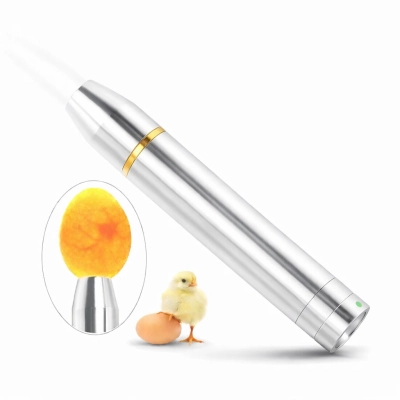
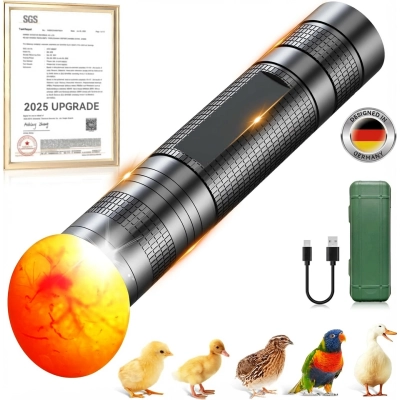
- A bright LED candler or flashlight
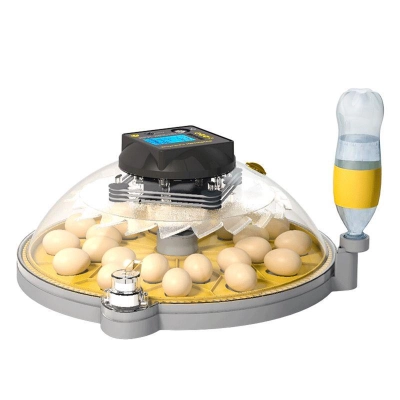
- A warm incubator ready for pauses between steps
Wash your hands, sanitize tools, and work in a warm, draft-free area. Keep handling time short so the egg does not cool down or dry out.
Step 3: Make a Tiny Viewing Window
Start at the area around the air cell, near the external pip.
Very carefully:
- Remove only a tiny piece of shell
- Make just enough of an opening to inspect the membrane
- Avoid digging, tearing, or peeling large sections
You are not trying to open the whole egg. You are only checking whether the membrane is dry and whether blood vessels are still active.
Step 4: Moisten the Membrane
If the membrane looks dry, use a cotton swab with warm saline or warm clean water to lightly moisten it.
Important:
- The membrane should become soft and flexible
- It should not be soaked
- Do not let liquid cover the beak or nostrils
A slightly moistened membrane is easier to work with and less likely to tear.
Step 5: Check for Blood Vessels
This step is critical.
If you see:
- Bright red blood vessels
- Fresh bleeding
- Membranes that are still clearly attached to circulation
Stop immediately.
Return the egg to the incubator for 1–3 hours, maintain high humidity, and reassess later. Do not continue peeling while blood supply is still active.
If the vessels have faded and the membrane looks pale or bloodless, you may continue carefully.
Step 6: Peel in Small Stages
Once the chick appears ready, gently remove small pieces of shell around the pip area in stages.
Rules to follow:
- Work slowly
- Pause often
- Remove only what the chick cannot manage on its own
- Keep the membrane slightly moist during the process
You may need to work in short sessions of 20–40 minutes, with rest periods in between. If needed, return the egg to the incubator between stages.
Step 7: Let the Chick Finish the Final Push
Even after most of the shell is loosened, the chick should still do the final pushing if possible.
Do not:
- Pull the chick out by force
- Peel away attached tissue
- Tear membranes that are still connected
- Tug on the chick’s body, legs, or head
Once the shell is mostly unzipped and the membranes are bloodless, allow the chick to push free naturally.
What to Do If You See Blood
If you see blood during assisted hatching, the safest response is to stop.
If You See Bright Red Blood Vessels
- Stop peeling immediately
- Return the egg to the incubator
- Raise humidity if needed
- Wait before checking again
Bright red vessels usually mean the chick is not ready to be fully separated from the membrane.
If There Is Active Bleeding
-
Stop all assistance immediately
-
Keep the chick warm
-
Handle the egg as little as possible
-
For minor surface oozing only, a tiny dab of cornstarch may help
-
If bleeding continues or worsens, seek expert veterinary or breeder guidance
Bleeding is one of the clearest signs that assistance is happening too early or too aggressively.
Common Problems During Assisted Hatching
Shrink-Wrapped Chick
A chick becomes “shrink-wrapped” when low humidity causes the inner membrane to dry out and tighten around the chick.
Signs include:
-
Dry, white membrane
-
Tight wrapping around the chick’s body
-
Little movement despite an external pip
What to do:
-
Raise humidity
-
Moisten the membrane gently
-
Open only around the air cell first
-
Continue in slow stages
Sticky Chick
A sticky chick may hatch with fluid, residue, or membranes clinging to the body, often due to poor moisture balance during incubation.
What to do:
-
Keep the chick warm
-
Avoid overhandling
-
Do not scrub the chick clean immediately
-
Let the chick stabilize before further intervention
Malpositioned Chick
A malpositioned chick is not lined up correctly for hatch. Its head may not be near the air cell, making normal pipping and zipping difficult.
What to do:
-
Use candling to assess position
-
Open only enough to improve air access
-
Do not remove large shell sections too early
-
Proceed very cautiously
Unabsorbed Yolk Sac
If the chick still has an unabsorbed yolk sac, do not try to pull it free.
What to do:
-
Minimize handling
-
Keep the chick warm and clean
-
Place it in a safe brooder setup
-
Seek professional help if the yolk sac is swollen, torn, or leaking
Tools You Need for Assisted Hatching
You do not need a lot of equipment, but the right tools make the process safer and cleaner.
Essential Tools
-
LED candler or bright flashlight
-
Fine-tipped tweezers
-
Cotton swabs
-
Warm sterile saline or warm clean water
-
Clean paper towels
-
Gloves
-
Thermometer and hygrometer
-
A properly warmed brooder for aftercare
Safety Tips
-
Sanitize tools before use
-
Keep your hands clean
-
Work in a warm area
-
Keep the egg out of the incubator for the shortest time possible
-
Pause whenever you feel unsure
Post-Hatch Care for Weak Chicks
A chick that needed help hatching may be weak, tired, or slow to recover.
Immediate Care After Hatch
Once the chick is out:
-
Keep it warm and quiet
-
Allow it to rest until dry and fluffy
-
Offer water first
-
Use non-slip bedding
-
Make feed easy to reach once the chick is alert
Do not crowd or overstimulate a weak chick. Recovery often depends on warmth, hydration, and low stress.
How to Prevent Assisted Hatching in the Future
The best solution is to prevent stuck chicks before hatch day.
Key Prevention Tips
-
Maintain stable incubation temperature
-
Keep humidity appropriate, especially during lockdown
-
Avoid opening the incubator too often during hatch
-
Turn eggs properly before lockdown
-
Stop turning at the correct time
-
Use clean, fertile, well-stored eggs
-
Candle eggs during incubation to monitor development
Good incubation management greatly reduces the chance of dry membranes, weak chicks, and difficult hatches.
Assisted Hatching FAQ
Can I help a chick hatch before an external pip?
No. You should not assist before a true external pip unless you are dealing with a rare emergency and have strong evidence the chick cannot access air.
How long should I wait after the first pip?
Many chicks hatch within 12–24 hours after the first external pip. If there is little or no progress after 18–24 hours and the membrane is drying out, reassess carefully.
What does a dry white membrane mean?
It often means the membrane has dried and tightened, which can trap the chick and make hatching harder.
What should I do if I see blood?
Stop immediately, return the egg to the incubator, and wait before trying again.
Should I pull the chick out if most of the shell is already open?
No. Even if much of the shell has been loosened, the chick should still do the final push whenever possible.
Final Thoughts
Most chicks should hatch without help. Assisted hatching should be a last resort, not a routine step.
The safest approach is to wait for a clear external pip, look for signs that the chick is truly stuck, and intervene only in small, careful stages. If the membrane is still active or bleeding, stop and wait. If the chick is ready, gentle and patient assistance may help it complete the hatch safely.
When in doubt, go slower—not faster. In assisted hatching, patience is often the difference between helping and harming.


0 Comments