You do not add a chicken coop heater just because winter shows up. You add one when cold starts causing real problems. Frozen water is one of them. Long, bitter nights are another. Use the checks below to see if your coop is crossing from cold into unsafe. If you want to compare safe options in one place, start with our chicken coop heaters collection.
|
Temperature Threshold |
Action Required |
|---|---|
|
Below freezing |
Use heat only if you need it to keep water from freezing |
Some flocks feel cold sooner than others. Large combs freeze faster. Drafty coops lose heat quickly. Damp cold cuts deeper than dry cold. This is not about comfort. It is about keeping birds safe. The best chicken coop heaters do just enough and no more.
Key Takeaways
-
Start with safety. Look for a real safety mark on the heater itself, like ETL, UL, or CSA, and check the label before you plug it in. Match the heater to your coop and your winter. Do not chase big watt numbers. Check the coop air and the birds. Use a simple thermometer and your own eyes. Use heat with good airflow and dry bedding. A heater cannot fix a wet, drafty coop.
Best Chicken Coop Heaters for 2026
Top Picks and Safe Choices
You want the best chicken coop heaters because you want a safe winter, not a warm living room. Put safety first. Look for a trusted safety mark on the heater you buy. ETL, UL, and CSA are common ones. The mark should be on the unit or the cord tag, not just on a web page.
Here is a table of top picks and the kind of safety mark you should look for on the unit you receive:
|
Product Name |
Type |
Wattage |
Safety Mark to Look For |
Pros |
Cons |
|---|---|---|---|---|---|
|
Cozy Chickens™ Chicken Coop Heating Panel |
Flat Panel |
200W |
Check for ETL on the unit |
Low surface heat, quiet, good for steady spot warmth |
Needs mounting, not a “move around” heater |
|
K&H Thermo-Peep Heated Pad |
Heated Pad |
40W |
Check for MET or similar mark |
Low power use, good for small areas |
Does not warm the whole coop |
|
Brinsea EcoGlow Safety 600 |
Brooder Panel |
12W |
Check for UL on the unit |
Gentle heat, cool touch, height adjusts |
Best for small groups and close contact |
|
Sweeter Heater Model 150 |
Radiant Panel |
150W |
Check for ETL on the unit |
Good for focused warmth, mounts well |
Costs more than a basic panel |
Tip: Check the label on the heater you receive. If you cannot find a safety mark on the unit or cord tag, do not use it.
For most backyard coops, a flat panel or radiant panel is the safest style to start with. It gives steady, gentle warmth in one spot. It also keeps you away from open heat sources. Skip heat lamps and big high-watt space heaters in a dusty coop. They can turn one small mistake into a fire.
Budget and Energy-Efficient Options
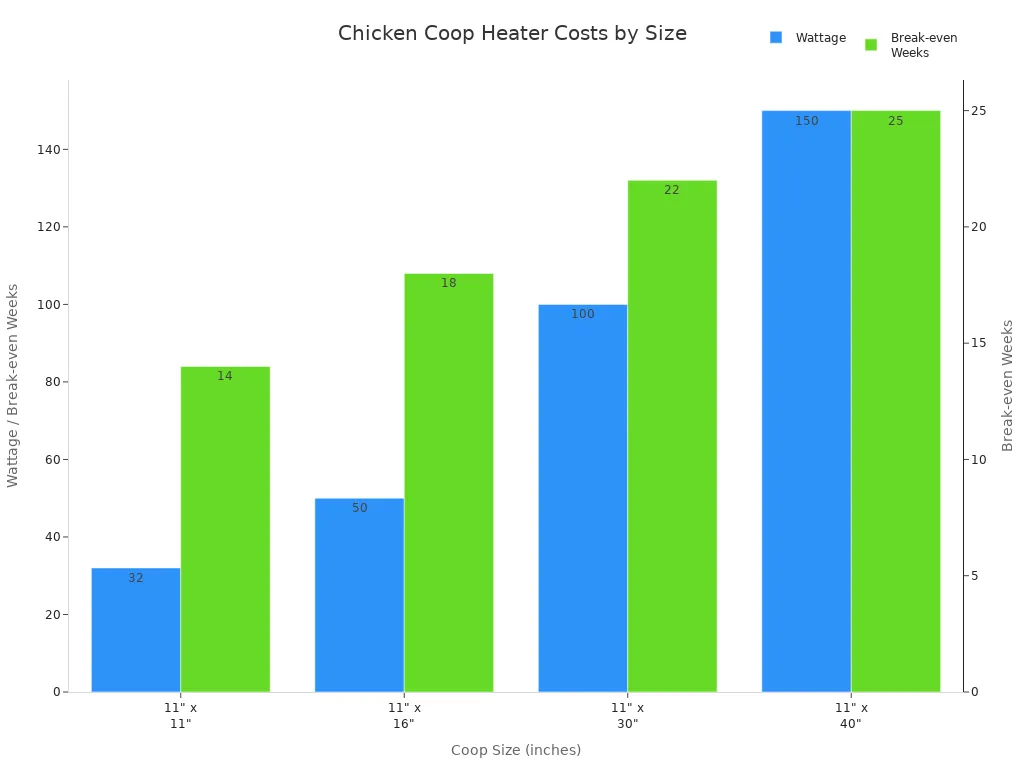
You do not need a huge heater to keep birds safe. In many coops, low-watt spot heat is enough. It helps birds warm up when they choose to, and it helps you avoid overheating the whole space.
Here is a simple way to think about power. Use it as a starting point, and then decide based on your coop, your winter, and your setup:
|
Coop Size (inches) |
Wattage |
Break-even Weeks |
|---|---|---|
|
11" x 11" |
Varies |
Varies |
|
11" x 16" |
Varies |
Varies |
|
11" x 30" |
Varies |
Varies |
|
11" x 40" |
Varies |
Varies |
-
Running cost depends on your local power rate and how many hours you run the heater.
-
Use the cost formula later in this article to check your own numbers.
-
If you add a thermostat, you often run the heater less because it only turns on when it needs to.
Pick the best chicken coop heater that fits the job. Start small and stay safe. If you do not know, do not guess. Read the manual and test it before the coldest week hits.
Heaters for Different Coop Sizes
You need a heater that matches your coop and your winter. Too much heat can raise moisture, and moisture makes frostbite more likely. Too little heat will not help when a cold snap hits. Use this table as a simple guide, then adjust based on your coop setup and the heater type.
|
Coop Size |
Recommended Wattage Range |
Best Heater Types |
|---|---|---|
|
Small (up to 50 sq ft) |
Start low and adjust |
Flat panel, heated pad |
|
Medium (50-100 sq ft) |
Start low and adjust |
Radiant panel, flat panel |
|
Large (over 100 sq ft) |
Use more than one low-watt heater |
Multiple panels, radiant |
-
In a small coop, a mounted panel can give a safe warm-up spot without heating the whole coop.
-
In a medium coop, you may need a better placement plan so birds can choose the warm zone.
-
In a large coop, one big heater is not always the answer. More than one low-watt panel is often safer.
Note: Do not pick a heater just because it has big numbers. In a coop, “stronger” can also mean “riskier.”
The best chicken coop heaters for winter are low-watt, mounted well, and used with common sense. You keep your flock safest when you control heat, not when you chase it.
When to Use a Chicken Coop Heater
You want to keep your flock safe during winter. So you need to know when to add heat and when to leave well enough alone. Use this checklist to guide your decision. Start with what happens inside the coop, not what your weather app says.
Trigger Conditions for Heating
Ask yourself these questions:
-
Does the temperature inside your coop drop to the mid 30s or lower at night for long stretches?
-
Do you see water freezing inside the coop area?
-
Are you getting a short, sharp cold snap that is far colder than your usual winter?
-
Do you have young birds, older birds, or breeds that struggle in cold and wet weather?
If you answer yes to any of these, it may be time to add a safe heat source. Do it early. Do not wait until you see frostbite. Start small, watch the coop, and keep the air dry.
Tip: Check a thermometer inside the coop. Outdoor temps do not tell the full story.
Breed and Coop Risk Factors
Some birds handle winter better than others. You should know who needs extra help:
-
Bantams and smaller birds can lose heat faster.
-
Birds with big combs and wattles can get frostbite sooner.
-
Cold-hardy breeds often do fine if the coop is dry and draft-free.
-
A damp coop raises risk even when the temperature is not extreme.
A small coop can hold heat better, but it can also trap moisture if airflow is poor. A large coop can stay drier, but heat can spread out too much. You get the best results when you keep good airflow and give birds a safe warm-up spot.
Signs Your Flock Needs Extra Warmth
Watch your chickens for these signs that something is off:
-
Shivering or trembling
-
Staying puffed up for long periods
-
Moving less than normal
-
Not coming off the roost to eat or drink
-
Pale, gray, or dark tips on combs and wattles
If you see these signs, do not panic. Check the coop for drafts and wet bedding first. Then add safe, gentle heat if you need it. Your goal is simple. Keep birds safe and keep the coop dry.
Chicken Coop Heater Safety Checklist
A safe chicken coop heater protects birds from cold without creating a new danger. Coops are full of bedding, dust, and curious beaks. That is why you have to set things up like you expect trouble, even when you hope for the best.
Fire Prevention and Certifications
Pick a heater with a trusted safety mark. Look for labels like UL, ETL, CSA, or other recognized testing labs. These marks mean the heater went through basic safety testing. You should still use it the right way. Some heaters also have built-in shutoff features if they overheat. That helps, but it does not replace good placement and good habits. If you cannot find a safety mark on the unit you have in hand, do not use it.
Tip: Skip heat lamps and high-watt space heaters. In a dusty coop, an open hot surface is asking for trouble.
Installation and Electrical Safety
Follow these steps to set up your heater safely:
-
Fix drafts and leaks first. Do not use a heater to “cover up” a bad coop.
-
Mount the heater so it cannot fall or touch bedding.
-
Keep cords out of reach. Chickens peck at anything that looks interesting.
-
Use a GFCI outlet if you can. Coops get damp, even when you try hard.
-
Add temperature control. This is where a thermostat-controlled coop heater can make life easier because it helps prevent overheating.
-
Test the heater before the first hard freeze.
-
Have a plan for outages. If your power drops, your setup changes fast.
Keep wires away from anything that can burn. Avoid long-term extension cord use. Follow the heater’s manual for clearance, mounting, and cord routing.
Placement and Maintenance Tips
Follow the clearance in the heater manual. Do not let the heater touch bedding, walls, or plastic parts. Check the cord and plug often for wear. Wipe dust off the heater surface so it can run as designed. If something looks damaged, stop using it. A small problem can turn into a big one in the middle of a cold night.
Types of Chicken Coop Heaters
Each heater type behaves differently in a coop. Some types are easier to use safely. Some types demand perfect setup, and most coops are not perfect. If you want a deeper breakdown of what tends to be safest, read our guide on chicken coop heater types and the safest option.
Flat Panel Heaters
Flat panel heaters use low wattage to give steady spot warmth. You mount them on a wall or hang them safely. Many panels stay cooler than old-style heat lamps, so they lower fire risk. They work well for overnight use because birds can warm up without the whole coop getting hot.
Note: A mounted panel is often the safest place to start for a backyard coop.
Radiant and Carbon Fiber Heaters
Radiant heaters warm birds and nearby surfaces more than they warm the air. That can be helpful in a drafty space. You still need safe mounting and safe cord routing. Place them so birds can choose the warm zone, and so bedding stays well away from the heater.
Ceramic and Oil-Filled Heaters
Ceramic heaters can give steady heat, but you have to treat them with caution in a coop. They can get hot, and hot things and bedding do not mix. Oil-filled heaters hold heat for a long time, but they are heavy and they are not built for messy, dusty animal spaces. Many keepers skip them for coops.
-
Ceramic can work, but only with careful placement and the right model.
-
Oil-filled heaters are usually not the best fit for a coop.
Heated Pads and Mats
Heated pads and mats give warmth in a small area. They do not heat the whole coop, and that is often a good thing. They can help with small jobs, like keeping a spot warm or helping prevent ice in a small area. Use only pads made for animal use, and mount them the way the maker says.
-
Heated pads use low power and can be a good “spot heat” tool.
-
They help you avoid overheating the entire coop.
Match the heater type to your coop and your birds. Keep it simple. Keep it safe. If you are not sure, stick with mounted, low-watt options.
Cost and Energy Efficiency of Chicken Coop Heaters
Calculating Running Costs
You want to know what a heater will cost to run. You can estimate it with a simple formula:
Running Cost = (Heater Wattage ÷ 1000) × Hours Used × Local Electricity Rate
For example, if you use a 200-watt heater for 10 hours each night and your electricity rate is $0.15 per kWh:
-
(200 ÷ 1000) × 10 × $0.15 = $0.30 per night
Swap in your own wattage, your own hours, and your own local rate. That will give you a number you can trust.
Energy-Saving Tips
You can lower costs and reduce risk with a few simple habits:
-
Keep the coop dry so birds hold warmth better.
-
Use a thermostat or timer so the heater does not run nonstop.
-
Seal gaps that blow air onto roosts.
-
Try the deep litter method if it works for your management style.
-
Put heat where birds rest, not in an empty corner.
-
Focus on insulation and airflow before you add more watts.
Tip: The safest savings usually come from better coop setup, not from a bigger heater.
Maintenance and Longevity
Check your heater often. Dust builds up in coops, and dust loves warm surfaces. Wipe it down as the manual allows. Look at the cord and plug. If you see cracking, chewing, or heat damage, stop using it. A clean, well-mounted heater is easier to trust when the weather turns rough.
-
Look for loose mounts and worn cords.
-
Test the heater before cold weather starts.
-
Replace damaged parts right away.
A heater is not something you “set and forget.” You protect your flock by checking your setup the way you would check a fence line.
Keeping Your Flock Warm in Winter
A heater can help, but it is not the whole plan. Winter safety comes from a dry coop, steady airflow, good bedding, and reliable water. Heat is just one tool in the box.
Insulation and Draft Control
Insulation helps hold heat, and draft control keeps cold air off the birds. You can use materials like:
-
Deep litter method with pine shavings or straw
-
Poly-Iso foam boards cut to fit walls
-
Fiberglass or recycled denim insulation
-
Straw as extra insulation in corners
Check for gaps and cracks. Seal them so wind does not blow across the roost. Just do not block your vents. A sealed-up coop can get wet inside, and wet air is what makes frostbite worse.
Ventilation and Moisture Management
You still need fresh air in winter. Moisture is the quiet enemy. It builds up from breath and droppings. Then it turns cold and damp, and combs can freeze faster. Try these steps:
-
Use vents up high so moist air can leave
-
Keep vents clear of insulation and dust
-
Air the coop out on mild days
-
Fix leaks fast and keep bedding dry
Good airflow should not blast birds on the roost. It should move air above them and carry moisture out.
Preventing Water Freezing
Chickens need water that does not turn to ice. Use a method that fits your setup and your power situation:
|
Method |
Description |
|---|---|
|
Heated water base |
Keeps water founts from freezing |
|
Heated pet dishes |
Provides unfrozen water easily |
|
Insulated containers |
Slows heat loss with foam or jackets |
|
Water movement system |
Uses a floating object to prevent ice |
|
Solar cover or greenhouse |
Traps warmth around water containers |
Check water every day. In cold snaps, check it twice. Water is often the first reason people add heat, and it is a good reason when you do it safely.
Diet Adjustments for Cold Weather
Birds burn more fuel in winter. You can help them keep weight and stay steady by:
-
Feeding a complete ration as the base
-
Offering scratch grains late in the day in small amounts
-
Making sure clean water is always available
-
Keeping feed dry so it does not spoil
Food does not replace a safe coop, but it helps birds do what they are built to do.
Remember: Heat is only one tool. Dry bedding, good airflow, and reliable water matter just as much.
You help your chickens most by keeping the plan simple. Pick a safe heater. Mount it well. Keep it away from bedding. Then keep the coop dry and ventilated. If you want the full step-by-step picture from start to finish, read our chicken coop heater ultimate guide.
|
Evidence Type |
Description |
|---|---|
|
Insulation |
Helps hold warmth and reduce drafts. Keep vents open. |
|
Ventilation |
Moves moist air out so the coop stays dry. |
|
Heating |
Adds a safe warm-up spot when conditions call for it. |
Do these things before the worst weather hits:
-
Store extra feed and bedding so you do not run short.
-
Keep a backup plan for water if power goes out.
-
Learn the early signs of frostbite so you can act fast.
-
Check your setup before bedtime when a cold snap is coming.
Do not use open heat sources in a coop. You keep chickens safest when you choose low-risk tools and you stay alert.
FAQ
How do you know if your chickens need a heater?
You should check the temperature inside your coop and watch the birds. If water freezes inside, or you see early frostbite signs on combs and wattles, it may be time for safe spot heat. Fix drafts and wet bedding first.
Can you use a regular space heater in a chicken coop?
You should not use a regular space heater in most coops. Many are made for clean indoor rooms, not dusty animal spaces. If you use heat, choose a heater designed for safe mounting and use one with a recognized safety mark.
What is the safest way to install a chicken coop heater?
You should mount it securely and keep it away from bedding and walls. Keep cords out of reach. Use a GFCI outlet if possible. Then follow the manufacturer’s instructions for clearance and placement.
How much heat do chickens need in winter?
You usually only need enough heat to prevent frostbite risk and keep water from freezing. Do not try to make the coop warm like a house. Too much heat can raise moisture and create new problems.
Should you leave a chicken coop heater on all night?
You can leave a low-watt, mounted heater on overnight when conditions call for it. Use temperature control when you can. Then check your setup often, especially during the coldest week.


0 Comments