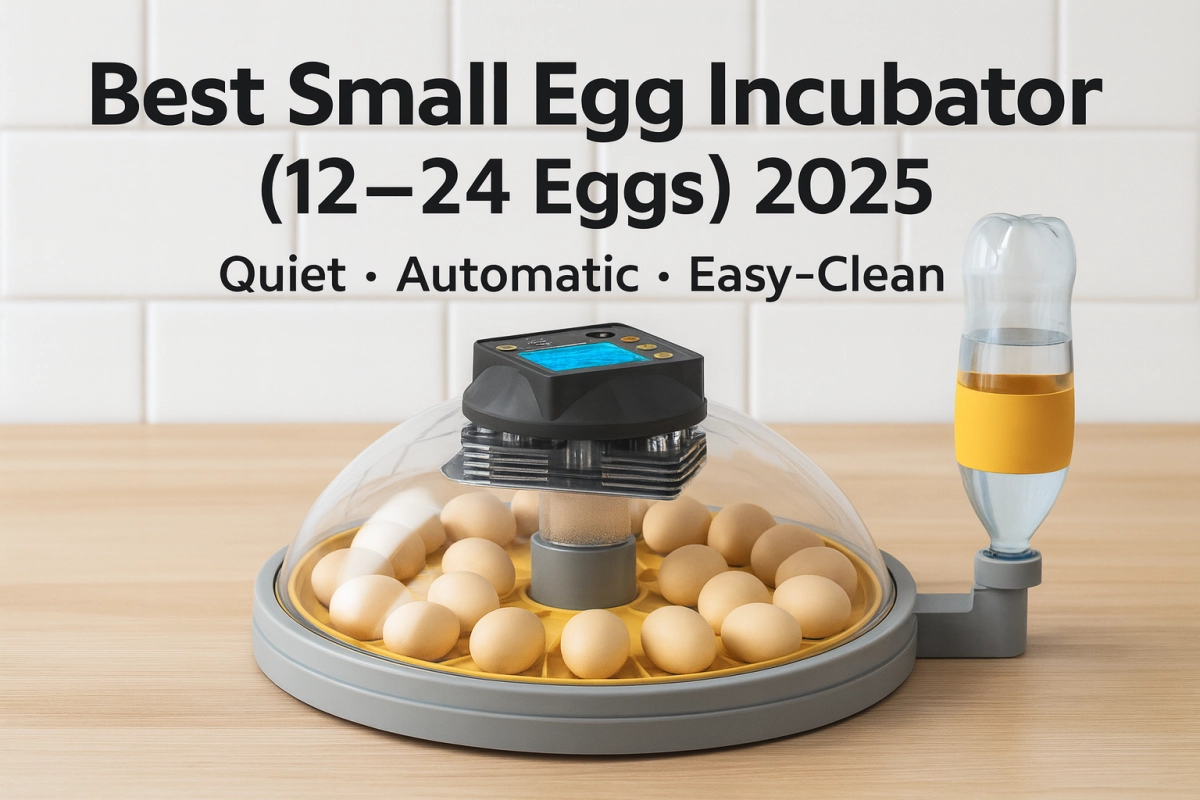
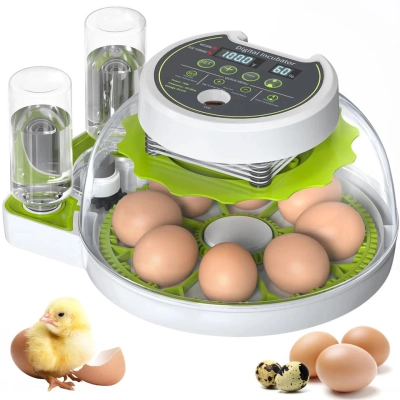
Looking for the best small incubator that stays quiet and runs on autopilot? If you want a reliable 12 egg incubator or a compact 12–24 egg range, focus on four things that actually protect hatch results: stable heat, a predictable humidity path, gentle airflow, and an easy-clean shell. A good mini egg incubator should feel boring in the best way. The fan stays steady. The display stays calm. Your routine stays consistent.
Many beginner hatches fail for repeatable reasons. Still-air units can form hot and cold layers. Humidity can crash when someone opens the lid during lockdown. Turning can be too infrequent. Late-stage airflow can be too weak. Power standards can also mismatch for US or EU buyers.
This guide keeps things brand-neutral. You will learn what to look for, how to set a small incubator once, and what to write down so each batch improves.
Who this guide is for
Home / backyard beginners
-
Want compact, automatic, low-noise gear that does not require constant checking.
-
Care about steady temperature, stable humidity, external water top-up, and easy cleaning.
K–12 classrooms
-
Need quiet operation and 360° visibility so students can observe without lid opening.
-
Care about no-lid-opening lockdown, simple steps, and thoughtful animal care after the project.
Small homesteads
-
Want repeatable hatch rates across seasons.
-
Care about durability, adjustable venting, and fast turn-around cleaning between batches.
Kids & Family Corner: A quick safety note before you hatch or handle eggs
A small incubator is a family project, so keep two rules simple. Hatch only fertile hatching eggs from a trusted source. Handle all eggs with clean hands and a clean surface. This keeps the project safer and reduces contamination risk in the incubator and in your kitchen.
Quick family-safe routine
You should wash hands before and after touching eggs or the incubator.
You should keep the incubator area clean and keep food prep separate from hatch equipment.
You should cook eggs fully for the safest choice for kids.
What makes the best small egg incubator (the criteria that actually move hatch rates)
Temperature stability: forced-air vs still-air
-
Forced-air models level chamber temperature so eggs experience fewer hot or cool pockets. Target: ~99–99.5 °F.
-
Still-air models can stratify heat. Measure at egg-top height so your reading matches what embryos feel.
Humidity path: incubation → lockdown
-
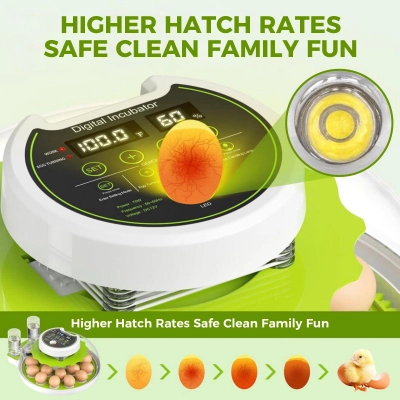
Run ~45–55% RH through incubation, then raise to ≥60–65% RH for the last 48–72 hours (lockdown).
-
Don’t open the lid in lockdown. Lid opening dumps humidity and can dry membranes.
- Optional deep dive: How to keep humidity stable during hatch
Phase Days Target RH Notes Incubation 1–18 45–55% Check trend weekly Lockdown 19–21 ≥60–65% No lid opening
Automatic turning (frequency matters)
-
Turning matters because long “no-move” periods raise the risk of sticking and uneven development.
-
Hourly auto-turn (~24×/day) helps keep development more even than low-frequency schedules.
-
Optional deep dive: Turner angle, frequency, calibration, and when to stop
Ventilation and airflow
-
Airflow matters because embryos need fresh oxygen and the incubator must shed heat and excess moisture, especially late in the cycle.
-
Don’t seal vents to chase temperature. Adjust vents and the room instead so heat stays stable without trapping stale air.
Hygiene and easy cleaning
-
Clean ASAP after each hatch:
-
Remove shells, down, and debris
-
Wash & scrub seams and corners
-
Rinse → disinfect → air-dry fully
-
-
Design details that help: rounded corners, smooth trays, quick disassembly.
Power & compliance (US/EU buyers)
-
US/CA: ~120 V / 60 Hz (Type A/B). EU/UK: ~230–240 V / 50 Hz (Type C/E/F/G).
-
Confirm voltage and plug before purchase and use compliant adapters or transformers where needed.
Capacity basics: how to read “12–24 eggs”
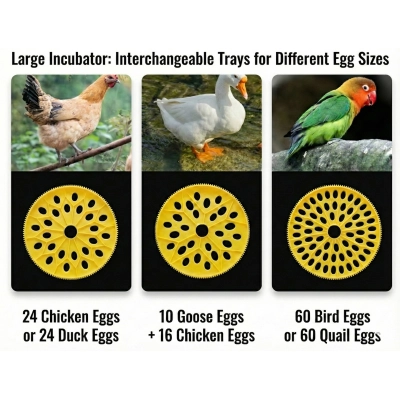
“12–24” assumes chicken eggs
Most consumer labels reference chicken eggs (US “Large” ~56.8 g). Change species and your real capacity changes.
Quail vs duck in the same chamber
-
Coturnix quail (~9–12 g): you’ll fit more.
-
Duck (larger, ~28 days): you’ll fit fewer per batch.
Incubation periods by species (plan your calendar)
-
Chicken ~21 d, ducks ~28 d, Coturnix quail ~17 d, geese ~33 d.
-
Tune late-stage humidity and airflow by species so hatch day stays smooth.
Use-case picks (brand-neutral)
“Beginner-proof” for home/backyard
-
Forced-air + hourly auto-turn + external water top-up + big viewing lid.
-
This combination reduces hot and cold spots and protects lockdown humidity because you can top up without opening.
“Classroom-friendly”
-
Low noise + 360° visibility + external top-up so students can observe without lid opening; plan post-project animal care.
“Small-homestead workhorse”
-
Adjustable venting + easy-disassemble parts for fast cleaning; support the unit with room humidity and temperature control for seasonal stability.
Setup fundamentals (one-and-done settings for small incubators)
Environment & pre-heat
-
Level surface, draft-free room ~70–80 °F so the incubator does not chase swings.
-
Pre-heat to setpoint before loading eggs so the first hours stay stable.
Temperature targets
-
Forced-air: ~99–99.5 °F. Aim for steadiness more than constant micro-adjusting.
-
Still-air: read at egg-top height and run warmer than forced-air to offset stratification.
Humidity path
-
45–55% RH for days 1–18 (chicken), then ≥60–65% RH for lockdown.
-
Use external top-ups so you do not dump humidity by opening the lid.
Turning cadence
-
Manual: ≥3–5×/day minimum.
-
Automatic: ~hourly is ideal; stop turning at lockdown.
-
Optional checklist: Printable 21-day timeline and checklist
Vent settings
-
Increase fresh-air throughput late in incubation. Never block vents entirely.
-
Aim for air exchange and humidity together so you do not trade oxygen for moisture.
Between-batch cleaning (5-step SOP)
-
Unplug and cool
-
Dry clean shells, down, debris
-
Wash & scrub corners and seams
-
Rinse, then disinfect per label
-
Air-dry fully before storage
Risk & troubleshooting
Power outage
-
Near hatch, embryos tolerate brief cooling better than earlier stages, but severe chilling kills.
-
Keep the incubator closed to limit heat loss; raise room temperature if possible; restore stable settings ASAP.
Seasonal swings
-
Winter: add room humidity; increase water surface area.
-
Summer: improve room ventilation; avoid direct sun.
-
Always steer back to the 45–55% → 60–65% RH path.
Lockdown lid-opening (don’t)
-
Opening the lid vents humidity and raises shrink-wrap risk. Plan no-lid top-ups for the final 48–72 hours.
FAQ
Can supermarket eggs hatch if incubated?
Most supermarket eggs will not hatch. A chick needs a fertilized egg, and most grocery eggs are not fertilized because roosters are not present in typical table-egg production. Refrigeration and food handling also reduce hatch chances.
Can you put eggs straight into an incubator?
Load eggs after the incubator is stable at the set temperature. Avoid placing very cold eggs straight into warm, humid air. Let eggs warm toward room temperature to reduce shell condensation.
Can I eat the first egg a chicken lays? Can you eat eggs right after they are laid?
Yes if shells are clean and uncracked. Handle eggs safely and cook them fully for the safest choice, especially for kids.
What temperature should I run a small (12–24) incubator?
-
Forced-air: ~99–99.5 °F
-
Still-air: read at egg-top and run warmer to offset stratification
What is the best humidity?
-
~45–55% RH until lockdown, then ≥60–65% RH for the last 2–3 days. Minimize lid openings.
How often should eggs be turned?
-
Manual: ≥3–5×/day
-
Automatic: ~hourly (24×/day) typically outperforms lower frequencies
Can I open the incubator during lockdown?
-
Avoid it. Opening dumps humidity and raises shrink-wrap risk. Plan external top-ups.
Can a US unit be used in the EU/UK?
-
Check voltage and frequency and plug type. Use compliant adapters or transformers if needed.
Conclusion
If you want reliable first-time results, the best small egg incubator is not about hype. It is the one that keeps temperature steady, follows a clear humidity path (45–55% → 60–65%), turns eggs automatically and often, moves air properly, and cleans up fast. The 12–24 egg range is a sweet spot for home, classroom, and small-homestead use because it is compact and manageable while still giving you a meaningful hatch. To improve batch to batch, write down your daily low and high temperature, daily low and high humidity, lid openings during lockdown, and any missed turns. Those four notes explain most hatch outcomes.
Take the next step (CTA)
-
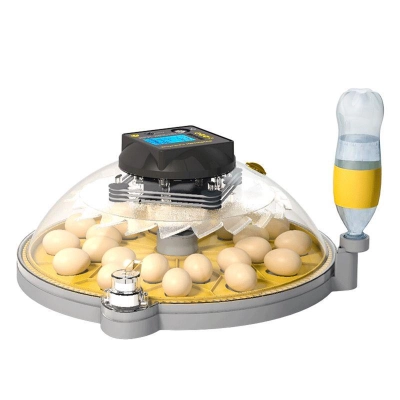
Shop now: Auto-turn dual-motor egg incubator for a quiet 12–24 egg setup — a simple starting point when you want steady turning, stable routines, and less lid opening.
-
Browse all: Egg Incubator — filter by capacity and features to match your space, power standard, and noise tolerance.
Data authenticity note: Temperature, humidity ranges, and process guidance reflect common small-flock incubator practice. Results vary by incubator model, room stability, egg handling, and flock health. Keep a simple hatch log of daily low and high readings, water top-ups, lockdown timing, turning reliability, and hatch outcomes to see what improves your results.

0 Comments