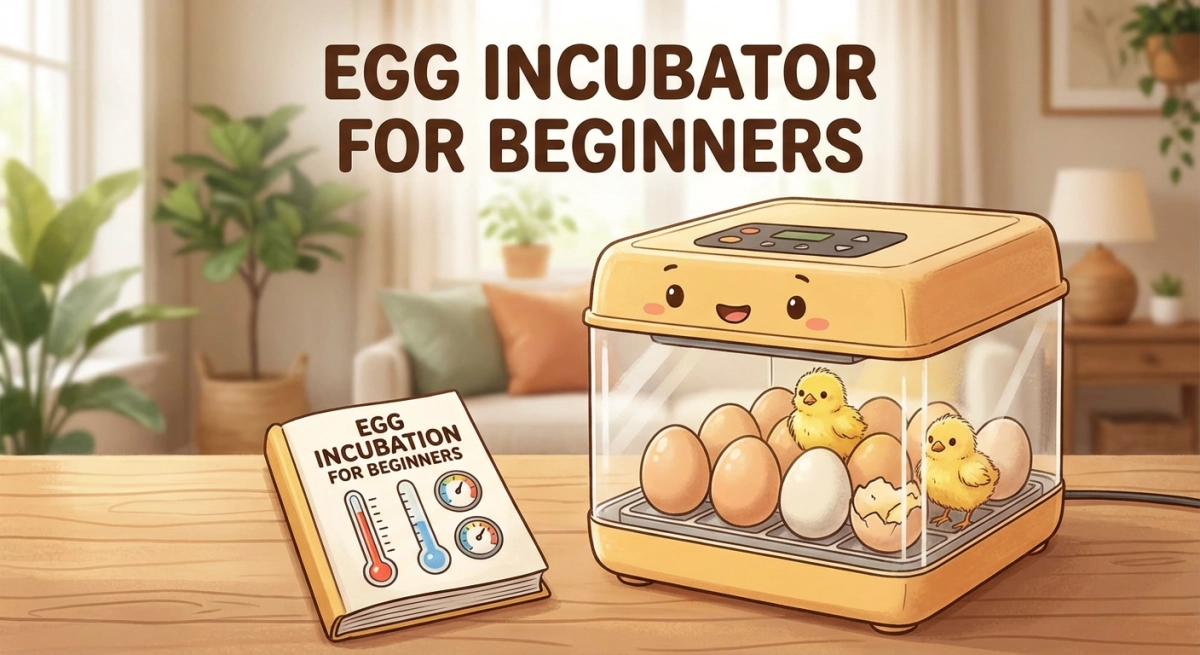
If you are thinking about hatching your first batch of chicks at home, you are not alone. Many backyard chicken owners reach a point where they want to see that tiny beak crack through the shell for the very first time. An egg incubator can help you do that in a safe and repeatable way, even if you do not have a reliable broody hen. This guide will walk beside you like a barnside neighbor. We will keep the science simple, the steps clear, and the expectations honest.
We will look at what an incubator really does, how to set simple and safe beginner settings, what your 21-day hatch will look like, and how to choose a machine that fits your home. If you already feel ready to try a hatch soon, you can also browse our egg incubator collection for beginners and see the types of models that match the ideas in this guide.
Before You Buy: Is an Egg Incubator Right for Your Backyard Flock?
Before you spend money on equipment, it helps to know if this is the right season for your first hatch. An incubator can be a great tool, but it still needs time, space, and steady attention from you.
What an Egg Incubator Really Does for Your Flock
A good incubator tries to copy what a steady mother hen does without failing. The incubator keeps the eggs warm, keeps the air moist enough, lets in fresh air, and turns the eggs on a regular schedule. The machine does not give up halfway through, and it does not leave the nest when a dog barks or a storm rolls in. That steady control is the main reason many backyard owners choose a machine instead of waiting for the “perfect” broody hen.
A mother hen can still be a great choice when she is very committed and when you only want to hatch a small number of eggs. But a hen may decide to stop sitting, or other chickens may bother her, or the nest may not be safe from predators. An incubator gives you more control over these moving parts, especially if children or students are watching and you want to protect the eggs from extra handling.
Incubator vs Broody Hen: Which Fits Your Life Right Now?
You might wonder if you should let a hen do the work or bring home a machine. A broody hen is simple when she is steady. She keeps the eggs warm and turns them by herself. You do not need to plug anything in. But you cannot control the exact temperature, the humidity, or the timing very well, and sometimes the hen quits halfway through or breaks eggs by accident.
An incubator asks more from you in the beginning, but it gives you clear numbers and a repeatable process. You set the temperature and humidity. You know exactly when day 1 and day 21 start. You can candle the eggs without worrying about an angry hen. For a first-time backyard owner who wants to learn the process step by step, an incubator is often the more predictable choice.
Quick Readiness Check for Your First Hatch
Before you buy, you can ask yourself a few simple questions. These questions will not judge you. They only help you see if this is the right time.
- Do you have a quiet spot in your home that feels steady in temperature and away from direct sun and drafts?
- Do you have reliable power, or at least very few outages in your area?
- Can you look at the incubator at least morning and evening for three weeks to check readings and add water?
- Are you ready to accept that even a careful first hatch may only give you about 60–75% chicks from good eggs, not 100%?
- Do you have a plan for the chicks once they hatch, including a brooder and a place in your flock?
If you can say “yes” to most of these points, you are likely ready to try your first hatch with an incubator. If not, it may be better to wait a little while, read more, or practice with fewer eggs first.
How an Egg Incubator Works in Plain Language
An egg incubator looks like a small box or dome, but inside it is doing four simple jobs all at once. When you understand these four jobs, the numbers on the screen and the knobs feel much less scary.
The Four Things Every Incubator Controls
The first job is heat. The incubator keeps the egg at a steady warm temperature that feels like the warmth under a sitting hen. The warmth lets the tiny chick grow at the right speed. If the egg gets too hot for a long time, the chick can grow in the wrong way or stop growing. If the egg stays too cool, the chick can grow too slowly and may hatch late or not at all.
The second job is humidity. Humidity means how much water is in the air. You can think of it like the difference between a dry winter day and a heavy summer day when the air feels thick. The egg loses a little water through the shell every day. That slow loss makes the air cell at the big end of the egg grow to the right size. If the air is too dry, the chick can get “shrink wrapped” inside the egg because the inner membrane dries and tightens. If the air is too wet, the chick may not have enough air in the shell when it is time to hatch.
The third job is air flow. The chick breathes through the shell. The incubator needs small vents or a fan to bring in fresh air and let out used air. You do not need to feel a strong draft. You only need open vents and a fan that runs smoothly and moves air gently around the inside.
The fourth job is turning the eggs. A sitting hen shifts the eggs many times each day with her beak and body. This keeps the growing chick from sticking to one side of the shell. Your incubator can do this with an automatic egg turner, or you can do it by hand if the machine is simple. Turning is important from day 1 through day 17. After that, you stop turning so the chick can position itself for hatch.
Safe Beginner Settings for Chicken Eggs
Most modern chicken egg incubators for home use are forced-air models. That means they have a fan that moves warm air around the chamber. For this type of incubator, a simple and safe target is about 99.5°F, with an acceptable range around 99–100°F. Your goal is not to chase each tiny wiggle. Your goal is to keep the temperature steady in that small window.
Some small, basic machines are still-air incubators. They do not have a fan, and hot air rises inside them. In that case the air near the top of the eggs needs to be warmer. Many extension guides suggest about 101–102°F measured at the top of the eggs in a still-air incubator. If you use this type, you should follow the manual closely and place your thermometer where the maker tells you to put it.
For humidity, beginners do well with a clear and modest plan. During the main growing time from day 1 through day 18, you can aim for about 40–50% relative humidity. During the last three days, often called lockdown, you can raise humidity to around 65–70%. This pattern lets the egg lose enough water early on, then keeps the membrane soft and moist when the chick is pecking out.
Chicken eggs take about 21 days to hatch when conditions are good. This is an average. Some healthy chicks may hatch as early as day 19 or as late as day 23. Slightly warmer temperature can make chicks hatch a bit early. Slightly cooler temperature can make them hatch a bit late.
Where to Put the Incubator in a Normal Home
The place where you set the incubator can help or harm your hatch. You want a spot that feels boring. The air should not swing from hot to cold all day. A low table in a spare room, a shelf in a quiet office, or a corner of a basement are often good places. The spot should be away from direct sun, away from heaters and air vents, and away from outside doors that open all the time.
You should also think about light, noise, and traffic. The fan in the incubator will make a gentle hum. The display may glow in the dark. That soft light and sound can bother some people at night. If you have small children or curious pets, you want the incubator somewhere they cannot bump it or knock it off a surface. Once you choose a spot and level the machine, it is best to leave it there for the whole hatch.
Your First 21-Day Hatch: Simple Timeline for Beginners
Every day inside that shell, something new happens that you cannot see. You do not need to memorize all the details to have a good hatch. It helps more to think in three phases. We will walk through them like a short story, and if you want deep detail later, you can read the complete 21-day chicken egg journey on EggBloom.
Phase 1: Set-Up and the First 24 Hours (Day 0–1)
Before you set any eggs, you should plug in the incubator and let it run empty. You should set the temperature to your target and add water to the correct channels so you can see where the humidity settles. Many people let the machine run for several hours or overnight. This warm-up time lets the plastic, the air, and the sensors reach a steady state.
When you are happy with the readings, you can place the eggs. The wider end of each egg should tilt slightly upward so the air cell sits in the high end. You can lay eggs on their sides in small machines. You can also place them large-end up in a tray if your incubator uses an automatic turner. After you close the lid, the incubator will need a little time to bring the temperature back to target. This short dip is normal if you do not leave the lid open too long.
Phase 2: Quiet Growing Days (Day 2–17)
Most of your hatch happens in this long quiet phase. The incubator keeps doing its four jobs. You will not see big changes from the outside, but inside the chick is forming bones, organs, feathers, and that strong little neck it will use to push on the shell.
Your work is simple but steady. You should check the temperature and humidity at least morning and evening. You can add water to the trays as needed. You can listen for odd noises from the fan or loose parts. If you do not use an automatic turner, you should turn the eggs by hand three to five times a day. Many people mark an “X” on one side and an “O” on the other in pencil so they can see at a glance that they turned every egg.
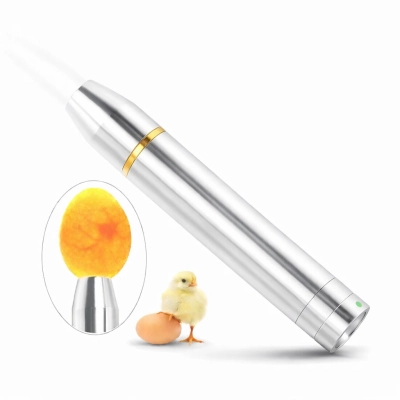
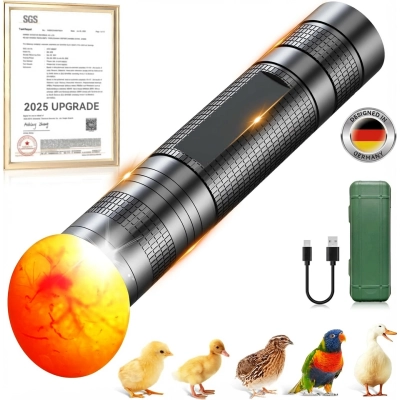
You can also candle the eggs a few times to see what is happening. Around day 7, you will often see a dark spot with thin red lines that look like a tiny spider web. Those lines are healthy blood vessels. Around day 14, the growing chick will fill more of the shell, and the air cell will be larger. You can remove clear eggs that show no growth at these checks. You should not candle every day just for fun. Each time you open the incubator, you let warm moist air escape.
Phase 3: Lockdown and Hatch Days (Day 18–21+)
Day 18 is a big turning point. On this day you stop turning the eggs. If you have an automatic turner, you can switch it off and often remove the tray so the eggs can lie flat. You should raise the humidity to about 65–70% and then close the incubator. This period is called lockdown because you keep the lid closed as much as possible so the air stays warm and moist for the hatch.
Near the end of this phase, the chick will break into the air cell inside the shell. Then it will make a first small hole in the shell. That little hole is called a pip. You may hear faint peeping from inside the egg. The chick will rest, breathe, and slowly chip a line around the shell. This line is called a zip. When the line goes far enough, the chick will push and pop out of the shell.
This whole process can take many hours. It is common for beginners to panic when they see a pip and then nothing seems to happen for a long time. In most cases the chick is fine and is doing slow work inside the shell. You should avoid opening the incubator during this time, because each open door lets the warm moist air drop, and that can dry the membrane around chicks that are trying to zip.
Some healthy chicks hatch on day 19 or 20. Some hatch on day 21. A few stragglers may not hatch until day 22 or 23. If you still see no signs of life by late day 23, you can assume most of the remaining eggs will not hatch. That outcome hurts, but every serious hatcher has seen it. The important thing is to learn from it, not to blame yourself for every egg that did not make it.
Choosing an Egg Incubator for Beginners
Now that you know what an incubator does and what the 21-day path looks like, you can choose a machine with more confidence. The best incubator for beginners is not the one with the most buttons. The best one is the one that keeps things steady and fits the way you live.
Capacity and Egg Turner Choices for First-Time Owners
Capacity is the first choice. Many backyard owners start with a small batch of 6–12 eggs. This size feels fun but not overwhelming. A classroom or a large family may want 12–24 eggs so that most children can see at least one chick hatch. Only people who plan to hatch many batches each year usually need machines that hold dozens of eggs at once.
You should also think about how you will turn the eggs. A hand-turn incubator costs less, but you must remember to turn the eggs several times a day. This routine can be hard if you work long hours away from home. An automatic turner lifts and tilts the eggs for you. Many first-time owners are glad they chose a model with an automatic turner, because it removes one major source of human error.
Simple Feature Checklist for an Egg Incubator for Beginners
You do not need every advanced feature on the market to have a good hatch. You can focus on a short, clear checklist that lines up with what you learned above.
- A clear digital temperature display that you can read at a quick glance.
- Simple buttons or a knob so you can set the target temperature and not bump it by accident.
- A humidity system that is easy to manage, such as marked water channels or an external fill point.
- A viewing window or clear lid so you and your family can watch the eggs without opening the incubator.
- Removable trays and a smooth interior so you can clean and disinfect between hatches.
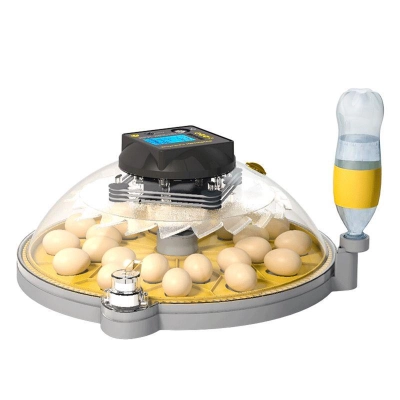
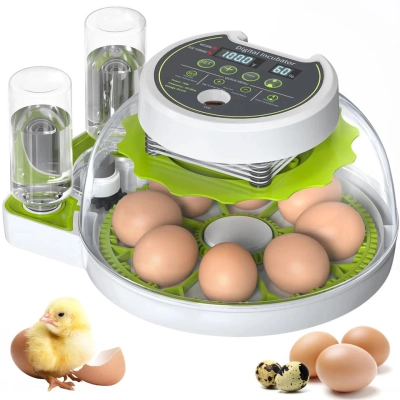
When you look at incubators, you can check how each model supports these points. For example, a simple automatic egg incubator with built-in turning trays can handle the turning for you, hold a small backyard-sized batch, and still give you a clear view through the top. You do not have to buy this exact model, but you can use it as an example of the kind of features that make life easier for a beginner.
Real-Life Examples: Matching Incubators to Different Owners
It may help to picture a few real people. A busy parent who works full time but comes home every evening may choose a small forced-air incubator with an automatic turner and simple digital controls. This parent can check readings in the morning and at night without worrying about mid-day turning.
A homeschooling family with several children may pick a medium-sized incubator with a large clear dome. The children can watch the eggs, write notes, and make drawings without touching the machine. The parents still handle the settings, but the whole family feels part of the project.
A serious hobbyist who plans to breed specific lines may buy a larger unit with more fine control and extra alarms. That type of owner will likely read very deep technical guides. For your first backyard hatch, you do not need that level of gear. A simple, steady incubator that fits your time and your flock is enough.
Daily Life With an Incubator: Noise, Space, and Routine
Many people worry that an incubator will take over the whole house. In real life, a small home incubator blends into your routine more than you might think. It is still a living project though, and it does ask for a little space in both your home and your mind.
What Your Daily and Weekly Routine Will Look Like
On a normal day, you might spend just a few minutes on the incubator. You walk by, you look at the temperature and humidity, you make sure the numbers are in range, and you top off the water if the level is low. If you turn eggs by hand, you take a moment to roll or tilt each egg in a gentle, steady way.
Once or twice a week during the growing phase, you may do a deeper look. You can candle on the key days. You can wipe off dust from vents. At the end of a hatch, after all chicks are out and the machine is cool and empty, you should clean and disinfect the inside. You do not need to deep clean every single week while the hatch is running, but you should clean well between batches so bacteria do not build up.
Noise, Light, and Smell in a Real Home
The sound of an incubator is usually a soft hum from the fan and an occasional click from a relay or small pump. Most people get used to this sound in a day or two. The display or indicator lights may glow at night. If that glow bothers you, you can place the machine in a room where you can close the door while you sleep.
During hatch, you may notice a light warm smell, especially when several chicks are out at once and the machine is still humid inside. This smell is normal in small amounts and will fade once you move the chicks to a brooder and clean the incubator. If you ever smell something very strong or rotten during the grow phase, you should candle and remove any eggs that did not develop and may have spoiled.
Power Outages and Other Scary Moments
Power outages make almost every new hatcher panic. The good news is that many short outages do not ruin a hatch. If the power goes out for less than an hour and the incubator sits in a warm room, the eggs usually cool slowly and can warm up again without harm. You can keep the lid closed to hold the heat in.
If you live in an area with longer outages, you can plan ahead. A small backup power supply or a generator can protect the incubator along with a few other key devices. You should avoid setting the incubator right next to a high heat source like a space heater or a strong heat lamp in an attempt to “save” the eggs. These quick fixes can overheat the eggs on one side and cause more harm than good.
After power comes back, you can check how low the temperature dropped and how long it stayed low. If the drop was gentle and not for very long, you can simply bring the incubator back to target temperature and continue. If the incubator sat cold for many hours, you may still get some chicks, but the overall hatch rate may be lower. That outcome is frustrating, but it is part of real life with hatching.
Common Beginner Mistakes and When to Try Again
No one gets a perfect hatch every time. Even people who hatch for many years see bad batches now and then. As a first-time backyard owner, you can aim for a realistic hatch rate and treat your first round as a long, gentle lesson.
Normal Ups and Downs in a First Hatch
With healthy eggs, a decent incubator, and reasonable care, many beginners see about 60–75% of eggs hatch. People with more experience, very good eggs, and stable conditions may reach 85–95%. Some new hatchers do see only 30–50% on their first try, and that can feel rough, but it does not mean you failed at everything. It means a few small things likely need adjusting.
It is normal to have a few clears that never started, a few early quitters, and a few chicks that pip but do not finish. The goal of this section is not to make you fear every small problem. The goal is to help you see patterns so your next hatch goes better.
Most Common Beginner Mistakes and How to Adjust Next Time
One common mistake is running the temperature too high or too low for the whole hatch. If chicks hatch very early, have many deformities, or die late in the shell, the temperature may have been too high. If chicks hatch very late and seem weak, the temperature may have been a bit low. Next time you can use an extra trusted thermometer to check the incubator’s reading and nudge your setting to match true temperature.
Another common mistake is too much humidity early on. When the air is too wet for all of days 1–18, eggs do not lose enough water. At hatch time you may see large wet chicks that seem “drowned” or you may see a lot of extra fluid in the shell. Next time you can aim closer to the lower side of the 40–50% range for the grow phase and only raise humidity near day 18.
A third mistake is opening the incubator often during lockdown. Each time you lift the lid in those last days, you let out warm moist air. The membrane around chicks that already pipped can dry and turn into stiff wrap. If you need to open the incubator once or twice, you can do it quickly and try to do several tasks at once, such as refilling water channels and checking multiple eggs, then close the lid again.
If you want to go deeper into problem solving, you can read our hatching failures troubleshooting guide. That article goes into more detail about what you may see when you examine unhatched eggs after a hatch and what each pattern can mean.
When to Try Again and What Comes Next
When your first hatch ends, you may feel tired, excited, and a little overwhelmed all at once. You might have a brooder full of noisy, healthy chicks. You might also have some eggs that never hatched. Both outcomes are normal. If you took notes during the hatch, you can write down what went well and what you would change next time.
If you are ready for the next step after hatch, your focus will move from incubator care to chick care. You can set up a warm brooder, show the chicks where to drink, and watch for strong leg and wing movement. Our guide on chick care in the first 24 hours will walk you through those first key hours.
When you feel ready to try another hatch, you can come back to this guide, review your notes, and fine-tune one or two parts of your process. You do not need to change everything at once. Small steady improvements make a big difference over time.
If you would like to see incubators that match the ideas in this article, you can visit our egg incubator collection again and look for models with steady temperature control, easy humidity management, and a clear view for your family. We will be here on the barn side of the fence, cheering you on for your very first backyard hatch.

0 Comments