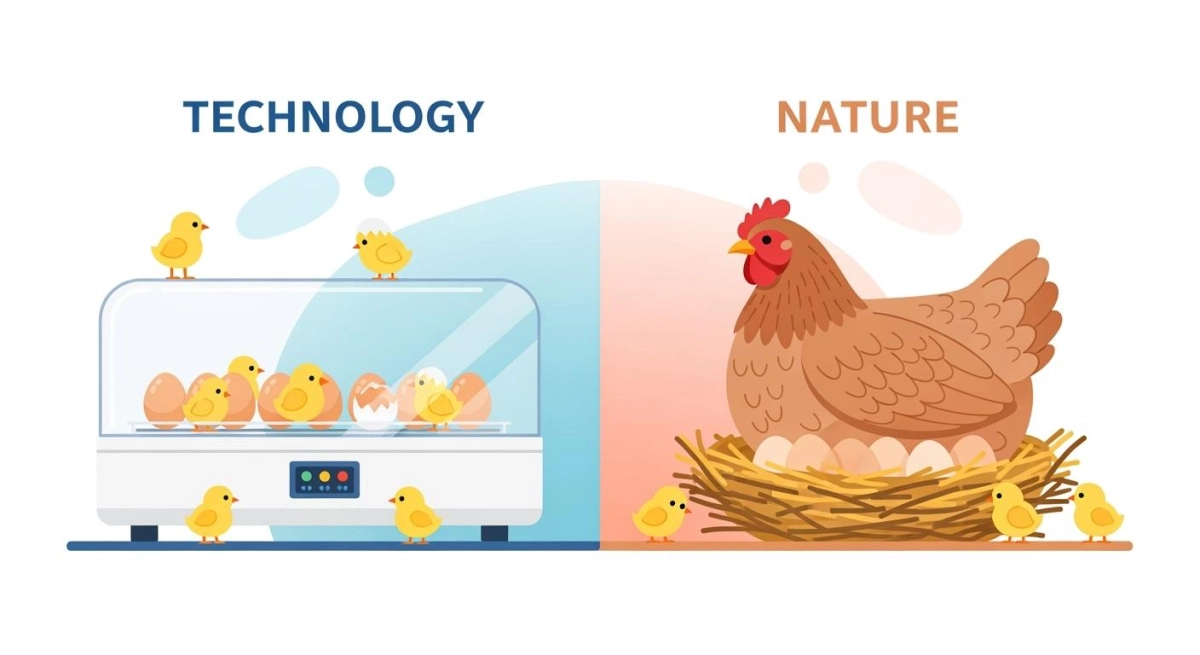
You want more chicks to hatch from your eggs. Recent observations suggest a broody hen often hatches about 75–80% of the eggs she sits on. A egg incubator can reach about 80% or more when managed correctly. Hatchability is the percentage of chicks that hatch from all eggs set. A broody hen relies on natural behavior, so her results change with weather, housing, and health. An incubator lets you manage conditions more closely and can help you raise more chicks consistently.
|
Term |
Definition |
|---|---|
|
Hatchability |
Percentage of chicks hatched from eggs set. |
|
Broody Hen |
Hen that naturally incubates eggs and cares for chicks. |
Key Takeaways
-
Broody hens commonly hatch about 75–80% of their eggs. They provide natural care and teach chicks how to survive in the flock.
-
Egg incubators can hatch 80% or more eggs when you manage them well. You can follow beginner-friendly incubator tips to keep temperature and humidity on target.
-
Pick a broody hen for small, natural hatches. Use an incubator when you want larger batches and more steady chick production.
-
Watch temperature and humidity in incubators closely. Even small changes can affect hatch rates.
-
Record hatch dates and results. Tracking patterns helps you improve your hatch process over time.
Hatch Rate Metrics and Definitions
Understanding hatch rate metrics helps you measure how well your hatching eggs perform. You see two main terms when you read about hatch rates: "Hatchability of Eggs Set" and "Hatch of Fertile (HOF)." Each term uses a different formula. You need to know which one you are using so you can compare results correctly.
Hatchability of Eggs Set
You use "Hatchability of Eggs Set" to find out what percentage of all hatching eggs produce chicks. This metric looks at every egg you set, even if some eggs are not fertile. You calculate it like this:
Hatchability of Eggs Set = (Number of Hatched Chicks ÷ Number of Eggs Set) × 100
For example, if you set 100 hatching eggs and 80 chicks hatch, your hatchability is 80%. Many keepers use this number as the main success rate. When you see "success rate" in this blog, it refers to the hatchability of eggs set.
Hatch of Fertile (HOF)
Sometimes you want to know how many fertile hatching eggs actually hatch. "Hatch of Fertile" only counts eggs that are fertile. You use this formula:
Hatch of Fertile (HOF) = (Number of Hatched Chicks ÷ Number of Fertile Eggs) × 100
If you set 100 hatching eggs but only 90 are fertile, and 81 chicks hatch, your HOF is 90%. This number is always higher than the hatchability of eggs set if some eggs are not fertile.
Here is a table to help you see the difference:
|
Metric |
Formula |
|---|---|
|
Hatchability of Eggs Set |
(Hatched Chicks / Eggs Set) × 100 |
|
Hatch of Fertile |
(Hatched Chicks / Fertile Eggs) × 100 |
|
Embryo Mortality Rate |
((Fertile Eggs - Hatched Chicks) / Fertile Eggs) × 100 |
You should always check which metric you use when you compare hatch rates. This helps you make better choices for your hatching eggs.
Incubator Versus Broody Hen: Hatch Rate Comparison
Broody Hen Hatch Rates
You may wonder how well a broody hen performs when hatching chicks. Many broody hens hatch about 75–80% of the eggs they sit on. Some keepers report even higher rates in ideal conditions, sometimes reaching close to 100%. The table below shows sample hatch rates from different people:
|
User Experience |
Hatch Rate |
|---|---|
|
User 1 |
100% |
|
User 2 |
80–90% |
|
User 3 |
100% |
|
User 4 |
100% (12 of 12) / 58.33% (7 of 12) |
A broody hen usually covers a small batch of eggs, often between 8 and 12. You get natural care for your chicks. The hen keeps the eggs warm and turns them. She teaches the chicks how to find food and water. The chicks learn flock behavior from her, which helps them fit into the group as they grow.
Note: Broody hens can be unpredictable. Their hatch rate depends on their health, the weather, egg quality, and how well you manage their nest.
Egg Incubator Hatch Rates
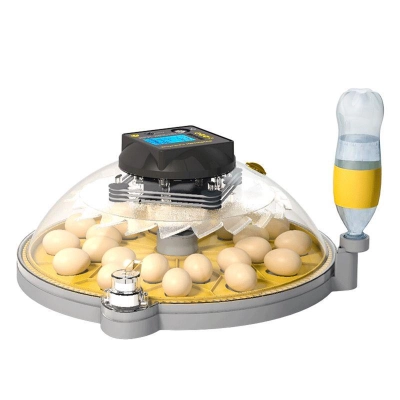
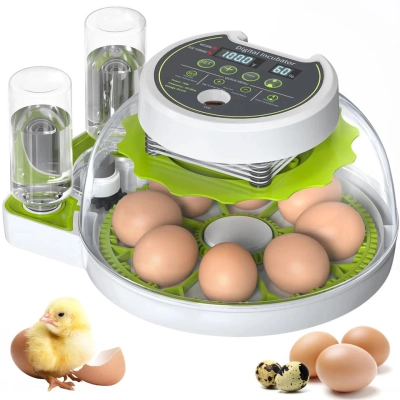
You can use an egg incubator to hatch more eggs at once. Commercial egg incubators often reach hatch rates of about 80%. With careful monitoring, some incubators report results in the high 80s or low 90s. Small-scale incubators may show hatch rates between about 65% and 75% if conditions are not well controlled. The table below compares typical hatch ranges for different egg types:
|
Egg Type |
Hatch Rate (%) |
Notes |
|---|---|---|
|
Chicken |
80–90 |
80% is common; higher rates with careful monitoring |
|
Quail |
85–95 |
High rates with good equipment and egg quality |
|
Duck |
Around 75 |
Representative rate from mixed experiences |
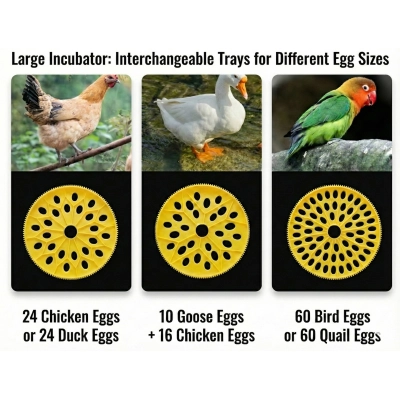
Larger incubators can hatch hundreds of eggs at once. In trials, some cabinet units have reached hatch rates in the mid-to-high 80% range with large batches. Other commercial models show moderate but still useful rates around the 60–70% range for certain egg types.
With an incubator, you control temperature, humidity, and turning. This helps you get repeatable results. You can hatch dozens of chicks at the same time, and careful monitoring gives you the best chance of strong hatch rates.
Batch Size, Reliability, and Chick Health Differences
You should think about batch size when you choose between an incubator and a broody hen. A broody hen manages a small clutch, usually 8–12 eggs. An egg incubator can hatch far more at once, sometimes even hundreds when you move up to larger cabinet incubators. This makes incubators better when you need consistent, larger batches.
Reliability matters too. Some studies show broody hens with hatchability rates around the high 70s to high 80s. Incubators can reach similar or higher ranges if you keep conditions stable and monitor them closely.
Chick health is another key point. Chicks hatched by a broody hen get care right away. The hen teaches them to eat, drink, and stay safe. They learn flock behavior early. Chicks from an egg incubator depend on you. You must keep them warm and feed them correctly. They may bond more with people than with other chickens.
-
Chicks from a broody hen:
-
Get natural guidance from the hen.
-
Learn flock behavior quickly.
-
Join the group more easily.
-
-
Chicks from an egg incubator:
-
Need human care for warmth and food.
-
May bond more with people than with other birds.
-
Require extra attention after hatching.
-
Tip: If you want more chicks and tighter control of conditions, an incubator is often the better fit. If you prefer natural care and small groups, a broody hen may suit you better.
Broody Hen for Hatching Chicks: Pros and Cons
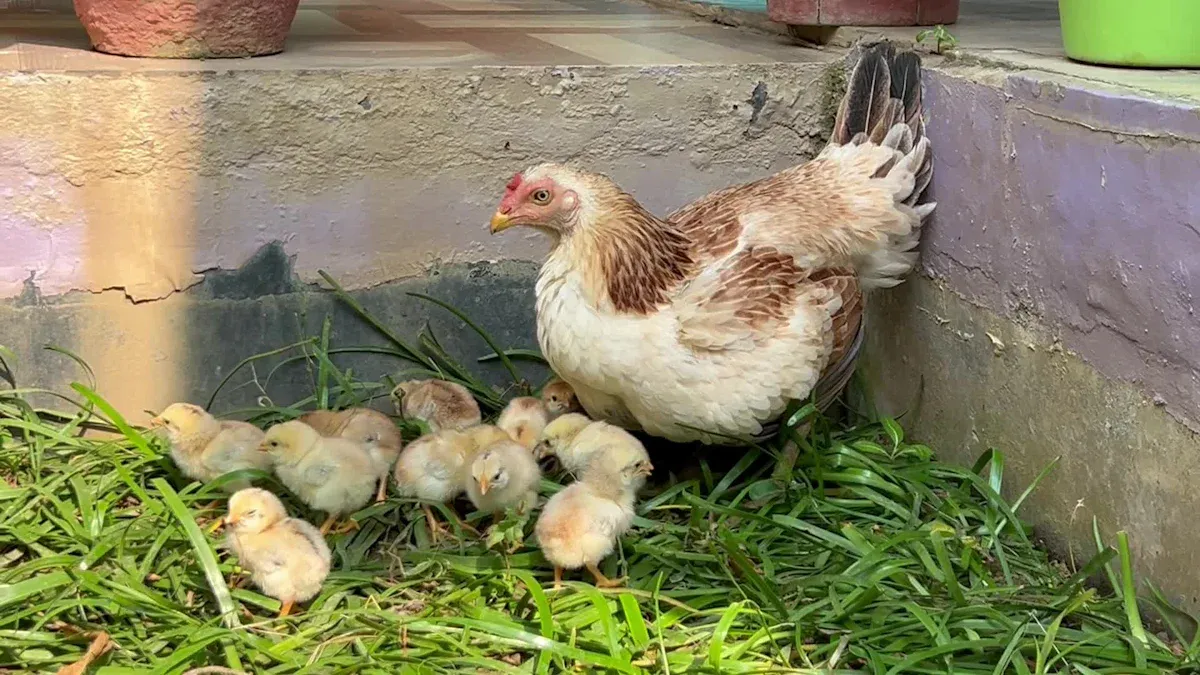
Advantages of Broody Hen
You get many benefits when you choose a broody hen for hatching chicks. The broody hen does most of the work for you. She keeps the eggs warm, turns them, and maintains natural humidity. You do not need a heat lamp at first because the chicks stay cozy under their mother. The broody hen teaches the chicks how to eat, drink, and avoid danger. You see her guide them through their first days, which makes raising chicks easier. Watching a mother hen care for chicks is rewarding, and her instincts help the chicks join the flock smoothly. You also save on equipment since she provides warmth and care herself.
-
The broody hen provides natural heat and humidity.
-
She turns the eggs and cares for the chicks after hatching.
-
Chicks learn survival skills from their mother.
-
You may not need a heat lamp for the first stage.
-
The broody hen protects her chicks and helps them fit into the flock.
Limitations of Broody Hen
You face some limits when you use a broody hen for hatching. She can only hatch a small batch of eggs, usually between eight and twelve. Her capacity is much lower than an incubator. The timing of her broody cycle is unpredictable. Sometimes she abandons her nest or becomes aggressive toward other birds. You cannot fully control when she decides to start or stop sitting. Seasonal changes also affect her willingness to set on eggs. You may need to wait for the right time, which can slow your hatching plans.
-
The broody hen hatches only a few chicks at a time.
-
Her timing is unpredictable and may not match your schedule.
-
She may abandon her nest or show aggression.
-
Seasonal factors can limit her reliability.
Risks with Broody Hen
You should know the risks before you rely on a broody hen for hatching. She may hoard eggs from other hens, which causes confusion in the coop. Aggressive behavior can make it hard for you to manage her or the eggs. The broody hen stops laying eggs while she is hatching, which lowers your overall egg production. Safety is a concern if you do not move her to a secure spot. Predators or other chickens may harm her or the chicks. Parasites can spread more easily in a nest that is not clean. You need to watch for these risks to keep your chicks safe and healthy.
Tip: Give your broody hen a clean, safe place to hatch. Check her nest often to prevent problems with egg hoarding or aggression.
|
Risk |
Description |
|---|---|
|
Egg Hoarding |
Broody hen may collect too many eggs. |
|
Aggression |
She can become hard to handle. |
|
Stop Egg Production |
She stops laying eggs during hatching. |
|
Safety Concerns |
Predators or flockmates may threaten her. |
Egg Incubator: Pros and Cons
Advantages of Egg Incubator
There are many advantages to using an incubator. You can set the temperature and humidity to target ranges and keep them steady. This helps eggs develop more predictably. You do not have to wait for a broody hen to decide when to sit. You can hatch eggs any time of year. You can hatch a lot of eggs at once and keep chick numbers more consistent. Schools use incubators to teach about animal life cycles. Conservation groups use them to help rare species. The table below lists the main benefits:
|
Advantage |
Description |
|---|---|
|
Optimal Conditions for Hatching |
You control temperature and humidity for better results. |
|
Improved Hatch Rates |
Using an incubator can increase your chances of successful hatching. |
|
Year-Round Hatching |
You can hatch eggs in any season. |
|
Educational Use |
Incubators help students learn about animal life cycles. |
|
Conservation and Research |
You support rare species and research by using an incubator. |
Tip: Incubators let you hatch more eggs at once and repeat the same process from batch to batch.
Limitations of Egg Incubator
There are some challenges you need to watch for with incubators. You must have reliable power. You need to check your incubator often. If you do not set the temperature or humidity correctly, eggs may not hatch well. Checking the incubator by hand can take time. Problems can include temperature swings, humidity that is too high or too low, or eggs being handled too much.
-
Temperature swings can lower hatch rates.
-
Incorrect humidity can harm developing embryos.
-
Handling eggs too much can crack shells or disturb development.
Risks with Egg Incubator
There are also risks when you use an incubator. If the water tray runs dry or sensors fail, humidity can drop sharply. If the room gets too hot or cold, incubator temperature can drift. Poor airflow can make it harder for chicks to hatch. You need to watch these issues to keep eggs safe.
-
Humidity problems can dry out embryos or cause sticky chicks.
-
Temperature changes can slow growth or stop embryos from developing.
-
Poor airflow can mean less oxygen for chicks.
-
Unstable conditions reduce hatchability.
Note: Check your incubator often and adjust settings as needed to keep eggs safe.
Key Factors Affecting Hatch Success
Egg Storage and Age
You need to watch how long eggs are stored. Eggs kept more than about 10 days often show lower hatchability and more embryo loss. Fresher eggs usually make stronger chicks. Older eggs can lead to weaker chicks and higher mortality.
|
Storage Duration |
Effect on Egg Quality Traits |
Effect on Mortality |
|---|---|---|
|
Up to 10 days |
Lower yolk index, larger air chamber, higher egg white pH |
More embryo deaths in eggs stored 10 days compared with 3 days |
|
14 days |
Lower Haugh unit |
Higher embryo mortality |
Action Steps:
-
Set eggs within about 7–10 days for best results.
-
Store eggs in a cool, clean place with stable conditions.
Temperature, Humidity, and Ventilation
You must keep temperature and humidity steady. Forced-air incubators work well around 99.5°F (about 37.5°C). Still-air incubators need about 101–102°F measured at the top of the eggs. Broody hen nests rely on her body heat and natural humidity. You can help by keeping her nest dry, clean, and protected from drafts.
|
Method |
Temperature Range |
Humidity Range |
|---|---|---|
|
Forced-air Incubator |
99.5°F (±0.5°F) |
45–55% |
|
Still-air Incubator |
101–102°F (egg top) |
45–55% |
Action Steps:
-
Check incubator temperature and humidity every day.
-
Keep broody hen nests away from damp or drafty spots.
-
Raise humidity to about 65–70% for the last three days before hatching.
Egg Turning and Lockdown
Turning eggs helps embryos grow evenly and keeps the yolk from sticking. Commercial research suggests that more frequent, gentle turning can support better hatchability, but for small setups you mainly need consistency. Aim to turn eggs several times per day or use an automatic turner so eggs are moved little and often. Broody hens turn eggs on their own. Stop turning eggs about three days before chicks hatch. This is called lockdown.
|
Turning Frequency (times/day) |
Hatchability Rate |
Early Mortality Rate |
Late Mortality Rate |
|---|---|---|---|
|
24 |
High |
Low |
Low |
|
12 |
Moderate |
Moderate |
Moderate |
|
6 |
Low |
High |
High |
|
3 |
Very Low |
Very High |
Very High |
Action Steps:
-
Turn eggs regularly until day 18 or use an automatic turning system.
-
Stop turning and raise humidity for lockdown.
Cleanliness and Disinfection
Clean nests and incubators help chicks stay healthy. Cleaning lowers disease risk and improves air quality. Disinfect equipment before you set eggs to protect your flock.
|
Aspect |
Importance |
|---|---|
|
Reducing Contamination |
Cleaning lowers bacteria and boosts hatchability. |
|
Health of Poultry |
Clean areas help chicks grow strong. |
|
Disinfection Protocols |
Multi-step cleaning removes germs and supports better hatch rates. |
|
Biosecurity Measures |
Limiting access and checking health helps stop disease spread. |
|
Equipment Maintenance |
Regular checks keep everything working and clean. |
Action Steps:
-
Select only visibly clean hatching eggs; avoid washing eggs unless you follow a specific breeder-safe protocol.
-
Clean and disinfect incubators and broody hen nests between batches.
Record Keeping and Error Correction
Keep records of hatch dates, egg sources, and results. Tracking helps you spot patterns and correct mistakes. If hatch rates are low, review your notes and adjust your process.
Action Steps:
-
Write down hatch dates, conditions, and results.
-
Look for patterns in failures and adjust your methods.
High Altitude and Extreme Climate Management
Special steps help chicks at high altitudes or in tough climates. In very dry air, higher humidity helps prevent dehydration. Use foggers or extra water surface if needed. Keep brooding temperature near 35°C (about 95°F) for the first week.
|
Strategy |
Description |
|---|---|
|
Humidity Control |
Keep humidity high enough to prevent dehydration, especially in very dry regions. |
|
Fogger System |
Use foggers or extra water surface to reach target humidity in dry areas. |
|
Brooding Temperature |
Hold at about 35°C for the first week to reduce chick losses. |
|
Lighting Programs |
Use gentle lighting programs after 7 days to manage chick growth. |
Action Steps:
-
Watch humidity and temperature closely in extreme climates.
-
Use extra equipment if needed to keep chicks healthy.
Tip: Small changes in storage, humidity, and cleanliness can make a noticeable difference in how many chicks you hatch.
Choosing Between Egg Incubator and Broody Hen
Goals and Batch Size
You should start by thinking about your goals. If you want to hatch a large number of chicks at once, an egg incubator gives you more options. You can set dozens or even hundreds of eggs in one batch. This method works well if you plan to grow your flock quickly or run a small farm. A broody hen can only cover a small batch, usually 8 to 12 eggs. She works best if you want a few chicks and prefer a natural approach.
-
Use an incubator for bigger batches and steady chick production.
-
Choose a broody hen for small, simple hatches and natural chick care.
-
Pick based on your space, time, and how many chicks you want.
Cost and Labor Considerations
You need to look at both cost and the amount of work each method needs. An incubator costs more at first. You may spend between $100 and $300 to buy one, depending on size and features. You also need to check it often and adjust settings. This means more hands-on work. A broody hen does not add equipment cost. She takes care of the eggs and chicks with little help from you. You spend less time watching over the process, but you have less control.
|
Method |
Cost |
Labor Requirements |
|---|---|---|
|
Broody Hen |
No additional equipment cost |
Less hands-on work |
|
Incubator |
$100–$300 (upfront) |
More hands-on management required |
Tip: If you want to save time and equipment costs, a broody hen is a good choice. If you want more control and bigger batches, an incubator may suit you better.
Risk Management Strategies
You can lower your risks by planning ahead. If you rely on only one method, you may lose chicks if something goes wrong. Try using both a broody hen and an incubator over the season. This way, you spread out your risk. You can also stagger your batches. Set eggs in the incubator one week, then let a broody hen start the next week. If one batch fails, you still have another chance.
-
Combine both methods for more resilience.
-
Stagger batches to avoid losing all your eggs at once.
-
Watch your process and adjust as you learn.
Note: Mixing methods and spreading out hatches helps you get more chicks and keeps your flock growing steadily.
Improving Hatch Rates: Practical Tips
Broody Hen Best Practices
You can help your broody hen succeed with a few simple steps. These actions make her more comfortable and improve the chances of hatching.
-
Mark the eggs under your hen. This helps you know which eggs she started with and stops new eggs from being added.
-
Remove any new eggs each day. This keeps the hatching group the same age and avoids confusion.
-
Give your hen a safe and quiet place. She needs to feel secure to stay on her eggs.
-
Keep her away from loud noises and busy areas. A calm spot helps her focus on hatching.
-
Let your hen brood in her chosen spot if possible. She feels less stress and can see her flock.
-
Watch for other hens laying eggs under her. This can cause problems with timing and care.
Tip: A relaxed and safe broody hen will do a better job hatching chicks.
Egg Incubator Best Practices
You can boost your hatching results by following these steps for your incubator:
-
Set up your incubator as the manufacturer suggests. This gives you the best start for hatching.
-
Check both the inside and room temperatures often. Keep them steady for healthy embryos.
-
Watch humidity levels closely. Consistent humidity is key for proper hatching.
-
Turn the eggs on a regular schedule or use an automatic turner. Mark each egg so you know which ones you have turned. Stop turning them two to three days before hatching.
-
Clean your incubator before and after each use. A clean incubator keeps germs down and helps your chicks stay healthy.
Note: Careful setup and daily checks can improve your hatch rates more than any single “quick fix.”
Quick Reference Card
Hatch Rate Ranges and Definitions
You can use hatch rate ranges to measure your success. Hatch rates change because many things affect them. Fertility and how you handle eggs matter most. If you incubate eggs soon after laying, you often see hatch rates around 70–80% under good management. If you use eggs that traveled far or were stored poorly, hatch rates can drop much lower.
-
Hatch rates depend heavily on egg freshness and handling.
-
Broody hens: 75–80% hatch rate is a common range.
-
Incubators: Around 80% is typical with good care; higher ranges are possible when everything is dialed in.
-
Transported eggs: hatch rate may fall sharply if storage and shipping are rough.
Key Terms and Calculations
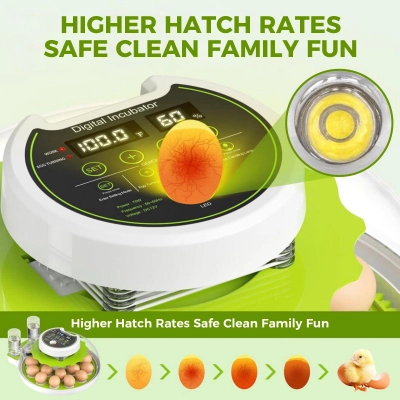
You need to know key terms and how to calculate hatch rates. These help you track your results and improve your process. Use candling to check if eggs are fertile. Break-out tests help you find true fertility.
|
Term |
Definition/Calculation |
|---|---|
|
Hatch of Fertile |
(Saleable chicks / Number of true fertile eggs) × 100 |
|
Hatch of Transfer |
(Saleable chicks / Number of transferred eggs) × 100 |
|
Importance of Candling |
Candling lets you see which eggs are fertile and helps you avoid mistakes. |
|
Egg Break-Out |
Break-out means checking clear eggs to confirm true fertility. |
Tip: Accurate candling and record keeping help you understand what is really happening inside the shell.
Action Checklist
You can follow this checklist to boost your hatch success. Each step helps you avoid common problems and keeps your eggs healthy.
-
Place eggs in clean incubation containers or nests.
-
Set temperature and check it often.
-
Adjust humidity when needed.
-
Turn eggs on schedule or use an automatic turner.
-
Candle eggs to check development.
-
Make sure air flows well in incubators or nest areas.
-
Write down conditions and results.
-
Handle eggs gently and carefully.
-
Do not overhandle eggs during incubation.
-
Watch hatchlings for health and growth.
🐣 Use this card as your guide for every hatch. Small improvements add up over time.
You can pick a broody hen or an egg incubator. Your choice depends on your goals and how much hands-on work you want. Incubators can hatch more chicks at once when you check them often and keep conditions steady. Broody hens also do a good job and are ideal if you enjoy natural hatching and want smaller groups. Use the Quick Reference Card and these tips to help your chicks do well:
-
Choose good eggs from trusted sources.
-
Keep eggs in a cool and dry spot before setting.
-
Clean and prepare your incubator or nest before you use it.
-
Turn the eggs regularly and keep them in the correct position.
-
Make sure the temperature and humidity stay within target ranges while eggs hatch.
FAQ
How many eggs can a broody hen hatch at once?
A broody hen usually covers 8 to 12 eggs. Her size and breed affect the number. If you give her too many eggs, she may not keep them all warm. You get better results with a batch she can cover comfortably.
What is the best temperature for an egg incubator?
You should set a forced-air incubator to about 99–100°F (37.2–37.8°C). This range helps embryos grow well. Check the temperature daily. Small changes can lower your hatch rate.
Can you mix eggs from different days in one batch?
You should not mix eggs from different days in the same batch. Eggs set at the same time hatch together. If you mix ages, chicks hatch at different times. This makes care harder and can lower your success rate.
How do you know if an egg is fertile?
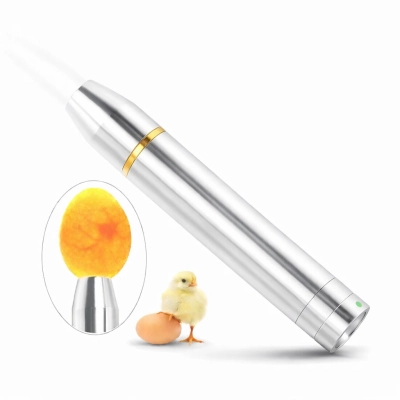
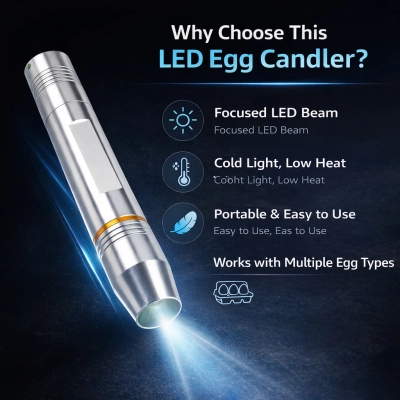
You can candle eggs after about 7 days. Hold a light to the egg in a dark room. If you see veins or a dark spot, the egg is likely fertile. Clear eggs are usually not fertile. Remove them to avoid problems.
What should you do if the power goes out during incubation?
If the power goes out, keep the incubator closed so the eggs stay warm longer. Restore power as soon as you can. If the outage is short, many eggs will still hatch.
Data authenticity note: This article summarizes typical hatch ranges and practices drawn from industry experience, hatchery field logs, equipment manuals, and poultry incubation references. All temperatures, humidity ranges, and hatch percentages are working ranges, not guarantees; adjust settings based on your own equipment, flock, and local conditions.
References :
1. Commercial and backyard hatchery field logs on broody hen and incubator performance.
2. Equipment manuals for forced-air and still-air incubators (various models).
3. Poultry incubation texts and training materials on temperature, humidity, turning, and storage time.
4. Hatchery standard operating procedures (SOPs) for sanitation, egg handling, and hatch rate tracking.
5. Extension and poultry science summaries on brooding behavior, egg storage, and chick brooding conditions.

0 Comments