
Quick answer: Candle chicken eggs on Day 7, Day 14, and a final quick check on Day 18 (before lockdown). You’re looking for veins early, steady growth mid-incubation, and a clear air cell near hatch—while keeping each egg out of the incubator for the shortest time possible.
Fast candling rule: A clean, quick check protects embryos better than a long “perfect look.”
-
Keep it short: candle 1 egg at a time, then return it immediately.
-
Use consistent labels: mark eggs so you can compare the same egg across checkpoints.
-
Act only on clear red flags: odor/leak/crack risk → remove; “unclear” → recheck next checkpoint.
If you’re brand new, start with the basics in Egg Candling at Home: Safely Made Simple for Beginners, then come back here for the stage-by-stage checklist.
Best mindset: candling is a quick health check—not a daily ritual. Your incubator stability matters more than extra peeking.
Key Takeaways
-
Candle on a simple schedule: Day 7 → Day 14 → Day 18 (then leave eggs alone during lockdown unless there’s a contamination concern).
-
Early stage: look for veins and a growing dark area. If you can’t tell, mark and recheck instead of guessing.
-
Mid stage: track the air cell trend to guide humidity adjustments—small changes beat big swings.
-
Always wash hands, keep tools clean, and keep eggs out for the shortest time possible.
-
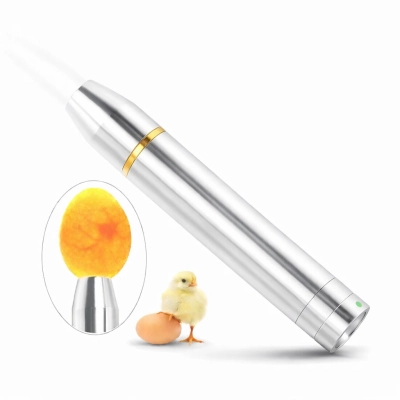
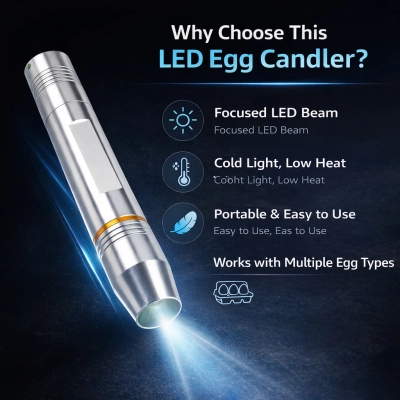
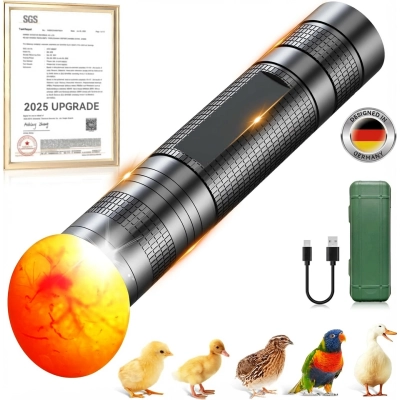
Use a bright, focused light. For reliable visibility on mixed shell colors, a dedicated option like the LED egg candler for hatching eggs makes the biggest difference.
What a chicken egg candler reveals and its limits
Confirming development and spotting problems
When you candle, you’re looking for change over time—not a perfect snapshot. A developing egg usually shows veins early, then a darker growing mass later. A non-developing egg often looks clear and unchanged across checkpoints. A blood ring can be a sign of early loss, and odor/leakage is a contamination risk that should be removed immediately.
What you’ll usually see by stage: the picture gets darker as the chick grows—so focus on veins early, then growth and air cell later.
-
Days 1–7: vein network appears; the air cell is visible at the large end.
-
Days 8–14: interior darkens; veins remain visible; movement may be noticeable.
-
Days 15–21: egg looks mostly dark; air cell becomes the clearest feature; movement can be subtle.
Use consistent outcome terms so you don’t change your decisions from one session to the next:
Outcome terms (keep them simple): consistency prevents “panic removals.”
-
Developing: veins and/or a growing dark mass; changes between checkpoints.
-
Clear egg (recheck): no veins and no change yet; mark and recheck at the next checkpoint.
-
Blood ring: ring-like pattern; typically an early loss → remove and sanitize hands/work area.
-
Questionable: hard to see (dark shell/awkward angle) → mark and compare at the next check.
-
Remove-now: odor, leak, mold, or obvious contamination risk → remove immediately.
Air cell tracking with egg candling
The air cell is your most practical humidity clue. If the air cell trend looks consistently too small or too large across several eggs, it usually means your humidity is running too high or too low. Don’t chase a single egg—look for a batch pattern. If you want a deeper humidity framework, use the “trend over time” approach and keep notes.
Tip: Hold the egg with the large end up, rotate slowly, and focus on the air cell boundary first—then scan for veins or the embryo shadow.
Why one look isn’t enough for dark shells
Darker shells reduce contrast, so it’s easier to misread a developing egg as “clear.” If the shell is dark or heavily speckled, treat your first read as a baseline and compare again at the next checkpoint. Most mistakes happen when people remove eggs too early based on one unclear look.
-
If visibility is poor, improve your seal, change the angle, and keep the room darker.
-
If you’re still unsure, mark “questionable” and recheck at Day 14 rather than guessing.
How to candle eggs: setup and hygiene
Dark room and workspace prep
Pick a dark room, set up your candler, pencil, and log sheet first, and keep food/drinks away from the area. A soft towel on the table gives you a safer surface in case you fumble an egg.
Tip: Set out everything before you open the incubator. The less time eggs sit out, the better.
Handwashing and tool cleaning
Wash your hands with soap and water for at least 20 seconds before and after handling eggs. Wipe down the candler opening and your work surface. Clean habits reduce contamination risk and keep your hatch more predictable.
Labeling eggs and logging results
Label each egg with a pencil (A1, A2, B1…) and record what you see at each checkpoint. Candling becomes far more accurate when you compare the same egg across Day 7 → Day 14 → Day 18.
Mini log template (copy/paste): simple enough that you’ll actually use it.
-
Egg ID: ____
-
Checkpoint (Date + Day): ____
-
Air cell (small/normal/large): ____
-
Veins (none/visible/strong): ____
-
Embryo shadow (none/small/growing): ____
-
Decision (Keep/Recheck/Remove): ____
Quick setup checklist for egg candling
Conclusion: If you can check these 3 boxes, your candling session will be cleaner and faster.
-
Dark room + tools ready: candler, pencil, towel, log sheet within reach.
-
Clean hands + clean surface: 20-second wash; wipe the candler opening.
-
One egg at a time: candle → log → return immediately.
First week (Day 0–7): early egg candling signs

Vein network and “clear egg” clues
Day 7 is your first meaningful checkpoint. A developing egg often shows veins like a spider web and a darker spot where the embryo is growing. If you see a completely clear egg with no veins, don’t toss it immediately—mark it and recheck at Day 14.
Tip: If you can’t decide in 10–15 seconds, label it “recheck” and move on. Long checks are where mistakes happen.
Fertile, infertile, and questionable eggs
Day 7 decision card: when in doubt, compare at Day 14.
-
Developing: veins + a dark spot → keep incubating.
-
Clear (recheck): no veins + no change → mark and recheck at Day 14.
-
Remove-now: blood ring, odor, leak, mold → remove immediately.
Scenario: If several eggs look clear at Day 7, stay calm. Mark them “clear—recheck.” Some eggs show clearer signs later, especially when shells are darker or your light isn’t fully focused.
What to do if results are unclear
-
Don’t discard questionable eggs on the first unclear view.
-
Log the egg ID + the exact reason it was unclear (dark shell, glare, weak seal).
-
Recheck at Day 14 and compare for change.
Second week (Day 8–14): embryo growth and air cell
Interior darkening and air cell changes
By the second week, the egg interior looks noticeably darker and the embryo takes up more space. This is when comparisons help most: you’re checking that the egg looks more developed than Day 7 and that the air cell boundary stays clear.
Tip: Don’t chase exact numbers. Track direction: “air cell slowly growing” and “interior noticeably darker than last check.”
Assessing air cell size and humidity
If the air cell looks consistently too small across many eggs, humidity may be running high. If it looks too large across many eggs, humidity may be low. Make small adjustments and verify with your next checkpoint rather than making big jumps.
Humidity adjustment rule: use trends across multiple eggs, not a single egg.
-
Air cell trending small: consider a small humidity decrease and recheck at the next checkpoint.
-
Air cell trending large: consider a small humidity increase and recheck at the next checkpoint.
-
Mixed readings: keep settings steady and tighten your process (seal/angle/dark room) before changing humidity.
Remove, re-check, or wait
Day 14 decision card: act on clear red flags, recheck unclear eggs, keep developing eggs.
-
Developing: darker mass + growth since Day 7 → keep.
-
Clear/no change: still clear at Day 14 → likely non-developing → remove to reduce risk.
-
Remove-now: odor, leak, mold → remove immediately.
Third week (Day 15–18): pre-lockdown checks
What to look for before lockdown
Right before lockdown, a healthy egg often looks mostly dark, with the air cell as the clearest feature. Your goal is not to “see everything,” but to confirm there are no obvious contamination issues and your air cell is visible.
Pre-lockdown check: confirm air cell + remove only clear contamination risks.
-
Air cell visible: clear pocket at the large end is a good sign.
-
Mostly dark interior: often normal at this stage.
-
Odor/leak/crack risk: remove immediately to protect the batch.
When to stop turning eggs
For chicken eggs, stop turning at Day 18 (lockdown begins). If you use an automatic turner, remove it now so the chicks can settle into hatch position.
Minimal checks for anxious hatchers
If you’re tempted to keep checking, redirect that energy into your log. Stable temperature and humidity are what matter most now.
Lockdown (Day 18–21): candling caution
Should you candle during lockdown?
In most cases, no. Avoid opening the incubator during lockdown. Candle only if you suspect contamination (odor/leak) and need to remove a bad egg to protect the rest.
Risks: humidity, temperature, handling
-
Humidity swings: opening the lid can drop humidity quickly.
-
Temperature drops: even short openings can cool the environment.
-
Handling stress: eggs are positioned for hatch; movement can interfere.
Alternatives to candling at this stage
-
Monitor from outside: listen for peeps, watch for pips/cracks.
-
Watch gauges: keep temperature/humidity steady; add water quickly only if needed.
-
Act on red flags only: odor/leak → remove fast; otherwise keep the lid closed.
Common mistakes, logs, and DIY candlers
Top 8 egg candling mistakes and fixes
Conclusion: Most candling failures come from time, handling, and inconsistency—not from “not seeing enough.”
-
Mistake: candling too long → Fix: set up first and keep checks short.
-
Mistake: skipping labels/logs → Fix: pencil ID + consistent outcome terms.
-
Mistake: weak light on dark shells → Fix: use a focused candler and improve your seal.
Scenario: Mixed shell colors can make your batch look “inconclusive.” If visibility varies, keep the same schedule and compare changes—don’t change your rules egg by egg.
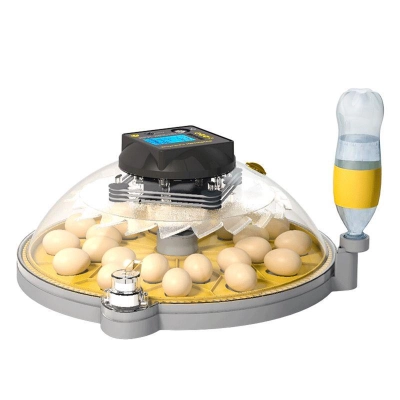
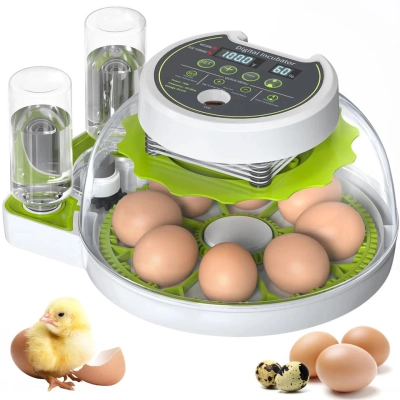
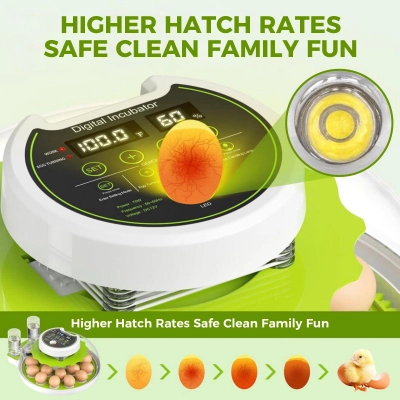
If you want fewer lid openings and more stable conditions overall, a reliable incubator setup helps. For example, an auto-turn incubator with dual motors can reduce handling and keep your process more consistent.
How to build a homemade egg candler (safer approach)
You can make a simple homemade candler, but prioritize safety: heat and exposed wiring are the biggest risks. If you build one, use a cool-running LED light source, keep the opening padded, and never leave it unattended. If your DIY unit gets warm, stop and switch to a safer option.
DIY safety card: if it gets hot, it’s not a good candler.
-
Use cool light: LED is safer than hot bulbs.
-
Pad the opening: prevents cracks and improves the seal.
-
Keep it clean: wipe the opening and wash hands each session.
FAQ
How often should you candle chicken eggs?
Most home hatchers get the best balance with three checks: Day 7, Day 14, and a final quick look at Day 18 before lockdown.
What signs show an egg is developing?
Early: a vein network. Mid: clear growth (darker interior) compared with the last checkpoint. Late: mostly dark with a visible air cell.
What should you do if an egg smells bad?
Remove it immediately. Odor or leakage is a contamination risk that can affect the entire batch.
Is it safe to candle eggs during lockdown?
Usually no. Only candle if you suspect contamination and need to remove a bad egg.
Can you candle eggs with dark shells?
Yes, but it’s harder to see. Use a brighter, focused light, improve your seal, and rely on checkpoint comparisons instead of one “perfect look.”
Data authenticity note: This article is for educational purposes only. Real-world results vary based on incubator calibration, room conditions, egg quality, shell color/thickness, and handling habits. If you encounter high-risk situations (for example, persistent contamination, repeated embryo loss across batches, or concerns about flock health), consider consulting a qualified veterinarian or poultry professional.

0 Comments