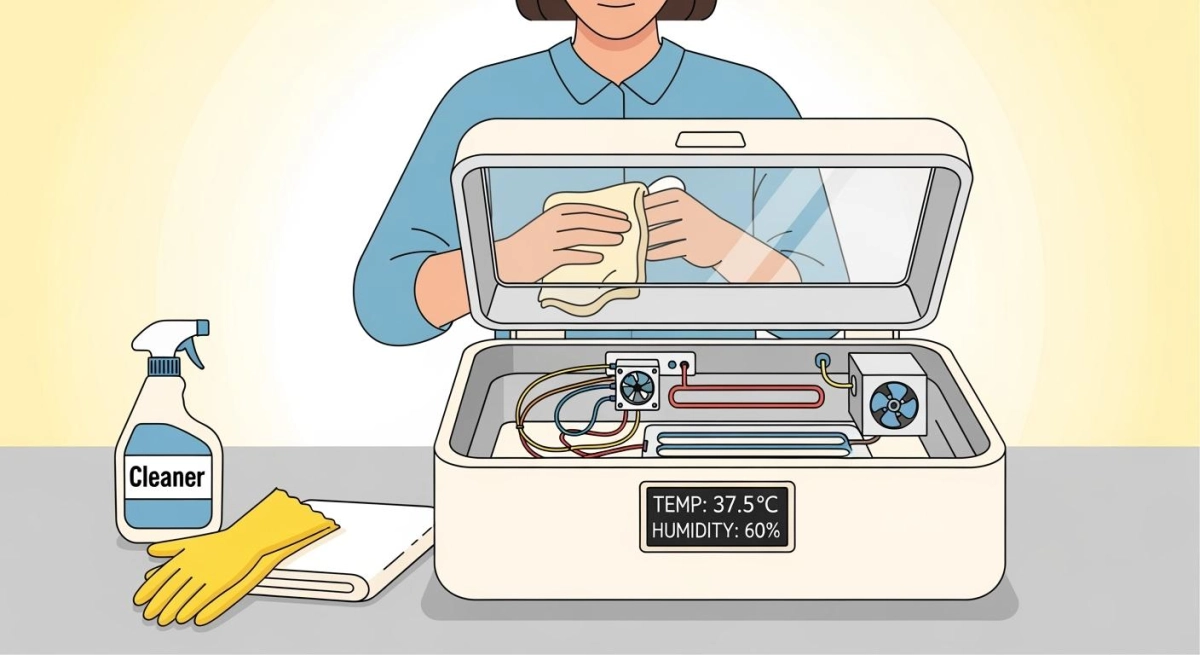
You want your chicks to be healthy and hatch well, so it is important to keep your egg incubator very clean. You can deep-clean your incubator without harming the electronics if you follow the right steps. Cleaning helps remove bacteria and mold that hide in small spaces and can lower your hatch rate. If you do not clean carefully, water or strong cleaners might damage the delicate parts inside your incubator. This guide makes cleaning both effective and safe.
Key Takeaways
-
Keeping your incubator clean helps chicks stay healthy. It stops bacteria and mold from hurting hatch rates.
-
Always unplug your incubator before you clean it. This keeps you and the electronics safe.
-
Use safe cleaning products like medical disinfectants and microfiber cloths. Do not use harsh chemicals that can damage your incubator.
-
Learn which parts you can wash and which you should only wipe. This keeps the electronics from getting ruined.
-
Clean first, then disinfect to kill germs. Use a bleach mix and make sure surfaces stay wet long enough.
-
Let all parts air-dry fully before you put them back together. Water can cause mold and harm the electronics.
-
Pick a safe place to clean, not near food. This keeps your kitchen free from germs.
-
Write down when you clean to keep track. This helps your incubator work well for every hatch.
Importance of a Clean Incubator
Why Egg Incubators Need Deep Cleaning
You want your chicks to start life strong, so keeping your incubator very clean is key. A quick wipe might look fine, but it does not remove the hidden threats. Warm, humid air inside the incubator creates the perfect place for germs to grow. If you only wipe the surface, bacteria and mold can stay and multiply in corners, fans, and under trays.
Here are some common troublemakers you might find in an unclean incubator:
-
E. coli and Salmonella can sneak through eggshells and infect your hatching eggs.
-
Mold loves damp, dirty eggs and can spread quickly to other eggs.
You need to deep-clean every part you can reach. This helps prevent harmful bacteria from taking hold and keeps your chicks safe. Always remember: clean first, then disinfect. Spraying disinfectant on a dirty surface does not work well because dirt and egg residue block the disinfectant from reaching germs.
Risks of Skipping Cleaning Between Hatches
If you skip cleaning between hatches, you put your next batch of chicks at risk. Even a little leftover dirt can cause big problems. Here’s what can happen if you do not clean your incubator well:
-
Contaminated eggs can lead to higher chick mortality rates.
-
Bacteria can be absorbed through eggshells, causing infections.
-
Dirty eggs may explode from gas buildup, spreading germs everywhere.
-
Poor sanitation can lower hatchability and chick quality.
-
Slightly soiled eggs can double chick mortality, while heavily soiled eggs can quadruple it compared to clean ones.
You want every hatch to be a success. Cleaning after each batch gives your chicks the best chance.
How Cleanliness Affects Hatch Rates
A clean incubator does more than just look nice. It helps you get more healthy chicks from each batch. Studies and field records show that cleaning methods can reduce contamination, especially for eggs that touch the floor. However, the biggest gains come from cleaning and sanitizing as soon as possible after collecting eggs. If you wait too long, bacteria have more time to grow, and hatch rates can drop.
To boost your chances of a successful hatch:
-
Sanitize eggs soon after collection.
-
Clean and disinfect the incubator after every hatch.
-
Make sure all surfaces are dry before starting a new batch.
By understanding the importance of a clean incubator, you set yourself up for healthy chicks and a smooth hatching experience every time.
Prep Before You Clean an Incubator
Unplug and Cool Down
First, unplug your incubator before cleaning. Make sure no power is on. Wait for the incubator to cool down all the way. Hot parts can burn you or hurt cleaning tools. If you just finished a hatch, let it sit for 30 minutes. Touch the outside to see if it feels cool. Do not rush this step. Safety is always most important.
Tip: Always unplug before cleaning. This keeps you and your incubator’s electronics safe.
Gather Safe Cleaning Supplies
You need the right tools to clean without hurting sensitive parts. Pick supplies that clean well but do not damage plastic or electronics. Use this checklist to get ready:
Cleaning Supplies Checklist:
-
Medical-grade EPA-approved disinfectant (quaternary ammonium or chlorine dioxide)
-
Specialized antimicrobial wipes for spot-cleaning
-
High-quality microfiber cloths for debris removal
-
pH-balanced enzymatic cleaner for breaking down egg residue
-
Mild dish soap (for non-electronic parts)
-
Soft brushes or sponges
-
Disposable gloves
-
Clean water for rinsing
-
Paper towels or lint-free cloths for drying
These supplies help you remove germs and dirt without hurting your incubator. Medical-grade disinfectants kill bacteria and viruses but are gentle on plastic and metal. Microfiber cloths pick up dust and germs better than regular rags. Enzymatic cleaners break down sticky egg messes and protect electronics. Always wear gloves to keep your hands safe.
Note: Never use harsh chemicals like ammonia or strong acids. These can harm your incubator and create toxic fumes.
Identify Washable and Wipe-Only Parts
Some parts of your incubator can be washed. Other parts need gentle wiping. You must know which parts are safe to wash and which need extra care.
Washable Parts:
-
Plastic trays and racks
-
Metal mesh or egg holders
-
Removable water pans
-
Detachable plastic covers (if your manual allows)
Wipe-Only Parts:
-
Main body with wires or fan holes
-
Control panel, display screen, buttons, and knobs
-
Heating elements and fixed fans
-
Power cord entry points
Never Get Wet:
-
Exposed circuit boards
-
Plug sockets and metal connectors
-
Any area marked “Do not get wet” in your manual
If you use a household plastic or ABS forced-air incubator, these rules usually work. Always check your manual for special instructions. Some models have extra features or different materials. If you are not sure, just wipe with a damp cloth.
Tip: Clean first, then disinfect. Washing removes dirt so disinfectant works better. Do not skip cleaning by only spraying disinfectant.
Choose a Safe Cleaning Location:
Pick a spot away from where you make food. Do not use your kitchen sink or counters. Try a laundry room, utility sink, or outdoor table. This keeps germs away from your food and family.
Now you are ready to clean. You have unplugged, gathered safe supplies, and know which parts to wash or wipe. Let’s go to the next steps for a deep clean.
Personal Protection and Ventilation
Before you start cleaning, you need to protect yourself. Cleaning an incubator means you will handle disinfectants and come into contact with germs. You want to stay safe and healthy, just like your chicks.
Put on the right personal protective equipment (PPE) before you begin:
|
Personal Protective Equipment (PPE) |
|---|
|
Gloves |
|
Safety goggles |
|
Lab coat or apron |
-
Gloves keep your hands safe from bleach and cleaning chemicals.
-
Safety goggles protect your eyes from splashes.
-
A lab coat or apron shields your clothes from spills and germs.
You should always follow basic lab safety rules when cleaning your incubator. Wear gloves and goggles every time you use bleach or disinfectant. Even a small splash can irritate your skin or eyes. If you do not have a lab coat, use an old shirt or apron.
Ventilation matters, too.
Open a window or turn on a fan before you start. Good airflow helps clear out strong smells from bleach or disinfectant. Never clean your incubator in a small, closed room. If you feel dizzy or your eyes start to sting, step outside for fresh air.
Tip: Always clean your incubator in a space with fresh air. This keeps you comfortable and safe.
Quick Safety Checklist:
-
Put on gloves, goggles, and a lab coat or apron.
-
Open windows or use a fan for airflow.
-
Keep cleaning supplies and disinfectants away from your face.
-
Wash your hands with soap and water after you finish.
You want to protect yourself as much as you protect your chicks. Taking a few minutes to gear up and ventilate your space makes cleaning safer and easier. Now you are ready to move on to the next step—cleaning the non-electronic parts of your incubator.
Cleaning Your Incubator: Non-Electronic Parts
Remove Debris and Dry Clean
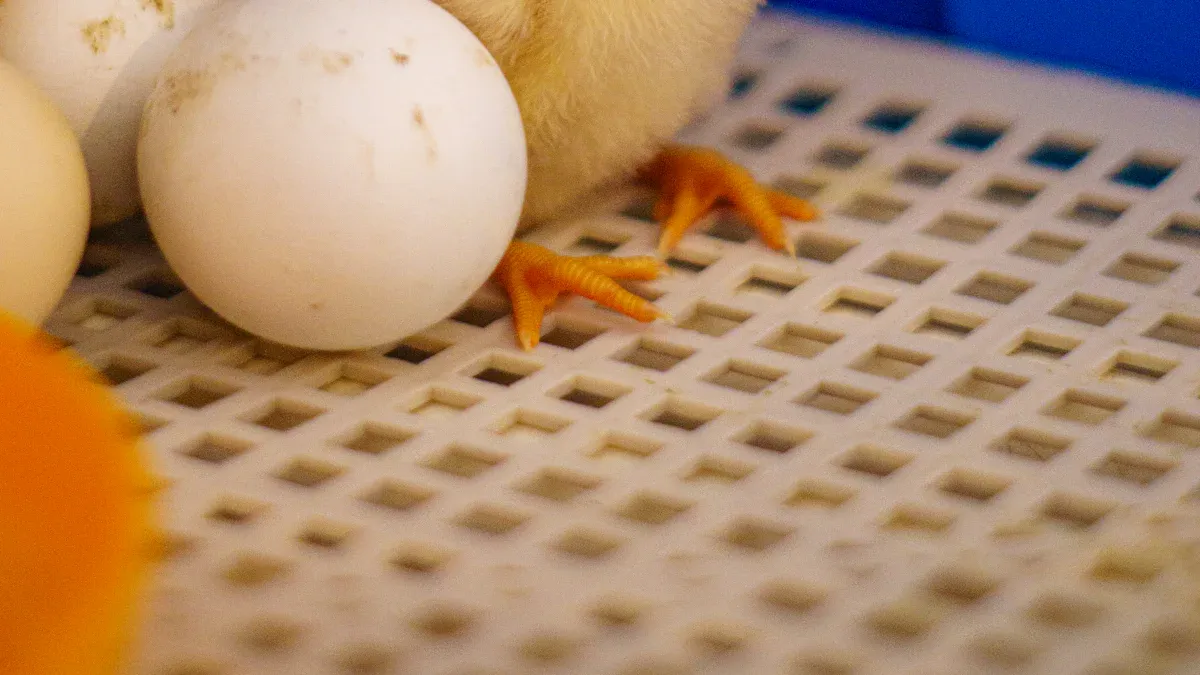
You want to start with a fresh surface before you use any water or soap. Begin by unplugging your egg incubator and letting it cool down. Once it feels safe to touch, take apart the removable pieces. Pull out the egg turner, metal mesh tray, and plastic tray. Shake off loose eggshells, fluff, and bedding. Use a dry microfiber cloth to wipe away dust and crumbs from all surfaces. For tight corners, grab a soft brush or even a toothbrush. You can use canned air to blow out bits from hard-to-reach spots, especially near fans or vents.
Step-by-Step Debris Removal Checklist:
-
Unplug and cool down the incubator.
-
Remove all trays, racks, and egg turners.
-
Shake out loose debris over a trash bin.
-
Wipe surfaces with a dry microfiber cloth.
-
Brush corners and crevices.
-
Use canned air for tricky spots.
Tip: Always check your manual before removing any part. Some incubators have special clips or covers.
Wash with Soap and Water
After you remove debris, you need to clean the surfaces. Fill a basin with warm soapy water. Use mild dish soap or household detergent. Dip the plastic trays, metal mesh, and egg holders into the water. Let them soak for at least 30 minutes. This helps loosen dried egg residue and stains. Scrub each piece with a soft sponge or brush. For greasy spots, a microfiber cloth works best. If you see stubborn stains, use a toothbrush to scrub gently.
Washing Steps:
-
Soak trays and mesh in warm soapy water for 30 minutes.
-
Scrub with a sponge or brush.
-
Use a microfiber cloth for greasy areas.
-
Rinse each part with clean water.
Note: Never soak any part with wires, motors, or electronic controls. Only wash the pieces your manual says are safe.
Disinfect with Diluted Bleach
Once you finish cleaning, you need to disinfect. Disinfection kills germs that soap cannot reach. Mix one teaspoon of unscented household bleach with one gallon of clean water. Dip the washed trays, mesh, and holders into this solution. Let them sit for 2 to 10 minutes. Make sure every surface stays wet during this time. After disinfecting, rinse all parts with clean water to remove bleach. Place them on a rack or towel to air-dry completely.
Disinfection Steps:
-
Prepare a bleach solution (1 tsp bleach per 1 gallon water).
-
Soak cleaned trays and mesh for 2–10 minutes.
-
Rinse with clean water.
-
Air-dry all parts before reassembling.
|
Common Errors |
What Happens |
How to Fix |
|---|---|---|
|
Skipping cleaning before disinfection |
Germs survive |
Always clean first, then disinfect |
|
Using too much bleach |
Damages plastic |
Use correct dilution |
|
Not rinsing after bleach |
Bleach residue remains |
Rinse thoroughly with clean water |
|
Reassembling before parts are dry |
Mold or odors |
Air-dry completely |
Callout: Clean first, then disinfect. Spraying disinfectant on dirty surfaces does not work well. Always follow the sequence for best results.
You have now finished cleaning your incubator’s non-electronic parts. You removed debris, washed with warm soapy water, and used a deep disinfectant. Your incubator is ready for the next step.
Rinse and Air-Dry Thoroughly
Now that you have washed and disinfected your incubator parts, it is time to rinse away any leftover soap or bleach. This step keeps your chicks safe from chemical residue and helps your incubator last longer.
Step-by-Step Rinsing and Drying:
-
Rinse each part under running water. Make sure you remove all traces of soap and disinfectant.
-
Shake off extra water from trays, racks, and mesh.
-
Place all washed pieces on a clean towel or drying rack. Spread them out so air can reach every surface.
-
Let the parts air-dry completely before you put your incubator back together. Do not rush this step. Even a little moisture can cause mold or damage electronics.
Tip: Never use a hair dryer or heater to speed up drying. High heat can warp plastic or damage parts.
Quick Checklist for Rinsing and Drying:
-
Rinse every non-electronic part with clean water.
-
Shake off excess water.
-
Lay out parts in a single layer on a clean towel.
-
Wait until every piece is fully dry before reassembly.
Common Mistakes and How to Avoid Them
|
Mistake |
What Happens |
How to Fix |
|---|---|---|
|
Assembling while parts are damp |
Mold, odors, or rust can develop |
Always let parts air-dry fully |
|
Stacking wet parts |
Water gets trapped, causing smells |
Spread out parts to dry evenly |
|
Using towels to dry electronics |
Moisture can seep into controls |
Only air-dry, never towel dry |
|
Skipping the rinse step |
Chemical residue may harm chicks |
Rinse all parts after disinfecting |
You want your incubator to be as dry as possible before you put it back together. Moisture left behind can lead to mold, bad smells, or even harm your next batch of chicks. Always let every part air-dry completely. If you are not sure, wait a little longer. Patience pays off with a safe, clean incubator.
Note: If your incubator has special materials or features, check your manual for drying instructions. Some models may need extra care.
By following these steps, you make sure your incubator is ready for the next hatch—clean, dry, and safe for your chicks.
Clean an Incubator Without Damaging Electronics
When you clean an incubator, you want to protect the electronics. Moisture can ruin sensitive parts and cause your incubator to stop working. Follow these steps to keep your egg incubator safe and working well.
Map Safe and No-Moisture Zones
Start by looking at your incubator and finding the areas that should never get wet. These are the "no-moisture zones." You need to know which parts you can wash and which you should only wipe.
No-Moisture Zones Checklist:
-
Control panel, display screen, buttons, and knobs
-
Heating elements and fixed fans
-
Power cord entry points
-
Exposed circuit boards and connectors
-
Any area marked “Do not get wet” in your manual
You can wash trays, racks, and removable water pans. You should only wipe the shell, control panel, and any part with wires or vents. Always check your manual if you are not sure. Each incubator model is a little different.
Tip: Never let water drip into vents, seams, or openings near electronics. If you see a warning label, follow it.
Wipe Electronics with Damp Cloth
You want to clean the shell and electronic areas without letting moisture get inside. Use a damp cloth, not a wet one. The cloth should feel moist but not drip water. This keeps your incubator safe.
Step-by-Step Instructions:
-
Unplug the incubator and let it cool down.
-
Dampen a microfiber cloth with clean water. Wring it out until it feels just moist.
-
Wipe the shell, control panel, and any "wipe only" areas. Move gently and avoid pressing water into seams or buttons.
-
For stubborn spots, use a little mild dish soap on the cloth. Wipe again with a clean damp cloth to remove soap.
-
Dry the wiped areas with a lint-free towel or let them air-dry.
Electronics Cleaning Checklist:
-
Use only a damp cloth (never wet)
-
Wipe gently around buttons and screens
-
Avoid all openings and seams
-
Never spray cleaner directly onto the incubator
-
Dry with a towel or let air-dry
Alert: Never use spray bottles, soaking cloths, or pour liquids on electronic parts. This can cause short circuits or permanent damage.
Avoid Common Cleaning Mistakes
Mistakes during cleaning can lead to electronic failure. You want to keep your incubator running smoothly, so watch out for these errors.
|
Mistake |
What Happens |
How to Fix |
|---|---|---|
|
Using a wet cloth or sponge |
Moisture seeps into electronics |
Use only a damp, wrung-out cloth |
|
Spraying cleaner directly on controls |
Liquids enter buttons or screens |
Spray onto cloth, not the incubator |
|
Ignoring dust in the egg turning device |
Dust blocks movement, causes jams |
Regularly check and clean device |
|
Not cleaning around vents and fans |
Dust buildup affects airflow |
Wipe gently with a dry brush |
|
Reassembling before surfaces are dry |
Moisture causes corrosion or mold |
Air-dry all wiped areas completely |
You should pay special attention to the egg turning device. Dust and foreign objects can block its movement and cause problems. Clean and maintain this part often. If you see dust or bits of shell, remove them with a dry brush or a slightly damp cloth.
Note: Always clean first, then disinfect. Do not skip cleaning by only spraying disinfectant. Dirt and dust block disinfectant from reaching germs.
Quick Error Prevention Table
|
Area to Clean |
Safe Method |
Common Error |
How to Avoid |
|---|---|---|---|
|
Control panel |
Damp cloth |
Wet cloth |
Wring out cloth |
|
Egg turning device |
Dry brush/damp cloth |
Ignoring dust |
Check regularly |
|
Vents and fans |
Dry brush |
Using water |
Never use water |
You want your incubator to last for many hatches. Careful cleaning keeps electronics safe and helps your chicks thrive. Always follow the steps and checklists. If you are unsure, look at your manual or ask for help.
😊 Cleaning your incubator the right way means more healthy chicks and fewer worries about repairs!
Hygiene and Cleaning Location
Where to Clean Your Incubator Safely
Pick a spot that keeps germs away from your food and family. Never clean your incubator in the kitchen sink or on food prep counters. You want a place with good airflow and easy-to-clean surfaces. Try a laundry room, utility sink, or even an outdoor table if the weather is nice. If you use a bathroom or mudroom, wipe down the area after you finish.
Safe Cleaning Locations Checklist:
-
Laundry room sink
-
Utility or garage sink
-
Outdoor table (weather permitting)
-
Bathroom or mudroom (clean after use)
Tip: Always check your incubator manual. Some models have special cleaning needs. If you are unsure, ask the manufacturer.
Proper Disposal of Waste
You will find eggshells, fluff, and dirty water after cleaning. Handle these wastes the right way to stop germs from spreading. Never pour dirty water or bleach down a kitchen sink. Use a toilet, outdoor drain, or a utility sink instead. Throw solid waste like eggshells and fluff into a trash bag. Tie the bag tightly before you toss it out.
Waste Disposal Steps:
-
Collect all solid debris in a trash bag.
-
Pour dirty water and bleach solution into a toilet or outdoor drain.
-
Rinse the sink or drain with clean water.
-
Wipe down any surfaces that touched waste.
|
Common Mistake |
What Happens |
How to Avoid |
|---|---|---|
|
Using kitchen sink |
Germs spread to food areas |
Use utility or outdoor sink |
|
Leaving waste uncovered |
Smells and pests |
Tie trash bag tightly |
|
Pouring bleach on plants |
Plants get damaged |
Use toilet or safe drain |
Alert: Never mix bleach with other cleaners. This can make dangerous fumes.
Handwashing After Cleaning
You want to keep yourself safe after cleaning the incubator. Wash your hands with soap and running water for at least 20 seconds. Scrub between your fingers and under your nails. Dry your hands with a clean towel or paper towel.
Handwashing Steps:
-
Wet your hands with running water.
-
Add soap and rub your hands together.
-
Scrub all parts of your hands for 20 seconds.
-
Rinse well under water.
-
Dry with a clean towel.
😊 Good handwashing keeps you healthy and protects your next batch of chicks.
Quick Hygiene Checklist:
-
Clean in a safe location
-
Dispose of waste properly
-
Wash hands after every cleaning
You want your incubator to stay clean and your home to stay safe. Follow these steps every time you clean. If you have a different type of incubator, always check your manual for special instructions.
Troubleshooting Incubator Cleaning Issues
Persistent Odors After Cleaning
Sometimes your incubator smells bad even after cleaning. This can be annoying. You want to get rid of all hidden smells.
People who find a rotten egg in their incubator remember the smell forever. The smell is strong and easy to notice. It is much worse than just "rancid." Why do eggs go bad in the incubator? Usually, dirty eggs are the reason. Bacteria from a dirty egg grows inside and makes a nasty liquid. This kills the embryo inside. Gasses build up and make pressure. The egg can ooze or even explode.
If you still smell something, look for egg bits or missed spots. Check under trays and in corners. Sometimes, leftover moisture causes smells too. Always let every part dry before you put it back together.
-
Take out all trays and parts
-
Scrub corners and seams well
-
Rinse and let everything air-dry
-
Clean again if the smell stays
Common Error Table
|
Problem |
Likely Cause |
Solution |
|---|---|---|
|
Odor after cleaning |
Missed residue or damp parts |
Clean again and dry everything |
|
Odor returns quickly |
Not disinfected properly |
Use the right bleach mix |
Removing Stains and Egg Residue
Sticky stains and dried egg are hard to clean. You need to follow steps to get your incubator clean.
-
Wear rubber gloves to keep your hands safe.
-
Take off the incubator top for better access.
-
Use paper towels to clear out debris and water.
-
Rinse the bottom, tray, and mesh screen in warm soapy water.
-
Scrub tough stains with a soft toothbrush.
-
Use cotton swabs for air holes and tight spots.
-
Scrub the mesh screen with a plastic brush.
-
Clean water wells with a soapy toothbrush.
-
Rinse all pieces in warm water.
-
Soak tough stains in diluted bleach.
-
Rinse again to get rid of bleach.
-
Put parts in sunlight for extra cleaning.
-
Let everything dry before you store it.
Tip: Always clean first, then disinfect. Do not skip cleaning by only spraying disinfectant.
Error Table for Stain Removal
|
Mistake |
What Happens |
How to Fix |
|---|---|---|
|
Scrubbing too hard |
Damages plastic or foam |
Use gentle brushes |
|
Skipping rinse |
Leaves soap or bleach residue |
Rinse well with water |
|
Not drying parts |
Mold or odors come back |
Let everything air-dry |
Dealing with Mineral Scale
Mineral scale looks white or chalky. It shows up in water pans or humidity parts. Hard water causes this problem. You can stop and clean it with easy steps.
-
Use distilled or deionized water to lower mineral buildup.
-
Clean the system every week with mild vinegar if you use tap water.
-
Once a month, soak parts in a mix of vinegar and water to remove scale.
-
Rinse all parts well after using vinegar.
-
Try a water filter if you use regular water.
-
If your water is very hard, a sequestering agent like EDTA can help.
Checklist for Mineral Scale:
-
Use distilled water if you can
-
Clean water pans with vinegar every month
-
Rinse and dry all parts after cleaning
Error Table for Mineral Scale
|
Problem |
Likely Cause |
Solution |
|---|---|---|
|
Scale keeps returning |
Using hard tap water |
Switch to distilled water |
|
Vinegar smell remains |
Not rinsed enough |
Rinse with clean water |
You can keep your incubator fresh and working well by following these steps. Clean first, then disinfect, and always dry every part before you store or use it.
Egg Incubator Deep-Clean Quick Reference
Step-by-Step Checklist
You want a simple guide for how to clean an incubator step by step. Follow this checklist every time you finish a hatch:
-
Unplug and Cool Down: Turn off your egg incubator and let it cool.
-
Disassemble: Remove trays, racks, water pans, and any detachable covers.
-
Remove Debris: Shake out shells, fluff, and bedding. Wipe loose dirt with a dry cloth.
-
Wash Non-Electronic Parts: Soak trays and racks in warm, soapy water. Scrub gently.
-
Rinse: Use clean water to rinse away soap.
-
Disinfect: Soak washed parts in diluted bleach solution (see below). Keep surfaces wet for the right time.
-
Rinse Again: Remove all bleach by rinsing with clean water.
-
Air-Dry: Lay out all parts to dry completely before reassembling.
-
Wipe Electronics: Use a damp cloth to gently clean the shell, control panel, and fan area. Never let water drip inside.
-
Check and Store: Inspect for damage or wear. Store in a cool, dry place.
Tip: Clean first, then disinfect. Never skip cleaning by only spraying disinfectant.
Quick Error Table
|
Mistake |
Risk |
How to Avoid |
|---|---|---|
|
Using high-pressure water |
Damages electronics |
Use damp cloth only |
|
Undiluted bleach |
Corrodes plastic/metal |
Always dilute bleach |
|
Cleaning in kitchen |
Spreads germs to food areas |
Use utility sink/outdoor |
|
Assembling damp parts |
Mold, odors |
Air-dry all parts |
Never Do:
Never soak electronic parts.
Never use a dishwasher for any incubator part.
Never mix bleach with other cleaners.
Never skip drying before storage.
Bleach Dilution and Contact Time
You want to disinfect without harming your incubator. Mix one teaspoon of unscented household bleach with one gallon of water. Soak non-electronic parts for 2–10 minutes. Make sure every surface stays wet. Rinse well after soaking. For tough germs, you can run the incubator empty at 100°F to help bleach fumes reach hidden spots. Always use gloves and work in a ventilated area.
Note: Never use undiluted bleach. Strong bleach can damage plastic and metal.
Record-Keeping for Cleaning
Keep a simple cleaning log. Write down the date, what you cleaned, and which disinfectant you used. Stick a label inside your incubator or keep a notebook nearby. This helps you track cleaning and spot problems early.
Sample Cleaning Log:
|
Date |
Steps Completed |
Disinfectant Used |
Notes |
|---|---|---|---|
|
2024-06-01 |
Full deep-clean |
Bleach (1 tsp/gal) |
No issues found |
|
2024-06-15 |
Quick wipe & check |
None |
Ready for hatch |
😊 Good records help you keep your incubator safe and your chicks healthy.
You want your hatching eggs to do well, so clean your incubator right after each hatch. Experts say you should deep-clean every time. Look at this table to see how often to clean:
|
Area |
Cleaning Frequency |
|---|---|
|
Setters |
After each incubation cycle |
|
Hatchers |
After each hatch |
Cleaning often helps protect your chicks. It also keeps your incubator working as it should. Cleaning stops germs from spreading. It helps your eggs and chicks stay healthy. Use the quick checklist every time you clean. If you follow these steps, your incubator will be safe and ready for new eggs.
FAQ
How often should I deep-clean my egg incubator?
You need to deep-clean your incubator after every hatch. If you find a broken or rotten egg, clean right away. Regular cleaning keeps your chicks healthy and your incubator working well.
Can I use vinegar instead of bleach for disinfecting?
You can use diluted vinegar to remove mineral scale from water pans. For disinfecting, stick with diluted bleach or an EPA-approved disinfectant. Vinegar does not kill all germs that threaten your chicks.
What should I do if water gets inside the electronics?
Unplug your incubator right away. Let it air-dry in a safe spot. Do not turn it on until you know everything is dry. If you see damage, contact the manufacturer for help.
Is it safe to clean my incubator in the kitchen?
No, you should not clean your incubator in the kitchen. Germs from eggs and chicks can spread to food areas. Use a laundry room, utility sink, or outdoor table instead.
How do I know which parts are safe to soak?
Check your incubator manual first. Usually, trays, racks, and water pans are safe to soak. Control panels, wires, and anything marked “Do not get wet” should only be wiped with a damp cloth.
What if my incubator still smells bad after cleaning?
Take apart all removable pieces. Clean and disinfect every corner. Let everything air-dry completely. If the smell stays, repeat the cleaning steps and check for hidden residue.
Do I need to keep a cleaning log?
Yes, keeping a cleaning log helps you track when you cleaned and what you used. This makes it easier to spot problems and keeps your incubator safe for every hatch. Data authenticity note: The cleaning steps, disinfectant dilutions, and risk ranges in this guide are based on widely used poultry hatchery hygiene practice, egg incubator equipment manuals, agricultural extension guidance, and aggregated records from small-flock and homestead users rather than on any single study or brand.
0 Comments