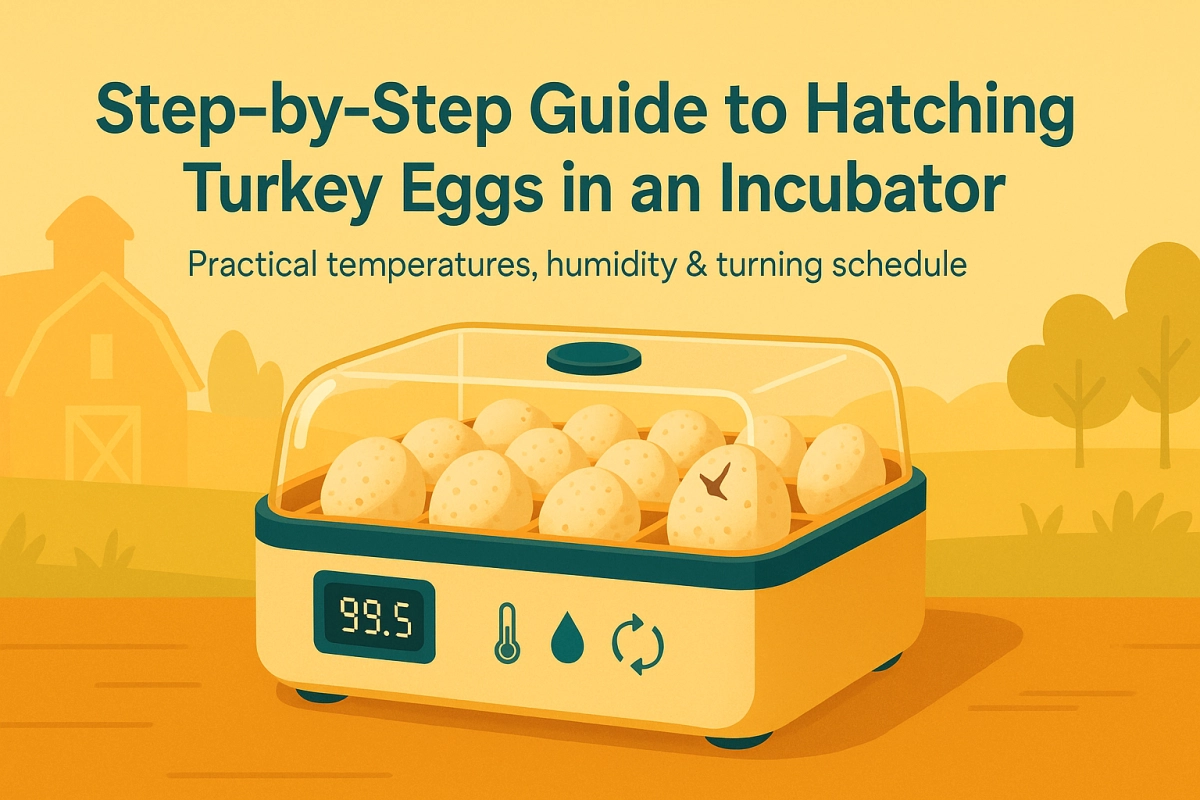
You can hatch turkey eggs at home with an incubator by following a consistent, step-by-step process. Most turkey eggs hatch in about 28 days. With careful control of temperature, humidity, and turning, many keepers achieve strong results—sometimes around 90% under well-controlled conditions.
Sound incubation practices lead to vigorous, healthy poults.
By monitoring temperature and humidity precisely, home hatchers can achieve outcomes comparable to small hatcheries. Anyone can try this rewarding project with patience, clean equipment, and steady settings.
Key Takeaways
-
Choose a forced-air incubator for even heat. Set it to 99.0–99.5°F and maintain humidity around 55–60% for most of the incubation period.
-
Turn turkey eggs 3 to 6 times daily to prevent embryos from sticking. Using an odd number of turns helps avoid resting on the same side overnight.
-
Monitor temperature and humidity closely and adjust as needed to keep conditions stable.
-
Stop turning eggs about three days before hatch (day 25) and raise humidity to 65–75% during lockdown to support a clean hatch.
-
Move fully dry poults to a brooder promptly and ensure immediate access to starter feed and clean water.
Turkey Egg Incubation Equipment
Choosing an Incubator
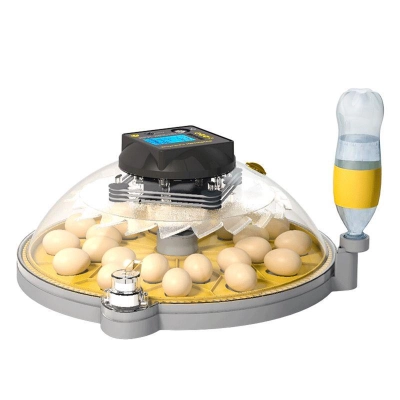
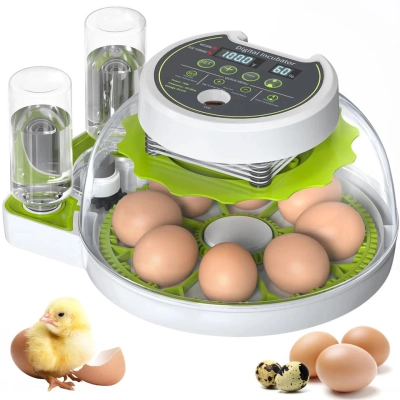
Pick a desktop incubator that works well for turkey eggs. Forced-air incubators provide the most even heat. Still-air models can work too—just measure temperature at the top of the eggs. Before setting eggs, run the incubator empty for 12 hours to verify stable temperature and humidity. A compact digital automatic 22-egg incubator is a practical starter size; for larger batches, cabinet incubators offer higher capacity and stable airflow.
Here is a table with features you should look for in an incubator:
|
Feature |
Description |
|---|---|
|
Precision temperature control |
Keeps heat steady at 99.0–99.5°F (forced-air) or 101–102°F at the top (still-air). |
|
Humidity control system |
Lets you hold 55–60% RH through the main period, then 65–75% RH for the final days. |
|
Automatic egg turning function |
Turns eggs several times per day so embryos develop evenly and hatch rates improve. |
Use your own thermometer and hygrometer to verify incubator readings, and calibrate them weekly for accuracy.
Tip: Turkey eggs typically need higher humidity than chicken eggs and take ~28 days to hatch.
Essential Tools & Supplies
You need more than just an incubator to succeed. Gather these items before you start:
-
Disposable gloves for handling eggs and cleaning
-
Cleaning tools to disinfect the incubator before use
-
Record sheets to track temperature, humidity, turning, and weight loss
-
Water pans or trays to regulate humidity (surface area matters more than depth)
-
Egg turning devices or racks to move eggs 3–6 times a day
-
Your own thermometer and hygrometer to cross-check incubator sensors
Set a forced-air incubator to 99.0–99.5°F. If you use a still-air incubator, keep it at 101–102°F at the top of the eggs. Start with humidity around 55–60% RH (wet bulb ~84–86°F). Ensure even airflow throughout the cabinet.
Check and calibrate sensors weekly. Clean and replace the wet-bulb wick as needed. These steps help keep conditions safe and stable from start to finish.
Preparing for Incubation
Cleaning & Disinfecting
Clean and disinfect your incubator and tools before you start to prevent bacteria and mold. Wear disposable gloves when handling equipment. Wash trays, surfaces, and water pans with water and a gentle soap, then rinse well. Use an EPA-registered avian disinfectant per label directions and let all items dry completely.
Wash cloths and sponges after use and keep them away from kitchens or living spaces. Use this schedule as a reminder:
|
Frequency |
Actions |
|---|---|
|
Daily to weekly |
Wipe high-touch surfaces with 70% ethanol or a suitable disinfectant. |
|
Monthly |
Clean the interior, remove shelves, clean the fan, and disinfect the water reservoir. |
|
Between batches |
Use hydrogen peroxide fogging or a spray disinfectant for deep cleaning. |
|
As needed |
Clean spills or messes immediately. |
Tip: A clean incubator supports better hatch rates.
Preheating the Incubator
Power on the incubator 24 hours before adding eggs to confirm stable settings. Set forced-air units to 99.5°F. For still-air units, use 100.5–101.5°F. Hold humidity at 30–35% while preheating. Ensure airflow paths are unobstructed.
Setting Temperature & Humidity
After preheating, apply turkey-specific settings. Forced-air incubators should be 99.0–99.5°F. For still-air models, measure at the top of the eggs and set 101–102°F. Hold humidity at 55–60% RH (wet bulb ~84–86°F). Confirm water pans provide adequate surface area for steady humidity, and verify airflow.
Note: Verify and calibrate sensors weekly to keep readings accurate throughout incubation.
Selecting & Storing Turkey Eggs
Choosing Healthy Eggs
You should always start with the best eggs if you want robust poults. Choose clean, smooth, normally shaped eggs. Avoid cracked, dirty, or misshapen eggs. Eggs from the middle of a hen’s laying cycle often perform best and are usually larger with stronger shells.
Tip: Number each egg and record its starting weight to track progress.
Storage Conditions
Store turkey eggs the right way before setting. Keep them at 50–65°F and ~70% humidity. Turn gently once a day to prevent sticking. Aim to set within 7 days (10 days max). Warm eggs gradually to room temperature before placing them in the incubator.
Here is a quick reference table for storage:
|
Condition |
Recommendation |
|---|---|
|
Temperature |
50–65°F (13–18°C) |
|
Humidity |
About 70% |
|
Duration |
Set within 7 days (10 days max) |
|
Turning |
Turn daily |
|
Position |
Large end up |
Arranging Eggs in Incubator
Before setting, recheck for cracks or dirt. Place eggs large end up or lay them flat, with space for airflow. Record the batch number and initial weight (W0) for each egg to track weight loss and progress. Careful arrangement gives every poult the best chance to hatch.
Note: Strong selection and correct storage set the foundation for healthy poults.
Turkey Egg Incubation Process
Turning Eggs
Turn turkey eggs several times each day so embryos do not adhere to the shell and growth remains even. Plan on 3 to 6 turns daily; an odd number (for example, 5) helps avoid resting on the same side overnight. Use a turning angle of ~45 degrees. Some modern units provide frequent micro-turns throughout the day, which further supports development.
-
Turn eggs 3–6 times per day (odd number preferred)
-
Use a turning angle of about 45°
-
Stop turning at day 25 of incubation
If you use an automatic turning device, confirm it operates correctly. If turning by hand, wash hands, wear gloves, and mark one side of each egg with a pencil to verify turns.
Tip: Consistent turning reduces early embryo losses and malpositions.
Monitoring Temperature & Humidity
You must keep temperature and humidity steady for reliable results. Turkey egg incubation works best at 99.0–99.5°F in a forced-air incubator. In still-air units, measure at the top of the eggs and hold 101–102°F. Temperature swings can slow growth and raise malformation or mortality risks, especially in the first four days.
|
Parameter |
Effect of Temperature Manipulation |
Effect of Humidity Manipulation |
|---|---|---|
|
Mortality Rates |
Higher during first four days |
Less radical effects |
|
Malformation Rates |
Higher with high temperatures |
Less significant |
|
Embryo Growth Rate |
Slower under temperature stress |
N/A |
Hold humidity at 55–60% for most of incubation. Use wide water surface area to regulate humidity. If the air cell grows too quickly, increase humidity; if it grows too slowly, reduce humidity or improve ventilation.
Check sensors weekly. Compare your thermometer and hygrometer to a trusted reference and calibrate if needed. Stable readings support healthy embryo development.
Note: Good airflow is essential. Ensure vents provide adequate oxygen, especially close to hatch.
Candling & Weighing
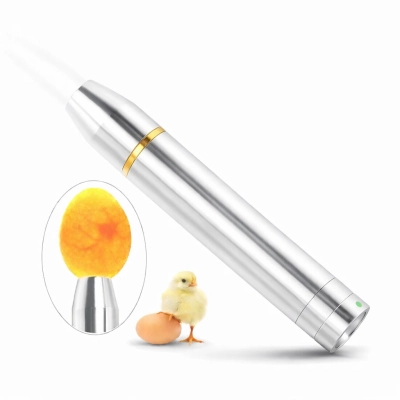
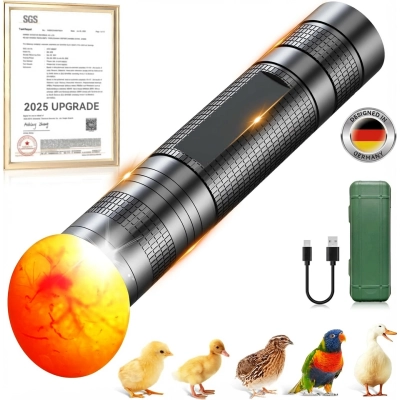
Candling and weighing help you track embryo growth and tune humidity. Candle first between days 4 and 7 and remove clears or blood rings. Candle again at day 14 and mark the air-cell edge with a pencil to monitor growth.
Weigh each egg before setting, then again at day 14. By day 14, expect ~6–7% weight loss; by day 25, target ~11–13%. If loss is too low, lower humidity; if too high, raise humidity.
-
Candle eggs at days 4–7, 14, and 24
-
Mark the air-cell edge each time you candle
-
Weigh eggs at the start, day 14, and day 25
-
Target weight loss: 6–7% by day 14, 11–13% by day 25
A small air cell suggests humidity is too high; a large air cell suggests it is too low. Adjust humidity and ventilation accordingly.
Tip: Early, consistent checks help you correct issues before they affect the hatch.
Lockdown & Hatching
Lockdown Settings
When you reach day 25, you enter the lockdown phase. Make the following changes to support a clean hatch:
Follow these steps for lockdown:
-
Stop turning and move eggs to the hatching tray.
-
Raise humidity to 65–75% RH by increasing water surface area (wet-bulb ~90°F).
-
Open all air vents fully to ensure oxygen supply.
-
Avoid opening the incubator unless there is an emergency.
-
Watch for internal pipping around day 26 or 27.
Tip: Higher humidity during lockdown softens the shell and membranes so poults can exit cleanly.
Here is a table showing the recommended humidity levels for turkey eggs during incubation and lockdown:
|
Species |
Incubation Humidity (RH%) |
Lockdown Humidity (RH%) |
|---|---|---|
|
Turkey |
55–60% |
65–75% |
If humidity has been well managed through day 25, raising it for lockdown is appropriate. Issues with “too much humidity” at this stage usually reflect earlier mismanagement.
Hatching Window
The hatching window typically begins around day 27 and lasts 12–24 hours, sometimes up to 48 hours. Some eggs hatch earlier or later based on flock age, storage time and temperature, incubation settings, airflow uniformity, and breed.
Keep the incubator closed during this window to prevent sudden humidity drops that can dry inner membranes and cause “shrink wrapping.”
Note: Most poults hatch within ~24 hours after external pipping, but some need up to 48 hours. Patience matters.
Avoiding Common Mistakes
Knowing what to avoid during lockdown and hatch improves outcomes.
Here is a table of common mistakes and how they affect your hatch:
|
Mistake Description |
Explanation |
|---|---|
|
Not turning eggs during lockdown |
You should stop turning on day 25. Continued turning can harm the poult. |
|
Incorrect humidity levels |
Humidity should be around 65–75% during lockdown. Low humidity can cause poults to get stuck. |
|
Confusing incubation schedules |
Mixing up species leads to wrong turning and lockdown times. Keep clear records. |
Also remember:
-
Do not open the incubator during the hatch window.
-
Keep humidity steady. Add water via external ports if available; avoid opening the lid.
-
Ensure vents remain fully open for oxygen.
-
Record when you stopped turning and raised humidity.
Alert: If a poult seems to struggle but conditions are correct, wait. Most will finish unassisted in a stable environment.
By following these steps and avoiding common errors, you give your turkey eggs the best chance to hatch cleanly.
After Hatch Care
Moving Poults to Brooder
Move dry poults to the brooder promptly so they stay warm and secure. Use this checklist for a smooth transition:
-
Prepare the brooder before the poults arrive; set 98–99°F.
-
Turn on the heat source and warm the area a day in advance. Pre-warm feed and water.
-
Place feed and water near the warm zone’s edge, not directly under the heat source.
-
Check litter temperature and maintain a 20–30°F gradient from center to edge.
-
Adjust ventilation to keep air fresh and minimize ammonia and CO2.
-
Transfer poults gently and allow them space to settle.
-
Early-morning placement gives more daylight hours to find feed and water.
Tip: Wear disposable gloves when handling poults and equipment.
First Food & Water
Poults need feed and water quickly. Energy reserves decline within 24–48 hours. Provide easy access to starter feed and clean water at the correct height. Use paper under drinkers and sprinkle a little feed to draw attention. Refresh paper every 4–6 hours for the first two days.
|
Age |
Birds per bell drinker |
Birds per nipple drinker |
Birds per feeder |
|---|---|---|---|
|
0–6 weeks |
90–110 |
30–40 |
50–70 |
Note: Keep water at 50–59°F (10–15°C). Place drinkers away from direct heat.
Monitoring Health
Watch poults closely during the first week. Confirm daily feed and water intake, keep drinkers clean and reachable, and provide a calm environment. Pre-warm the brooder house 48 hours before arrival to help poults adjust.
-
Track feed and water intake every day.
-
Check drinkers frequently for cleanliness.
-
Maintain a quiet brooder environment.
-
Use appropriate starter feed and fresh water to support growth.
After moving poults, clean the incubator with disinfectant and dry all surfaces before storage. Keep cleaning tools separate from living areas. Good hygiene protects poults and supports future hatches.
Tips & Troubleshooting
Common Issues
Temperature or humidity swings can reduce hatch rates. Excess heat or cold disrupts development, and incorrect humidity changes air-cell size and hatchability. Bacterial or mold contamination also harms outcomes.
Here is a table that shows how different things affect egg health:
|
Condition |
Impact on Egg Viability |
|---|---|
|
Hot Weather |
Hot conditions often reduce hatch rates compared with cooler seasons. |
|
Rain Storms |
Under a broody hen, weather may be buffered; in incubators, keep settings stable. |
|
Cold Snaps |
Effects vary; for incubators, maintain temperature and ventilation to avoid chilling. |
Other problems can occur:
-
Assisted hatching is a last resort under strict criteria; generally avoid intervention. If used, move the poult promptly to a warm brooder.
-
Roots or trash in the nest can cause more than half the eggs to be lost. Remove debris or relocate eggs to a clean site.
-
Cone-shaped or crowded nests make hatching difficult. Space eggs apart.
If temperature or humidity seems off, check your sensors. Frequent calibration keeps readings accurate and helps prevent issues.
Tip: As embryos grow, open vents further to increase oxygen; do not over-restrict vents to chase higher humidity.
Safety & Hygiene
Good hygiene protects poults and limits pathogens. Wash hands with plain soap before and after handling eggs; hand sanitizer adds a layer of protection. Store cleaning tools away from living areas.
Follow these safety steps:
-
Clean equipment with a suitable disinfectant that will not damage it.
-
Avoid washing hatching eggs; set only visibly clean eggs and use dry cleaning if needed.
-
Do not use hazardous fumigation at home or in schools.
-
Check and calibrate temperature and humidity sensors weekly.
|
Method of Sanitation |
Description |
|---|---|
|
Nest Clean Eggs |
Collect and set only visibly clean eggs; avoid washing hatching eggs to prevent bacteria entering through pores. |
|
Equipment Cleaning |
Clean incubators and tools with suitable products after every use. |
Note: Keeping equipment clean and following biosecurity practices supports better hatch rates and healthier poults.
You can hatch turkey eggs at home by following a clear process: set correct temperature and humidity, turn eggs on schedule, and watch for hatch signs. Move poults to the brooder once they are fully dry. Patience and steady monitoring drive success.
Key Steps:
-
Keep temperature at 99.5°F and humidity at 55–60%.
-
Turn eggs every few hours.
-
Watch for hatching signs around day 26.
-
Move poults to the brooder when dry.
Stay curious! For more tips, check this table of helpful topics:
|
Topic |
Description |
|---|---|
|
Egg selection |
How to pick the best eggs for hatching |
|
Incubating conditions |
Best settings for temperature and humidity |
|
Troubleshooting |
How to solve common hatching problems |
Data authenticity note: The settings and procedures in this guide reflect industry practice, equipment manuals, and aggregated logs from routine incubation runs. Values are provided for typical home setups and may require adjustment for your specific incubator and environment. Sources: industry practice; equipment manuals; aggregated logs; hatchery SOPs.
FAQ
How often should you turn turkey eggs during incubation?
Turn turkey eggs 3 to 6 times each day. Odd numbers (such as 5) help prevent resting on the same side overnight. Consistent turning supports even development.
What temperature and humidity do turkey eggs need?
|
Setting |
Value |
|---|---|
|
Temperature |
99.0–99.5°F (forced-air) or 101–102°F (still-air, egg top) |
|
Humidity |
55–60% RH (main), 65–75% RH (lockdown) |
Keep these settings steady for healthy poults.
When do you stop turning turkey eggs?
Stop turning on day 25 (about three days before hatch). Leaving eggs still helps poults position correctly for hatching.
How do you know if humidity is correct?
Track air-cell size and weight loss. By day 14, eggs should lose ~6–7% of starting weight; by day 25, aim for ~12% (11–13%). Adjust humidity if the air cell is too small or too large.
Data authenticity note: The settings and procedures in this guide reflect industry practice, equipment manuals, and aggregated logs from routine incubation runs. Values describe typical scenarios and may require adjustments for your specific incubator and room conditions. Sources: industry practice; equipment manuals; aggregated logs; hatchery SOPs.



0 Comments