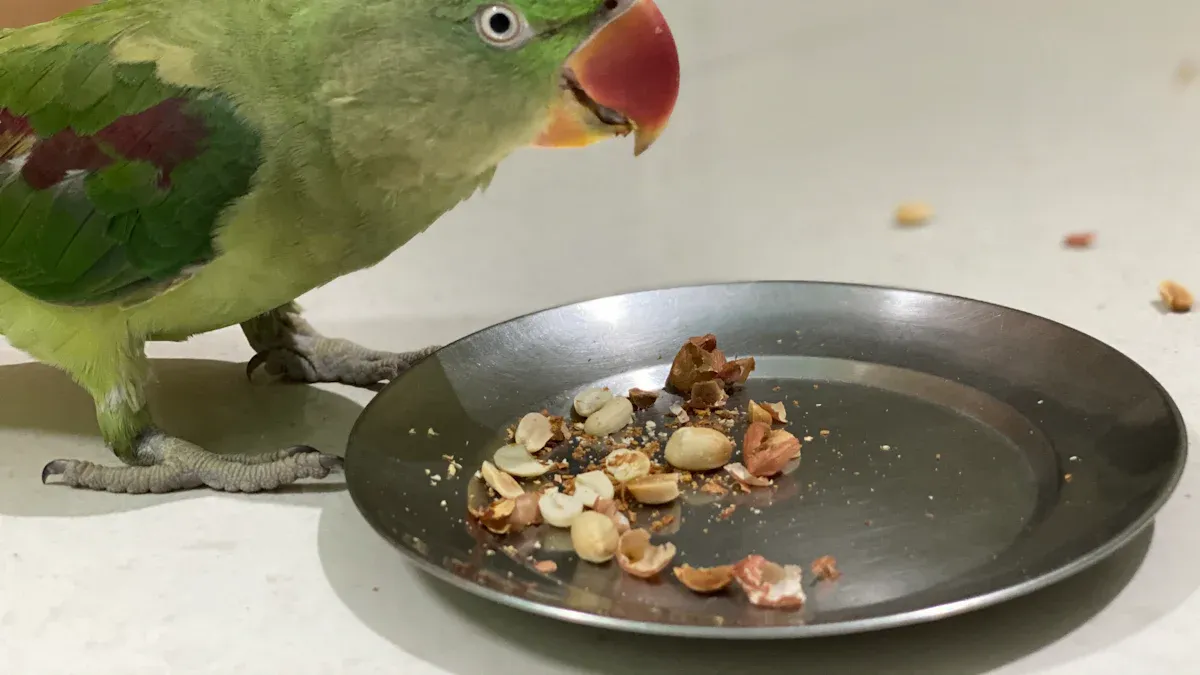
Parrot weaning can be calm, predictable, and safer when you use a bowl-first routine and warm soft foods. This guide is written for home keepers weaning young parrots such as budgies, cockatiels, conures, and African greys.
Who this guide is for: You are weaning a young parrot and want a low-stress plan that protects intake, digestion, and trust.
- If you want less stress: you will use a bowl-first routine and reduce feedings one step at a time.
- If you want safer outcomes: you will log morning weight and crop status so you do not guess.
- If you want clear boundaries: you will know when to slow down and call an avian vet.
- Start with warm, soft foods in shallow dishes that are easy to reach.
- Let your parrot explore food at its own pace so independence feels safe.
Key Takeaways
- Use a calm “bowl-first” routine and keep the feeding space quiet and warm.
- Track readiness with morning weight, crop emptying, and self-feeding skills.
- Make every change small. Remove one feeding at a time, then hold steady.
- Follow safe food handling every day to lower the risk of sour crop and infection.
- If warning signs repeat, pause weaning and contact an avian vet.
Last updated: Dec 26, 2025
Quick Take – Safe Parrot Weaning at Home
Use bowl-first feeding, warm soft foods, and a calm routine.
Weaning goes best when your parrot feels safe. Offer a warm bowl first, then top up only if needed. Keep the routine simple and repeatable. Your bird learns faster when feeding feels predictable.
Conclusion: Most weaning problems come from unsafe temperatures, spoiled food, or removing feeds too fast.
- Temperature rule: warm soft foods at 100 to 105°F. Formula at 101 to 104°F, and never above 105°F. Use a digital thermometer and stir well.
- Freshness rule: discard warm, moist foods after 2 hours. Do not “top up” old food.
- Safety rule: if intake drops or the crop does not empty, slow down and add support feeding. Contact an avian vet if it repeats.
Tip: Offer the bowl first when your bird is calm. A calm bird explores food. A stressed bird refuses food.
One-Page Weaning Checklist
Conclusion: If you follow this one checklist daily, your weaning becomes safer because you will catch trouble early.
- Before feeding: check morning weight and feel the crop. Empty crop plus steady trend means “hold or step down.”
- During feeding: bowl first, then top up only if needed. Keep temperatures in range every time.
- After feeding: remove leftovers on time and wash bowls. Write one short note about appetite and droppings.
Parrot Weaning Readiness Checklist
Begging decreases and bowl interest increases.
Readiness often looks like less begging and more interest in bowls. You may also see food particles in the water dish. That often means your parrot is practicing dipping and tasting.
Conclusion: Bowl interest matters because it shows your parrot is practicing self-feeding.
- Offer the warm bowl first, then wait before any top-up.
- Reduce daytime feeds first. Keep the bedtime top-up the longest.
- Hold the new schedule until morning weight trend stays steady.
Picks up food with the beak and feet with better control.
Coordination is a real milestone. When your parrot can pick up food and bring it to the mouth without struggling, self-feeding becomes realistic. Use soft foods that hold together in small pieces so the bird can grip them.
- Use shallow dishes so the food is easy to see and reach.
- Offer a few easy-to-grab pieces and refresh often.
- Change texture slowly so the bird stays confident.
Crop empties overnight and morning weight trend is steady.
Check the crop every morning before the first feeding. A crop that empties overnight suggests digestion is moving normally. Weigh your parrot at the same time each morning before the first feeding. A trend is more useful than one number.
Conclusion: Morning weight plus crop status is your safest “go slower or go faster” signal.
- Crop warning: if the crop is still full in the morning, stop step-down changes and contact an avian vet if it repeats.
- Weight warning: if weight drops more than about 10% from a recent high or keeps dropping across mornings, add support feeding and slow down.
- Whole picture: combine weight, crop, energy, and droppings before you change the plan.
A Flexible Step-Down Plan
Use a pattern, not a rigid week table.
Different parrots move at different speeds. A flexible plan is safer because it follows daily signals. Reduce one feeding, then hold steady until the bird proves it can handle it.
Conclusion: The safest weaning pace is one small change, then a stability check.
- Step-down order: reduce one daytime feeding first. Keep the bedtime feeding the longest for comfort.
- Bowl-first rule: bowl first, then top up only if needed. This builds independence without panic.
- Stability check: do not remove another feeding until morning trend stays steady and the crop empties normally.
Step-Down Methods: Syringe to Spoon to Bowl
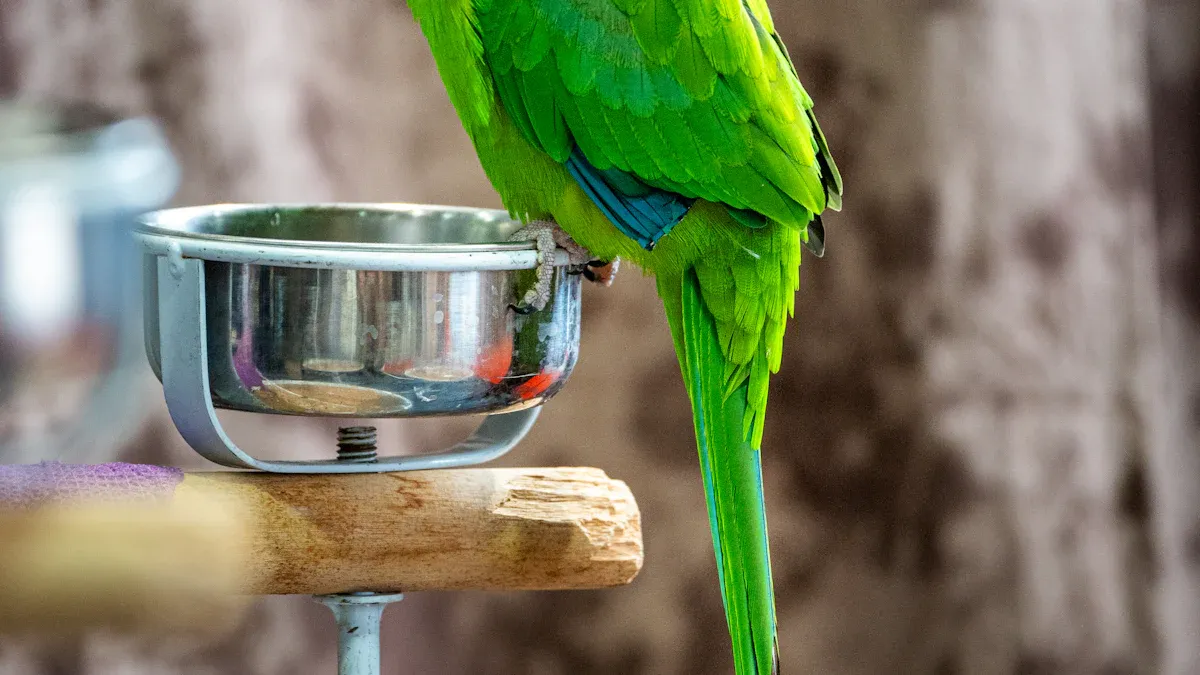
Transition slowly. The goal is not to “remove the syringe fast.” The goal is reliable intake and growing confidence.
Conclusion: A slow step-down prevents panic because your parrot never feels suddenly hungry.
- Syringe: use only as needed. Do not rush. Stop when the bird turns away.
- Spoon: offer small tastes to build comfort with new textures.
- Bowl: keep the bowl warm and shallow so the bird can succeed quickly.
Tip: If your bird refuses a new food, do not argue with it. Go back one step, then try again later.
Warming and Safe Food Temperatures
Use a thermometer every time.
Temperature changes comfort and digestion. Warm foods are often accepted more easily. Hot foods can burn tissue. Cold foods can slow digestion and increase crop problems.
Conclusion: A thermometer prevents burns and digestion slowdowns because your hand cannot reliably detect safe ranges.
- Warm soft foods: 100 to 105°F.
- Formula: 101 to 104°F, and never above 105°F.
- Stir well and test more than one spot, especially after reheating.
For a dedicated temperature routine and tool checks, use: How to Mix Parrot Hand Feeding Formula at a Safe Temperature.
Discard uneaten warm foods after 2 hours.
Warm, moist foods spoil quickly. When bacteria grow, young parrots can develop sour crop, diarrhea, or low appetite. A timer makes this rule easy.
Conclusion: The 2-hour rule lowers illness risk because bacterial growth rises fast in warm, wet foods.
- Set a timer when food goes in the cage.
- Remove bowls, wash with hot soapy water, then rinse well.
- Replace with fresh warm food rather than adding to old food.
Warm Soft Foods and Simple Options
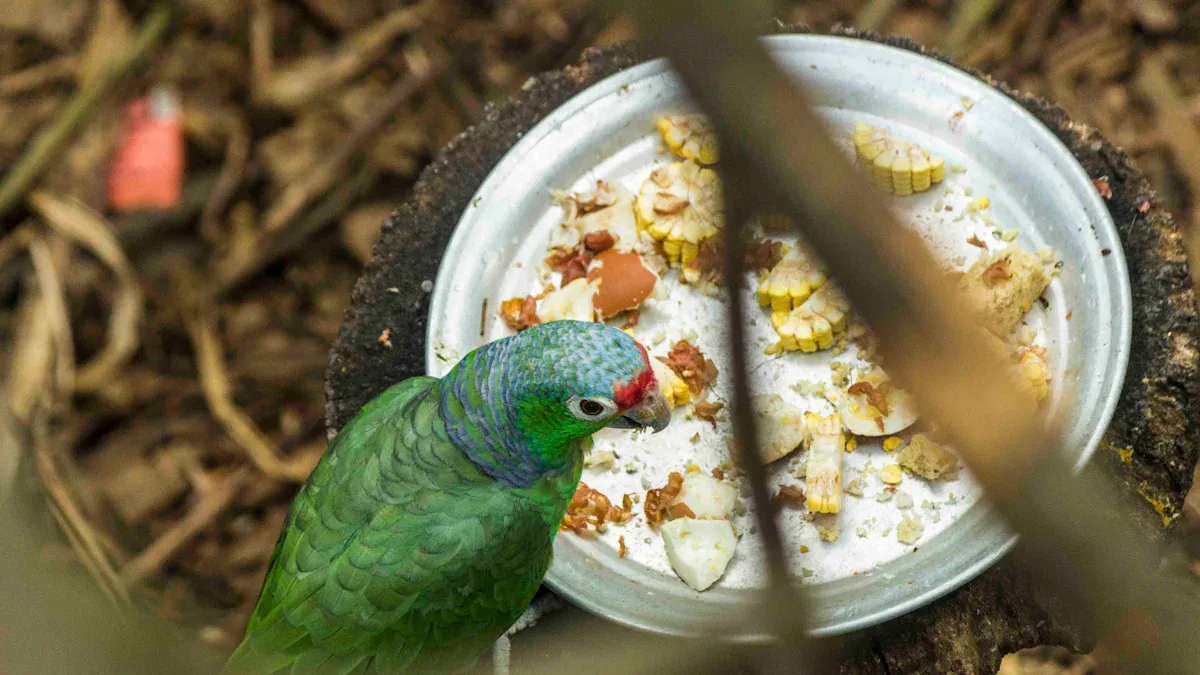
Start with foods that are easy to swallow and easy to grip. Keep portions small. Refresh often. That keeps food appealing and reduces spoilage risk.
Conclusion: Soft foods work best when texture matches skill, so texture should change slowly.
- Easy starters: soaked pellets, fork-mashed cooked grains, soft veggie mash.
- Simple protein: plain scrambled egg cooked without oil or salt.
- Texture ladder: puree, then fork-mash, then small soft pieces.
First Foraging Setup
Foraging is practice. Keep it simple so your bird gets quick wins and repeats the behavior.
Conclusion: Simple foraging lowers stress because success happens quickly.
- Easy start: place a few bites on a flat dish or tray so food stays visible.
- Safe exploration: offer a few pieces, then refresh. Avoid stuffing food into deep containers at first.
- Chewer caution: if your bird shreds and swallows fibers, avoid loose paper materials in the feeding area.
Weight and Logging for Weaning Progress
Logging works because it shows trends before problems look dramatic. One low day can happen. A steady downward pattern is a warning.
Conclusion: A simple log keeps weaning safer because you can react early instead of guessing.
- Morning weight: record before the first feeding at the same time each day.
- Crop status: note if the crop is empty in the morning.
- One note: appetite, droppings, and energy in one short sentence.
Mini log template you can copy:
Date:
Morning weight (g):
Crop empty in the morning (yes/no):
Bowl foods offered and eaten:
Top-up feedings count + temp checked (yes/no):
One note about energy or droppings:
Troubleshooting and Vet-First Boundaries
Young birds can decline quickly when intake drops. If you see repeated warning signs, pause step-down changes and contact an avian vet.
Conclusion: Use this decision path so you do not guess when things look off.
- If weight dips once: hold the plan for 24 hours and confirm temperatures and food freshness.
- If weight keeps dropping: add a support feeding and reduce change speed. Re-check crop emptying in the morning.
- If crop does not empty or your bird refuses food: stop step-down changes and contact an avian vet.
Related EggBloom Guides
- Complete Parrot Hand-Feeding Schedule by Age for Beginners
- How to Mix Parrot Hand Feeding Formula at a Safe Temperature
- Parrot Assisted Hatching: Vet-First Criteria for Budgies and Cockatiels
If You Also Run a Home Hatch Project
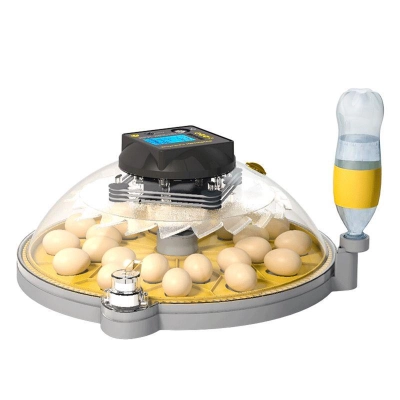
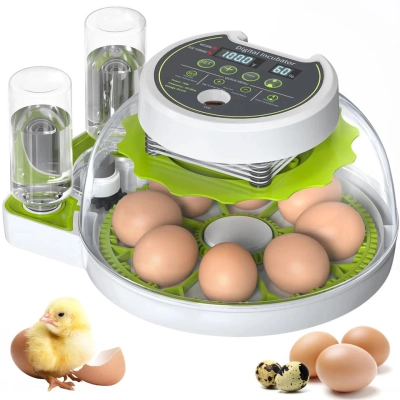
If you are incubating eggs at home, reducing manual handling can also reduce “forgotten turns” and routine stress. If you want a setup that automates turning, consider an auto-turn dual-motor incubator that reduces manual egg turning during daily care.
FAQ
How do I know my parrot is ready to start weaning?
Look for less begging, more bowl interest, better self-feeding skills, an empty crop in the morning, and a steady morning weight trend. Progress speed varies by species and by individual.
What temperature should I serve formula and soft foods?
Use a digital thermometer. Warm soft foods should be 100 to 105°F. Formula should be 101 to 104°F, and never above 105°F. Stir well and test more than one spot.
What should I do if my parrot loses weight or refuses food?
Pause step-down changes, offer warm familiar foods, and add support feeding if needed. Check crop emptying and hydration. Contact an avian vet if refusal, repeated crop issues, or continued weight loss occurs.
Data authenticity note: This guide is for educational use and reflects general at-home husbandry practices. It does not replace individualized advice from an avian veterinarian, especially when a bird is losing weight, refusing food, or showing crop or breathing problems.



0 Comments