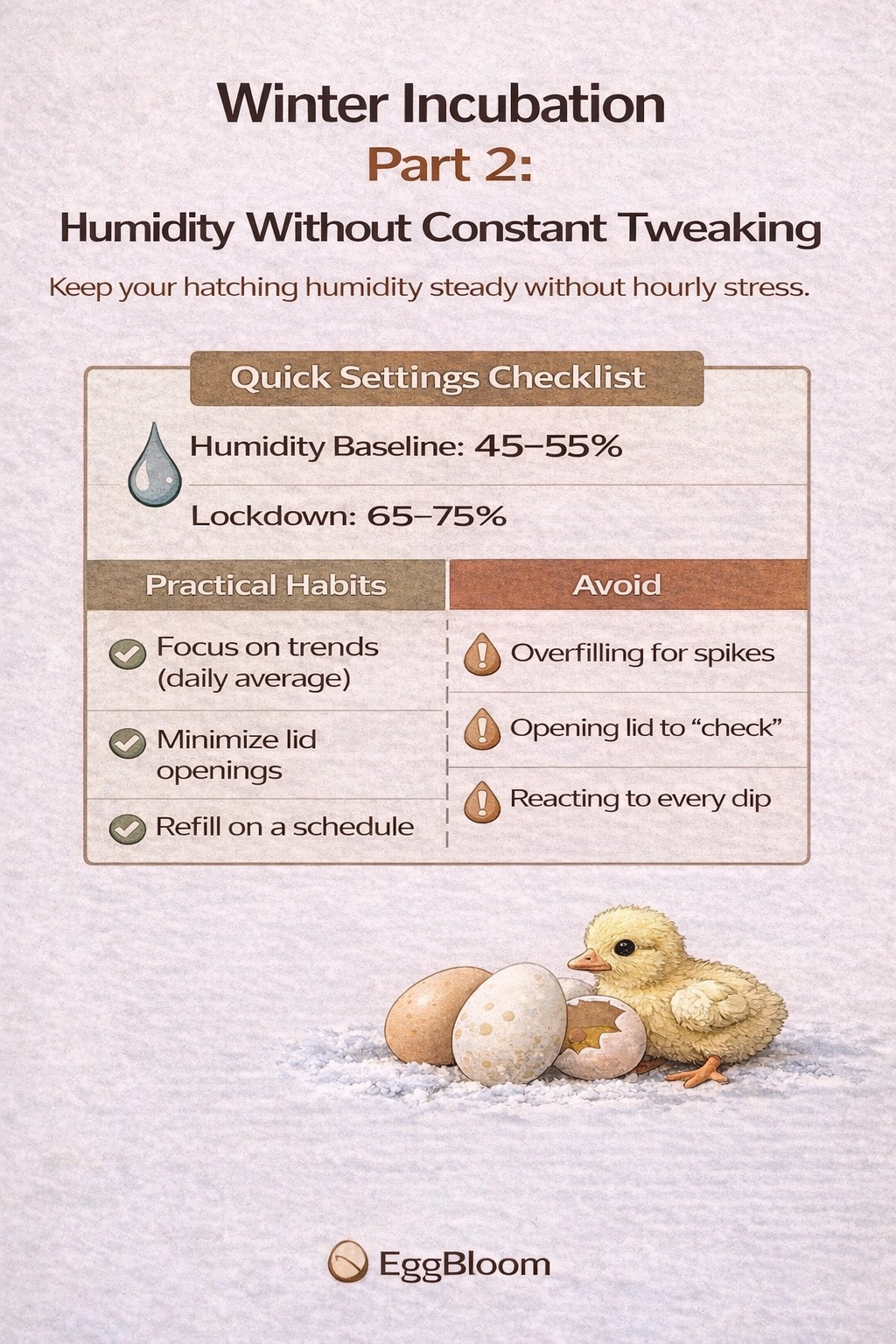
If temperature swings are the first winter challenge, humidity is the quiet second one. When using an egg incubator in winter, humidity problems rarely show up as sudden disasters. They show up slowly—late hatches, sticky chicks, or eggs that just don’t finish strong.
I struggled with this early on because I treated winter humidity like a number I had to constantly fix. What finally helped wasn’t tighter control, but a calmer approach.
This article focuses on how to manage winter humidity without hovering, guessing, or opening the incubator more than necessary.
Why Winter Air Makes Humidity Harder to Maintain
Cold air simply holds less moisture. When that air is heated indoors, relative humidity drops even further. This is a basic physical property of air, and it’s why homes feel dry in winter.
University extension research consistently notes that indoor winter environments accelerate moisture loss from incubators, especially when lids are opened frequently. The incubator isn’t failing—the surrounding air is just pulling moisture out faster.
Understanding this alone helps reduce panic. Winter humidity challenges are environmental, not personal mistakes.
The Biggest Winter Humidity Mistake: Reacting Too Often
Many keepers respond to winter dryness by checking humidity constantly and adding water every time the reading dips.
The problem is that humidity readings fluctuate naturally, especially right after turning or brief lid openings. Chasing those short-term changes creates more instability than the dry air itself.
Poultry science guidance emphasizes that embryos respond best to overall moisture trends across days—not minute-by-minute readings. Stability matters more than precision.
If you’re also dealing with temperature changes, it helps to review Winter Incubation Part 1: Avoiding Temperature Swings, since temperature and humidity issues often reinforce each other.
Think in Trends, Not Numbers
Instead of asking, “What is the humidity right now?” a better winter question is:
“Is humidity generally stable over time?”
Practical winter habits that support this mindset include:
- Checking humidity at consistent times each day
- Refilling water channels on a routine, not reactively
- Avoiding adjustments after short lid openings
This approach reduces unnecessary interference, which is especially important when conditions outside the incubator are working against you.
Lid Openings Matter More in Winter
Every time you open an incubator in winter, warm moist air escapes and is replaced by cold, dry air. Recovery takes longer than it does in summer.
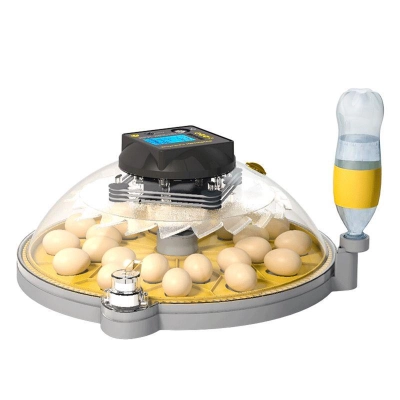
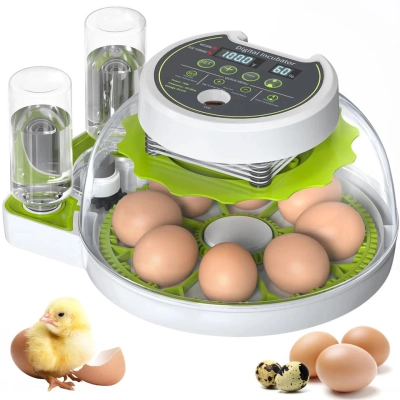
This is one reason many winter hatchers quietly move toward an Automatic Egg Incubator. Automatic turning reduces how often the lid needs to be opened, which indirectly stabilizes humidity.
It’s not about convenience—it’s about limiting how often the incubator has to fight the room.
Water Management: Simple Beats Perfect
In winter, consistency in water management matters more than volume.
- Use the same fill points each time
- Add water gently to avoid sudden spikes
- Stick to a predictable refill schedule
Extension publications often note that embryos tolerate modestly lower humidity early far better than repeated swings caused by overcorrection.
If you’re new to moisture control overall, our guide on incubator humidity basics provides helpful background without overcomplicating things.
Why Equipment Stability Helps in Winter
Not all incubators react to environmental changes the same way. Units with better insulation and internal thermal mass lose moisture more slowly when room conditions shift.
During winter, this slower response time becomes an advantage. A more stable Egg Incubator gives you breathing room instead of forcing constant corrections.
In my own experience, switching to a heavier, more enclosed setup reduced how often I even thought about humidity.
Humidity at Lockdown: Fewer Moves, Better Results
Lockdown is when many winter hatchers undo weeks of good work by making last-minute changes.
Research-based guidance is clear: once lockdown begins, unnecessary lid openings are one of the most common causes of hatching trouble—especially in dry winter air.
Prepare early:
- Ensure water levels are adequate before lockdown
- Resist adjusting based on short-term readings
- Trust the system you’ve maintained for weeks
Humidity Control Is About Reducing Intervention
Winter incubation rewards restraint.
Instead of perfect numbers, focus on:
- Stable placement
- Predictable routines
- Fewer reasons to open the incubator
This philosophy naturally leads many keepers toward setups that reduce hands-on involvement, including a reliable chicken incubator that supports consistency rather than constant monitoring.
Looking Ahead: The Human Factor
Temperature and humidity are only part of winter incubation success. The third—and often biggest—factor is human behavior.
In Winter Incubation Part 3, we’ll look at how small habits, good intentions, and over-involvement create problems in cold-weather hatching—and how simplifying your process leads to better results.
Data sources include mainstream poultry science research and university extension publications.

0 Comments