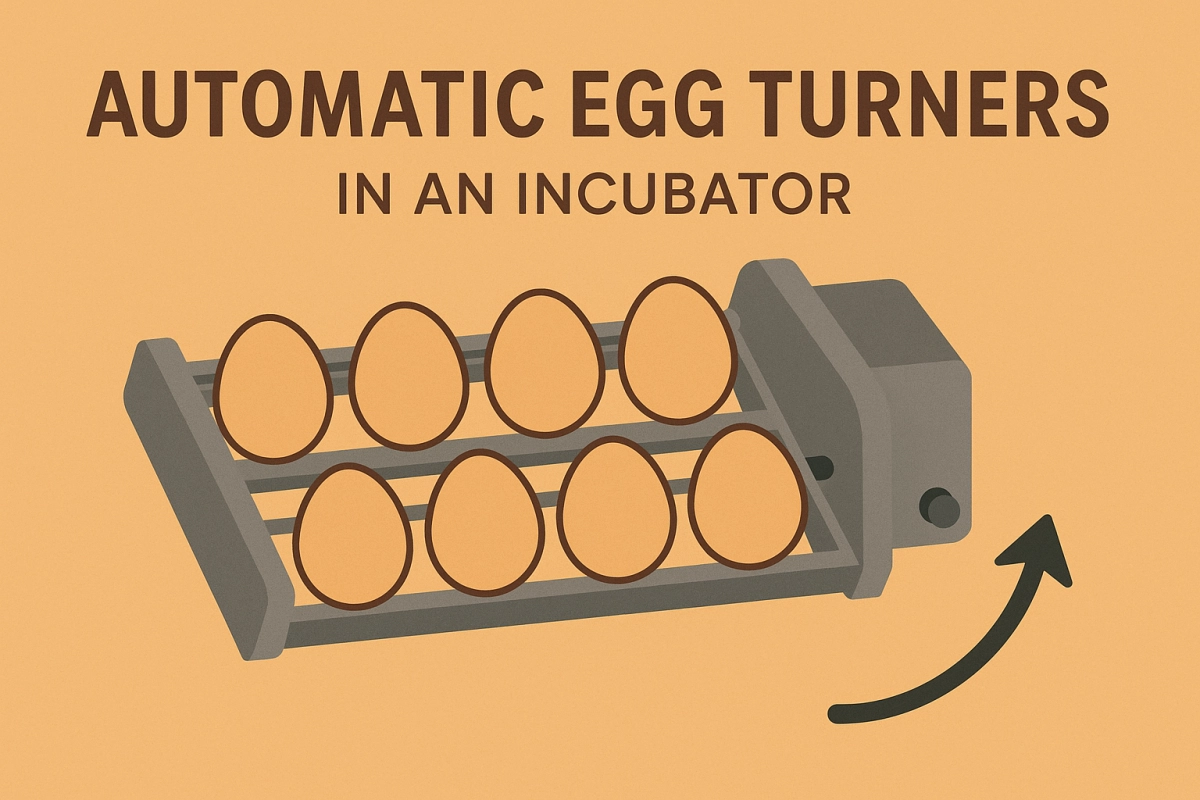
Hatching eggs successfully requires more than just keeping them warm — it also involves turning them regularly. In nature, a mother hen instinctively turns her eggs several times a day. In artificial incubation, this vital task is handled by an automatic egg turner. But how exactly does it work? Let’s explore the mechanics, benefits, and tips for using an automatic egg turner inside your incubator.
🔧 What Is an Automatic Egg Turner?
An automatic egg turner is a motorized device designed to rotate eggs at regular intervals during incubation. Its main function is to mimic the natural turning process that a hen would perform, ensuring that the developing embryos receive even heat and proper nutrient distribution.
If you’re new to incubation and want to understand different types of incubators and accessories, check out the Egg Incubator Collection at EggBloom — it’s a great place to explore reliable and efficient incubation tools.
Instead of turning eggs by hand several times a day, the turner automates this process—saving time and reducing the risk of human error.
⚙️ How Does It Work?
Most automatic egg turners operate through a slow, timed rotation mechanism. Here’s how it typically functions:
-
Motor and Gear System – A small electric motor powers gears or arms that gently tilt or roll the egg trays.
-
Cradle or Tray Design – Eggs are placed in specially designed cradles or slots that hold them securely while allowing smooth movement.
-
Timed Intervals – The turner is programmed to move the eggs every few hours—commonly every 2 to 4 hours—to prevent the embryo from sticking to the shell membrane.
-
Angle of Tilt – Most turners rotate eggs at about 45° from side to side, imitating the natural movement made by a hen’s beak and wings.
-
Power Source – Most units use low-voltage electricity and can operate continuously throughout the incubation period (except the final 2–3 days).
This steady and precise motion keeps the embryo centered and ensures uniform temperature and humidity exposure.
🌱 Why Turning Is So Important
Regular egg turning is essential for:
-
Embryo Development – Prevents the embryo from sticking to the shell and promotes healthy growth.
-
Yolk Positioning – Ensures the yolk remains centered for even nutrient absorption.
-
Gas Exchange – Helps form a proper air cell, aiding the chick’s breathing before hatching.
Without proper turning, hatch rates can drop dramatically.
🕒 When to Stop Turning
Turning should stop around day 18 for chicken eggs (three days before hatching). This gives the chicks time to orient themselves and prepare to break out of the shell. Many incubators have removable turners or a switch to disable automatic rotation during this stage.
🧩 Common Types of Automatic Egg Turners
There are a few designs you’ll find on the market:
-
Rocking Tray Type – Moves the entire tray side to side. Ideal for small incubators.
-
Rolling Bar Type – Uses rods or rollers to gently roll the eggs. Suitable for larger operations.
-
Individual Cradle Type – Each egg sits in its own holder, providing very consistent rotation.
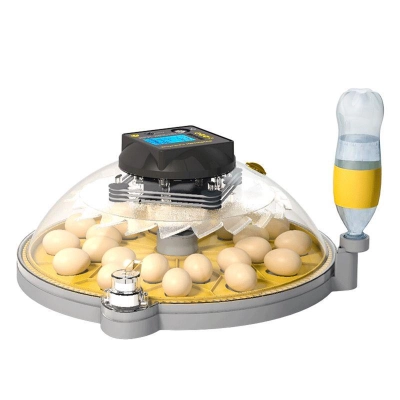
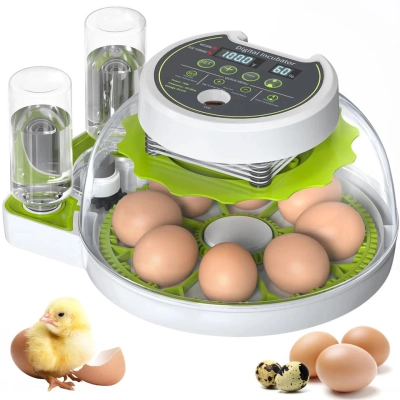
If you’re looking for a reliable option that simplifies incubation for quail, pigeons, or small birds, the Automatic Egg Incubator 3 Trays for Birds and Quail by EggBloom is an excellent choice. It features a built-in automatic egg turner and precise temperature control, perfect for both beginners and small-scale breeders.
💡 Tips for Using an Automatic Egg Turner
-
Check Before Loading – Ensure the turner moves smoothly before adding eggs.
-
Monitor Temperature & Humidity – Turning doesn’t replace proper climate control.
-
Clean Regularly – Bacteria can harm developing embryos, so clean the trays after every hatch.
-
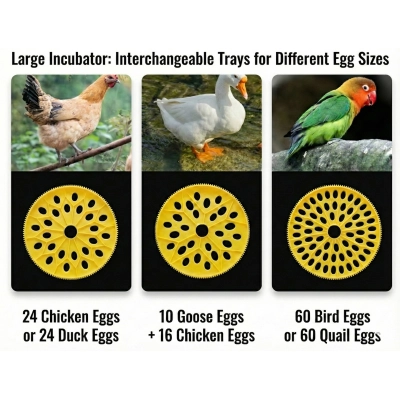
Don’t Overload – Each slot is designed for a specific egg size; mixing sizes can hinder movement.
-
Unplug Before Lockdown – Stop turning 2–3 days before hatch day to let chicks settle.
🐣 Final Thoughts
An automatic egg turner is a simple yet crucial tool that brings consistency, efficiency, and higher hatch success rates. By automating one of the most delicate parts of incubation, it frees up your time and helps ensure each chick develops under ideal conditions.
To explore more reliable incubation equipment or upgrade your setup, visit the Egg Incubator Collection or try the Automatic Egg Incubator 3 Trays for Birds and Quail for a professional, hands-free hatching experience.

0 Comments