
Mini egg incubators usually fit the needs of most backyard chicken keepers. You can hatch a handful of chicks at a time, which matches the pace of a small flock. If you plan to grow your flock slowly or just want a few new layers each year, you probably will not outgrow a mini incubator right away. Think about how many chickens you want, how often you want to hatch, and what your long-term plans look like. This helps you make the best choice for your backyard.
Key Takeaways
-
Mini egg incubators are designed for small backyard flocks and typically hold about 6–14 chicken eggs per batch. Before you buy, think about your long-term flock goals and how many new chicks you truly need each year. A mini incubator with automatic turning and simple digital controls is usually enough if you just want a few new layers or a kid-friendly project. Place the incubator in a quiet, draft-free room and keep the room itself around 68–75°F for stable performance. If you regularly need to hatch more than 14 eggs at once, plan on moving up to a hobby or cabinet incubator in the future. As a beginner, it is realistic to see roughly 30–50% of eggs hatch, and with practice many home users reach about 50–75%. Mini units are inexpensive to run—often only around a dollar of electricity for a 21-day hatch at typical U.S. power rates—so they are a budget-friendly way to learn before you invest in larger equipment.
Mini Egg Incubators: Capacity and Features
Mini Egg Incubator Capacity
6–14 Eggs per Batch
You can set between 6 and 14 chicken eggs in a mini egg incubator for each hatch. This range fits most backyard flocks. If you have 4–10 hens, you probably want to hatch just a few chicks at a time. Mini egg incubators work well for this goal. You do not need a large machine if you only want to refresh your flock or try hatching for the first time.
Circular Tray Design
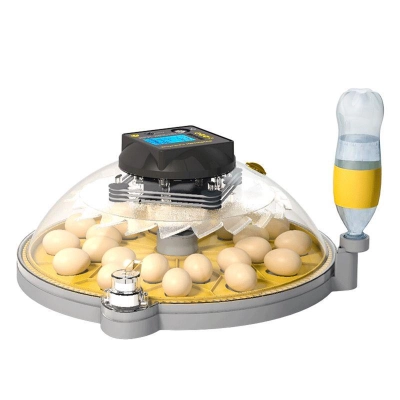
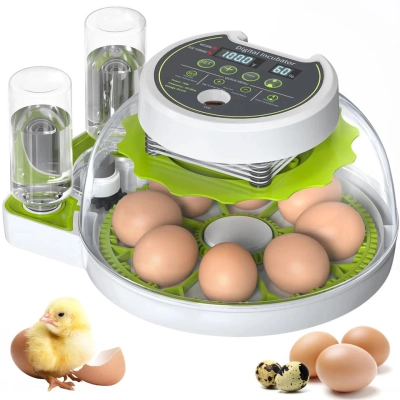
Most mini egg incubators use a circular tray. This design helps you fit eggs in a small space. You can see all the eggs through the clear lid. The tray often rotates or tilts for automatic egg turning. This feature keeps the eggs healthy and helps chicks develop evenly.
Mini Incubator Features
Digital Controls
You get simple digital controls with most mini egg incubators. You can set the temperature and watch the numbers on a small screen. Some models let you adjust humidity. These controls make it easy for you to keep the eggs at the right conditions. Automatic egg turning is usually built in, so you do not have to turn eggs by hand.
Small Footprint
Mini egg incubators take up very little space. You can place one on a desk, shelf, or small table. Most use only 50–100 watts of electricity, which is about the same as a small light bulb. You will not notice much noise, and you can run the incubator in a spare room without disturbing your family.
Tip: Place your egg incubator in a draft-free room between 68–75°F. Keep it away from kitchens and busy areas.
Mini vs Medium and Cabinet Incubators
Capacity Comparison
Here is a simple table to help you compare egg incubator sizes:
|
Incubator Type |
Egg Capacity |
|---|---|
|
Mini |
6–14 eggs |
|
Hobby/Small |
12–48 eggs |
|
Cabinet |
60+ eggs |
If you want to hatch more than 14 chicks at once, you may need a hobby-size egg incubator. These hold 12–48 eggs and suit small breeding projects. Cabinet incubators start at 60 eggs and work best for large flocks or selling chicks.
Space and Noise
Mini egg incubators are quiet and compact. You can run one in a bedroom or office. Medium and cabinet incubators need more space and may have fan noise. You will notice the difference if you upgrade to a bigger model.
|
Feature |
Mini Incubators |
Medium and Cabinet Incubators |
|---|---|---|
|
Size and Capacity |
Small, 6–14 eggs |
Large, 60+ eggs |
|
Noise Level |
Quiet |
Fan noise |
Do this:
-
Count how many chicks you want to hatch each year.
-
Choose a mini egg incubator if you only need 6–14 eggs per batch.
-
Look for automatic egg turning to save time and effort.
-
Check for digital controls so you can set temperature easily.
-
Place your egg incubator in a safe, quiet spot.
-
Use a hobby-size incubator if you plan to hatch 12–48 eggs at once.
-
Upgrade to a cabinet incubator only if you need to hatch 60 or more eggs.
Decision Table in Prose:
If you want to hatch a few chicks for your backyard flock, a mini egg incubator is enough. You can run several batches each year if you need more chicks. If you want to hatch more than 14 eggs at once, or if you plan to breed several types of chickens, a hobby-size incubator with 12–48 egg capacity may fit better. Mini egg incubators use less electricity and space, so they work well for most home setups.
Automatic egg turning, digital controls, and a small footprint make mini egg incubators easy to use. You can start with a mini model and upgrade later if your flock grows.
Pros and Cons of Mini Egg Incubators
When you consider adding new chicks to your backyard flock, you want to know if a mini egg incubator will fit your needs. Let’s look at the main advantages and limitations so you can make a smart choice for your space, time, and goals.
Advantages of Mini Incubators
Cost and Efficiency
Mini egg incubators save you money and energy. You pay less up front compared to larger models. These incubators use about 50–100 watts, which means you spend around $1 on electricity for a full 21-day hatch at typical U.S. rates. This low cost makes them perfect for beginners or anyone with a small flock. You also help the environment by using less power.
|
Advantage |
Description |
|---|---|
|
Time-saving |
Automatic turning, humidity, and temperature controls reduce manual work. |
|
Space-efficient |
Mini models fit 6–14 eggs while taking less than one square foot of space, so they are easy to tuck onto a shelf or desk. |
|
Educational |
Provides an opportunity to observe the hatching process, making it fun and informative. |
You can place a mini egg incubator almost anywhere. It takes up less than one square foot, so you do not need a special room. The quiet operation means you can run it in a spare bedroom or office without disturbing your family.
Easy Setup
You will find mini egg incubators simple to set up. Most models have digital controls for temperature and sometimes humidity. Automatic egg turning saves you time and effort. You can watch the whole process through a clear lid, which makes it easy to check on your eggs and share the experience with your family.
Note: Always keep your egg incubator in a draft-free room between 68–75°F for best results.
Limitations of Mini Incubators
Batch Size
The main limit of a mini egg incubator is how many eggs you can hatch at once. Most hold 6–14 eggs per batch. This works well if you want just a few new chicks each year. If you need more, you will have to run several batches or consider a larger egg incubator. The batch size affects how quickly you can grow your flock.
Scalability
If you plan to expand your flock or start selling chicks, a mini egg incubator may not keep up. You will need to pay close attention to each batch. Running multiple hatches takes more time and planning. Mini incubators require you to monitor temperature, humidity, and egg turning, especially if you want the best hatch rates.
-
Limited capacity compared to larger units
-
Requires consistent user attention
-
Not ideal for unattended use
-
Batch size restricts how many chicks you can add at once
Do this:
-
Count how many chicks you want to hatch each year.
-
Check if a 6–14 egg batch meets your needs.
-
Decide if you have time to run multiple batches.
-
Place your egg incubator in a safe, quiet spot.
-
Upgrade to a larger model if you plan to hatch more than 14 eggs at once.
Decision Table in Prose:
If you want to hatch a few chicks for your backyard flock, mini egg incubators are a great fit. You can run several batches each year if you need more chicks. If you want to hatch more than 14 eggs at once, or if you plan to breed several types of chickens, a larger egg incubator may suit you better. Mini egg incubators use less electricity and space, so they work well for most home setups. Start small, see how it fits your goals, and upgrade only if your flock grows.
Flock Goals and Egg Incubator Planning
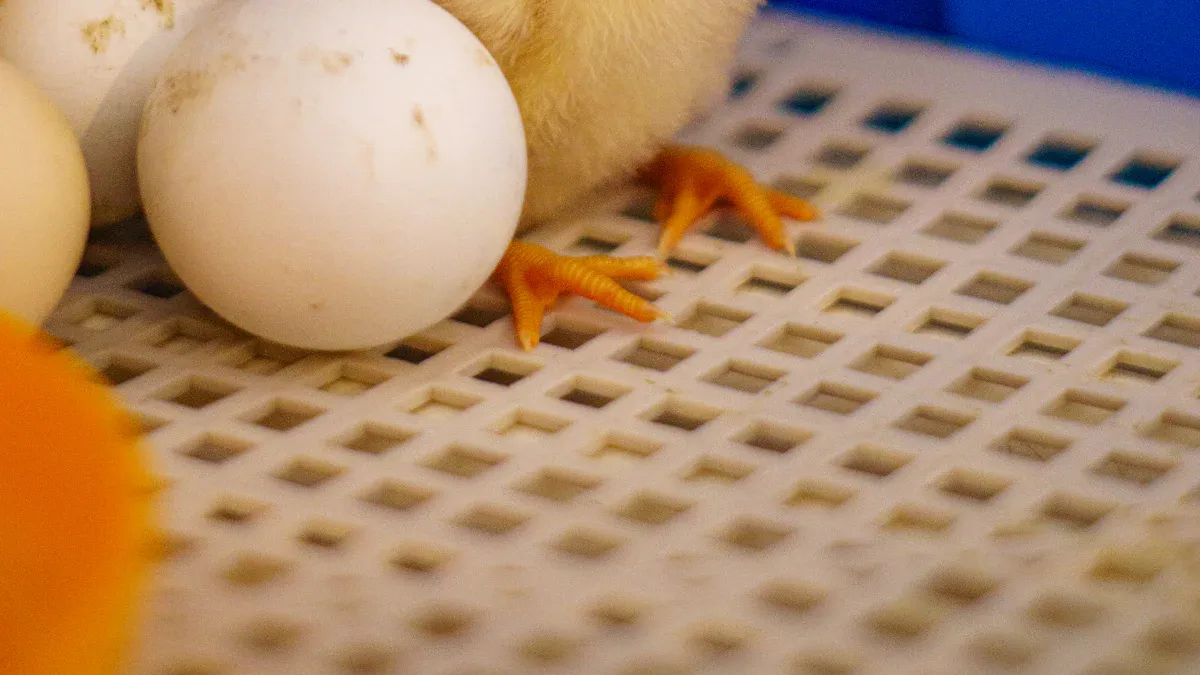
Choosing the right egg incubator starts with knowing your flock goals. You want to match your hatching plans to your family’s needs and your backyard space. Let’s break down how to plan for your ideal flock size and decide when a mini incubator is enough.
Backyard Flock Size
Family Egg Needs
You should start by thinking about how many eggs your family eats each week. Most families need 4 to 6 laying hens to keep up with breakfast and baking. If you have a family of four, you will want at least 6 hens for daily eggs. Many backyard chicken keepers start with a small flock of less than ten hens. This size fits most yards and gives you a steady supply of fresh eggs.
For a dozen eggs per week, plan for 3 to 5 hens. For two dozen eggs, aim for 6 to 10 hens.
|
Flock Size Range |
Description |
|---|---|
|
3-5 hens |
About a dozen eggs per week |
|
6-10 hens |
About two dozen eggs per week |
|
4-8 hens |
Average backyard flock for egg production |
Replacing Layers
Chickens slow down their egg laying as they age. You will need to replace older hens every year or two to keep your egg basket full. Planning to hatch a few chicks each year helps you keep your flock healthy and productive. If you want to refresh your flock, you can set aside a few hatching eggs each spring.
When Mini Egg Incubators Are Enough
Occasional Hatches
Mini egg incubators work well if you want to hatch a small number of chicks once or twice a year. You can set 6 to 14 eggs per batch. With a realistic hatch rate of 50–75%, you can expect 5 to 7 chicks from 10 eggs. This is usually enough to replace older hens or add a few new birds to your flock.
-
You can run one or two batches a year to keep your flock size steady.
-
Mini incubators fit easily in your home and use little electricity.
-
You can watch the hatching process with your family and learn together.
Small Projects
If you want to try hatching eggs for the first time or do a small breeding project, a mini egg incubator is a great choice. You can experiment with different breeds or teach kids about life cycles. Mini egg incubators give you a simple way to start without a big investment.
Tip: Plan for a 30–50% hatch rate if you are new to hatching eggs. With practice, you can reach 50–75%. Best-case results can reach 90%, but this takes experience and careful management.
When You’ll Need a Larger Egg Incubator
Selling Chicks
If you want to sell chicks or supply friends and neighbors, you will need to hatch more eggs at once. A larger egg incubator lets you set 24, 48, or even 60 eggs in one batch. This helps you meet demand and makes your hatching more efficient.
-
Selling chicks means you need a steady supply of new birds.
-
A bigger incubator saves you time by letting you hatch more at once.
Meat Birds
Raising chickens for meat takes even more planning. You need to hatch many chicks at the same time to grow them together. Many people who raise meat birds use a larger egg incubator to handle the bigger batches. This helps you keep your freezer stocked and your flock healthy.
-
Meat bird programs often require hatching dozens or even hundreds of chicks each season.
-
A larger incubator helps you manage these bigger goals.
Do this:
-
Count how many eggs your family eats each week.
-
Decide how many hens you need for your egg supply.
-
Plan to replace 2–4 hens each year to keep your flock productive.
-
Choose a mini egg incubator if you want to hatch 6–14 eggs per batch for family use.
-
Upgrade to a larger egg incubator if you plan to sell chicks or raise meat birds.
-
Use the following hatch rate guide for planning:
-
Beginners: 30–50% hatch rate
-
Home users: 50–75% hatch rate
-
Best case: up to 90% hatch rate
-
Decision Table in Prose:
If you want to hatch a few chicks each year to refresh your backyard flock, a mini egg incubator is enough. You can run one or two batches and meet your family’s egg needs. If you plan to sell chicks, raise meat birds, or grow your flock quickly, you will need a larger egg incubator. Always match your incubator size to your goals and the number of hatching eggs you want to set. Start small, learn the process, and upgrade only when your flock goals grow.
Hatch Rate Math for Mini Egg Incubators
Simple Hatch Planning
Eggs Set vs Chicks Hatched
When you start hatching chicks, you need to know how many eggs will actually become healthy chicks. Not every egg will hatch, even if you do everything right. Most mini egg incubators give many home users a hatch rate between 50% and 75% once you learn the basics, but beginners should plan for lower numbers at first. Research on well-designed forced-air incubators sometimes reports higher results under ideal conditions, but real backyard outcomes depend heavily on egg quality and day-to-day management.
-
Hatching chicks under a broody hen can sometimes reach very high hatch rates because she provides steady heat and turning, but results still vary.
-
Many home users eventually see around 50–75% hatch rates from mini incubators when they use fresh, fertile eggs and keep conditions stable.
-
Shipped eggs often have noticeably lower hatch rates, often around 40–50%, because transport can damage air cells.
-
Good care, accurate temperature, and high-quality eggs matter more than incubator size when you want reliable results.
Example Mini Incubator Math
10 Eggs, 5–7 Chicks
Let’s look at a real example. If you set 10 eggs in your mini incubator, you can expect about 5 to 7 chicks to hatch. This uses the average 50–75% hatch rate most backyard keepers see. If you are new to hatching chicks, you might get closer to 5 chicks. With practice and good eggs, you could see 7 or more. Some people reach even higher rates, but it takes experience and careful control of temperature and humidity.
Tip: Always use fresh, clean eggs from healthy hens for the best results when hatching chicks.
Multiple Batches vs Bigger Incubator
Time and Scheduling
If you want more chicks than your mini incubator can handle in one batch, you have two choices. You can run several batches back-to-back, or you can upgrade to a larger incubator. Running multiple batches means you will spend more time hatching chicks, since each batch takes about 21 days. You also need to clean and reset your incubator between each hatch.
Cost Comparison
Mini incubators use very little electricity—often around $1 in power per full hatch at typical U.S. rates. Even if you run three batches, your total cost stays low. Larger incubators cost more to buy and use more power, but they let you hatch more chicks at once. For most backyard flocks, running a few small batches is easier and cheaper than buying a big machine.
Do this:
-
Decide how many new chicks you want this year.
-
Use the 50–75% hatch rate to plan how many eggs to set.
-
For 6 new chicks, set 10–12 eggs in your mini incubator.
-
If you need more chicks, plan for two or three batches.
-
Upgrade to a bigger incubator only if you want to hatch 20 or more chicks at once.
|
Eggs Set |
Expected Chicks (50–75% Hatch Rate) |
|---|---|
|
6 |
3–4 |
|
10 |
5–7 |
|
14 |
7–10 |
Decision Table in Prose:
If you want to add a few new birds to your backyard flock, a mini incubator is enough. You can run several batches through the year to meet your needs. If you want to hatch a large group of chicks at once, or if you plan to sell chicks, a bigger incubator may fit better. Start with a mini incubator, learn the process, and upgrade only if your flock goals grow.
Choosing the Best Egg Incubator for Your Flock
When you look at desktop egg incubators for your backyard flock, you want to focus on features that help you get healthy chicks. The right incubator keeps eggs at the right temperature, controls humidity, and runs safely and quietly in your home. Let’s break down what matters most.
Temperature and Air Circulation
Forced-Air vs Still-Air
You will see two main types of egg incubators: forced-air and still-air. Forced-air incubators use a small fan to move warm air around the eggs. This helps keep the temperature even in every part of the incubator. Still-air models do not have a fan, so the air stays still and can create hot or cold spots. For most backyard chicken keepers, forced-air models are the best egg incubators because they give you more stable results.
Decision Table in Prose:
If you want the easiest and most reliable hatching, choose a forced-air incubator. You get even heat, which means better hatch rates. Still-air incubators can work, but you must watch the temperature more closely. For beginners or anyone with limited space, forced-air is usually the better choice.
99.5°F Target
Eggs need a steady temperature to develop. The best egg incubators hold the temperature at about 99.5°F for chicken eggs. If the temperature drops or rises too much, chicks may not hatch. Always check the digital display and keep the incubator away from drafts or direct sunlight.
|
Feature |
Importance |
|---|---|
|
Temperature |
Keep a constant 99–100°F for healthy chick development. |
|
Air Circulation |
A fan helps spread heat evenly, which is key for successful hatching. |
|
Humidity |
Proper humidity keeps eggs from drying out or holding too much water. |
Humidity Control
Water Channels
Humidity means the amount of moisture in the air. The best egg incubators have small water channels or trays inside. You add water to these channels to keep the air moist. This helps eggs lose just the right amount of water as they grow. If the air is too dry, chicks can get stuck in the shell. If it is too wet, chicks may not hatch at all.
Lockdown Humidity
For most of the 21-day incubation, keep humidity between 40–60%. In the last three days, called “lockdown,” raise humidity to 60–70%. This helps chicks hatch more easily. Always follow the instructions for your incubator and check the humidity display if you have one.
-
Proper humidity helps eggs lose water at the right rate.
-
Too little humidity dries out embryos.
-
Too much humidity can make hatching difficult.
Safety and Noise
Quiet Operation
You want an incubator that runs quietly. The best egg incubators use quiet fans and do not vibrate much. You can place them in a bedroom or office without disturbing your family. If you hear a lot of noise, check the fan and keep the incubator on a steady surface.
Child-Safe Design
Choose an incubator with a secure lid and sturdy build. This keeps curious hands safe and protects your eggs. Always wash your hands after touching eggs or chicks.
Tip: Place your incubator in a draft-free room, away from kitchens and pets. Keep the room at 68–75°F for best results.
Do this:
-
Pick a forced-air incubator for even heat.
-
Set the temperature to 99.5°F and check it daily.
-
Add water to the channels to keep humidity at 40–60%, then 60–70% for the last three days.
-
Choose a quiet model for your home.
-
Make sure the incubator has a secure lid and is out of reach of small children.
The best egg incubators for backyard flocks offer steady temperature and humidity control, quiet operation, and safe design. If you follow these steps, you will give your chicks the best chance to hatch strong and healthy.
Cost, Electricity, and Space
Mini Incubator Power Use
50–100 Watts
Mini egg incubators use about 50 to 100 watts of electricity. This is similar to running a small lamp or a laptop. You can keep your incubator plugged in for three weeks without seeing a big change in your electric bill. Many mini models use around 0.29 kilowatt-hours (kWh) each day as an example, so over a full 21-day hatch you might use about 6 kWh in total, depending on the exact unit and room conditions.
$1 per Hatch
At typical U.S. electricity rates, you pay roughly $1 or so for each 21-day hatch in a mini incubator. This low cost makes it easy to hatch chicks without worrying about your budget. You save money compared to larger incubators, which use much more power.
|
Incubator Type |
Daily Power Use |
Total Cost per Hatch |
|---|---|---|
|
Mini |
0.29 kWh |
~$1 |
|
Cabinet |
5.4 kWh |
~$18–20 |
Cabinet Incubator Comparison
5.4 kWh per Day
Cabinet incubators use much more electricity. A typical cabinet model may draw around 5.4 kWh every day. This is like running several space heaters at once. If you hatch eggs in a cabinet incubator for 21 days, you use roughly 113 kWh total.
$18–20 per Hatch
Using common U.S. power rates, you may pay around $18 to $20 for each 21-day hatch in a cabinet incubator. This higher cost fits bigger flocks or people who sell chicks. For most backyard chicken keepers, mini incubators are more affordable and practical.
Tip: Mini incubators are perfect for small flocks and first-time hatches. You save money and space.
Placement in the Home
Draft-Free Room
You want to place your incubator in a room that stays at a steady temperature. Choose a spot away from windows, doors, and vents. Drafts can change the temperature inside your incubator and affect your hatch rate. Use a thermometer to check the room for at least 24 hours before you set your eggs.
Away from Kitchen
Keep your incubator away from the kitchen and dining areas. Kitchens have changing temperatures and strong smells. Find a quiet room, like a bedroom or office, where you can watch your eggs easily. Place the incubator on a solid, level surface at a comfortable height.
Best Placement Checklist:
-
Pick a room with steady temperature (68–75°F).
-
Avoid direct sunlight and drafts.
-
Use a solid, level surface.
-
Monitor room conditions before starting.
-
Keep away from pets and small children.
Do this:
-
Check your incubator’s wattage (50–100 watts for mini models).
-
Estimate electricity cost: about $1 for a 21-day hatch at typical rates.
-
Choose a draft-free room with steady temperature.
-
Place the incubator on a solid, level surface.
-
Keep the incubator away from kitchens, pets, and children.
Decision Table in Prose:
If you want to hatch a few chicks for your backyard flock, a mini incubator keeps your costs low and fits in small spaces. You pay about $1 for electricity each hatch at typical power prices. Cabinet incubators cost much more to run and need extra room. For most backyard chicken keepers, a mini incubator is the best choice for saving money and space.
Decision Checklist: Is a Mini Egg Incubator Enough?
Choosing the right incubator for your flock can feel overwhelming. This checklist helps you decide if a mini egg incubator matches your needs or if you should consider a larger model. Review each point and see which fits your situation best.
Mini Incubator Fits If…
Small Flock
You keep a small backyard flock, usually between 4 and 10 hens. You want to add just a few new chicks each year to keep your flock healthy and productive. Mini egg incubators let you hatch 6–14 eggs per batch, which is perfect for replacing older hens or trying out new breeds without crowding your coop.
Occasional Hatching
You plan to hatch eggs once or twice a year. You do not need a constant supply of chicks. Running one or two batches each season gives you enough new birds for your family’s needs. This approach works well if you want to refresh your flock slowly or enjoy hatching as a fun project.
Limited Space
You have limited indoor space. Mini egg incubators fit easily on a desk or shelf and run quietly in a spare room. You do not need a dedicated hatching area. The small size and low noise make them ideal for homes where space matters.
Tip: If you want a simple, low-cost way to hatch a few chicks at a time, a mini incubator is a great starting point.
Need Bigger If…
Large Flock
You keep a large flock or want to grow your flock quickly. If you need to hatch more than 14 chicks at once, a larger incubator will save you time and effort. Bigger models let you set 24, 48, or even 60 eggs in one batch, which helps when you have many hens or want to raise meat birds.
Frequent Hatching
You plan to hatch eggs often, such as every month or throughout the year. Running many small batches can take up more time and require extra cleaning. A larger incubator lets you hatch more chicks at once, making your schedule easier to manage.
Selling Chicks
You want to sell chicks or supply friends and neighbors. Meeting demand means hatching bigger batches. A larger incubator helps you keep up with orders and makes your hatching process more efficient.
|
When to Choose |
Mini Incubator |
Larger Incubator |
|---|---|---|
|
Flock Size |
4–10 hens |
15+ hens |
|
Hatching Goal |
6–14 eggs/batch |
24+ eggs/batch |
|
Space Needed |
Small shelf |
Dedicated area |
|
Frequency |
1–2 times/year |
Monthly or more |
|
Selling Chicks |
Not needed |
Yes |
Note: Many people upgrade to larger incubators because they want more reliable performance. Cheaper models can break down or need frequent adjustments. If you find yourself checking the temperature often or dealing with breakdowns, you may need a more advanced incubator.
Start Small, Plan Ahead
Resale Value
You can start with a mini incubator and upgrade later if your needs change. Many backyard chicken keepers sell their first incubator to someone new when they move up to a larger model. This helps you recover some of your costs and makes it easier to try hatching without a big investment.
Test Batches
Running a few small test batches helps you learn the basics of incubation. You can practice setting eggs, adjusting temperature, and watching chicks hatch. This experience builds your confidence and helps you decide if you want to hatch more chicks in the future.
Callout: Start with a mini incubator if you have a small backyard flock and want to hatch a few chicks at a time. Upgrade only when your goals grow or you need more capacity.
Checklist for Deciding:
-
I have 4–10 hens and want to hatch a few chicks each year.
-
I have limited space and need a quiet, compact incubator.
-
I do not plan to sell chicks or hatch large batches.
-
I want to learn the basics before investing in a bigger model.
If you checked most of these boxes, a mini incubator will fit your needs. If you need more chicks, more frequent hatches, or want to sell chicks, consider a larger incubator as your next step.
Quick Reference Card: Mini Egg Incubators for Backyard Flocks
Size and Capacity Guide
You want to match your incubator size to your flock goals. Mini egg incubators work best for small backyard flocks. You can hatch enough chicks to refresh your layers or try new breeds.
|
Incubator Type |
Egg Capacity per Batch |
Best For |
|---|---|---|
|
Mini Desktop |
6–14 eggs |
Small flocks, first-time hatches |
|
Hobby/Small |
12–48 eggs |
Mixed breeds, small projects |
|
Medium/Cabinet |
60+ eggs |
Large flocks, selling chicks |
Tip: If you keep 4–10 hens, a mini incubator with space for 6–14 eggs per batch usually fits your needs.
What to do:
-
Count how many chicks you want to hatch each year.
-
Choose a mini incubator if you only need a few new birds at a time.
-
Upgrade to a larger incubator if you plan to hatch more than 14 eggs in one batch.
Hatch Rate Planning
Not every egg will hatch. You need to plan for realistic results. Hatch rate means the percentage of eggs that become healthy chicks.
|
Experience Level |
Expected Hatch Rate |
Example: 10 Eggs Set |
Chicks Hatched |
|---|---|---|---|
|
Beginner |
30–50% |
10 |
3–5 |
|
Home User |
50–75% |
10 |
5–7 |
|
Best Case |
Up to 90% |
10 |
9 |
Note: Fresh, fertile eggs and careful incubator management help you get better hatch rates.
What to do:
-
Set 10 eggs if you want 5–7 chicks.
-
Plan for lower hatch rates if you are new to hatching.
-
Run two or three batches if you need more chicks for your flock.
Electricity and Cost
Mini egg incubators use very little electricity. You save money compared to larger models.
|
Incubator Type |
Daily Power Use |
Total Cost per Hatch (21 days) |
|---|---|---|
|
Mini |
0.29 kWh |
~$1 |
|
Cabinet |
5.4 kWh |
~$18–20 |
Tip: You can run a mini incubator for three weeks and often spend only around $1 on electricity at typical U.S. rates.
What to do:
-
Check your incubator’s wattage (most mini models use 50–100 watts).
-
Place your incubator in a draft-free room to keep energy use low.
-
Use a mini incubator if you want to save money and space.
Quick Summary:
-
Mini incubators fit small flocks and first hatches.
-
Expect 5–7 chicks from 10 eggs with average hatch rates.
-
Electricity cost stays low—about $1 per hatch at typical power prices.
Safety and Hygiene Tips
Keeping your hatching area clean and safe helps you get healthy chicks and protects your family. You want to set up your mini egg incubator in a way that reduces risks and keeps germs away.
Tip: Always run your mini incubator in a separate, draft-free room. Aim for a steady temperature between 68–75°F. This helps your eggs develop properly and keeps your incubator working at its best.
Where to Place Your Incubator:
-
Choose a spare bedroom, office, or utility room.
-
Avoid kitchens and dining areas. Food prep areas can spread germs and change temperatures quickly.
-
Keep your incubator away from pets and small children. Curious hands and paws can bump or open the lid.
Daily Safety Checklist:
-
Check the room temperature with a thermometer.
-
Make sure the incubator sits on a solid, level surface.
-
Keep the lid closed except when you need to add water or check eggs.
-
Wash your hands before and after touching eggs, chicks, or any incubator parts.
Alert: After handling eggs, chicks, or incubator surfaces, wash your hands with soap and running water for at least 20 seconds. This simple step helps prevent the spread of germs like Salmonella.
Hygiene Steps for Every Hatch:
-
Use clean, fresh eggs from healthy hens.
-
Wipe down the incubator with a damp cloth before and after each batch.
-
Remove eggshells and any debris right after chicks hatch.
-
Clean water channels and trays regularly to prevent mold or bacteria.
|
Safety Tip |
What to Do |
|---|---|
|
Room Temperature |
Keep at 68–75°F |
|
Location |
Separate room, away from kitchen/dining |
|
Hand Washing |
20 seconds with soap and water after contact |
|
Cleaning |
Wipe incubator before/after each batch |
|
Child/Pet Safety |
Place out of reach |
Extra Reminders:
-
Let young children watch chicks hatch through the clear lid, but do not let them touch eggs or chicks directly.
-
Pregnant people, older adults, and anyone with a weak immune system should avoid direct contact with hatching eggs and chicks.
-
Always dry your hands well after washing.
Note: Good hygiene keeps your flock healthy and your family safe. Simple steps like hand washing and careful placement make a big difference.
You can enjoy hatching chicks at home when you follow these safety and hygiene tips. A clean setup and smart habits help you get the best results from your mini egg incubator.
Mini egg incubators fit most backyard flocks. You get a simple way to hatch a few chicks at a time. Before you buy, match the incubator size to your flock goals. Use this table to help you decide:
|
Factor |
What to Know |
|---|---|
|
Egg Capacity |
6–14 eggs per batch |
|
Growth Potential |
Best for small flocks, slow expansion |
|
Pricing |
$20–$400+ depending on features |
|
Ideal User |
Families, schools, first-time keepers |
Start small, learn the basics, and enjoy watching your chicks hatch!
FAQ
How many eggs can I hatch at once in a mini egg incubator?
You can hatch 6–14 chicken eggs per batch in most mini egg incubators. This size fits small backyard flocks and lets you refresh your hens without crowding your coop.
What hatch rate should I expect as a beginner?
Most beginners see a 30–50% hatch rate on their first try. With practice, you can reach 50–75%. Using fresh, fertile eggs and following instructions helps improve your results.
How much does it cost to run a mini egg incubator?
You will often spend around $1 on electricity for a full 21-day hatch at typical U.S. power rates. Mini incubators use 50–100 watts, so they are energy efficient and budget friendly for small flocks.
Where should I place my mini egg incubator?
Place your incubator in a draft-free room with a steady temperature between 68–75°F. Avoid kitchens, dining areas, and spots with direct sunlight or pets.
Can I hatch eggs from different breeds together?
Yes, you can hatch different chicken breeds together if the eggs are similar in size and need the same incubation time. Set all eggs at the same time for best results.
How do I keep my incubator clean and safe?
Wipe down your incubator before and after each batch. Wash your hands for at least 20 seconds after touching eggs or chicks. Keep the incubator out of reach of children and pets.
What should I do if I want more chicks than my mini incubator can handle?
You can run multiple batches through the year. Each batch takes about 21 days. If you want to hatch more than 14 chicks at once, consider upgrading to a larger incubator.
Do I need special skills to use a mini egg incubator?
No special skills are needed. Most mini incubators have digital controls and automatic turning. Follow the instructions, check temperature and humidity, and you will learn as you go.
Data authenticity note: The egg capacities, hatch-rate ranges, power-use estimates, temperature and humidity targets, and room-placement recommendations in this article are drawn from small- and medium-capacity incubator manuals, manufacturer specification sheets, small-flock incubation guides, and multi-season logs from home hatchers. All numbers are rounded into practical working ranges for backyard use and are examples only, not guarantees. Always follow the safety instructions for your specific incubator model, check local electricity prices when estimating running costs, and consult local poultry or extension professionals if you have questions about flock health.
References (no external links)
-
Small-flock and backyard poultry incubation guides that explain incubator sizing, hatch-rate expectations, and flock-replacement planning for family flocks.
-
Manufacturer manuals and spec sheets for mini, hobby, and cabinet incubators detailing wattage, typical power use, capacity, and recommended temperature and humidity ranges.
-
Backyard poultry education materials on safe incubator placement in the home, including room-temperature targets and biosecurity considerations.
-
Example energy-use and cost calculations for small household appliances, adapted to mini and cabinet incubators using typical U.S. residential electricity rates.
-
Aggregated multi-season logs from home hatchers tracking set eggs, chicks hatched, and outcomes by egg source (local vs shipped) and experience level.
0 Comments