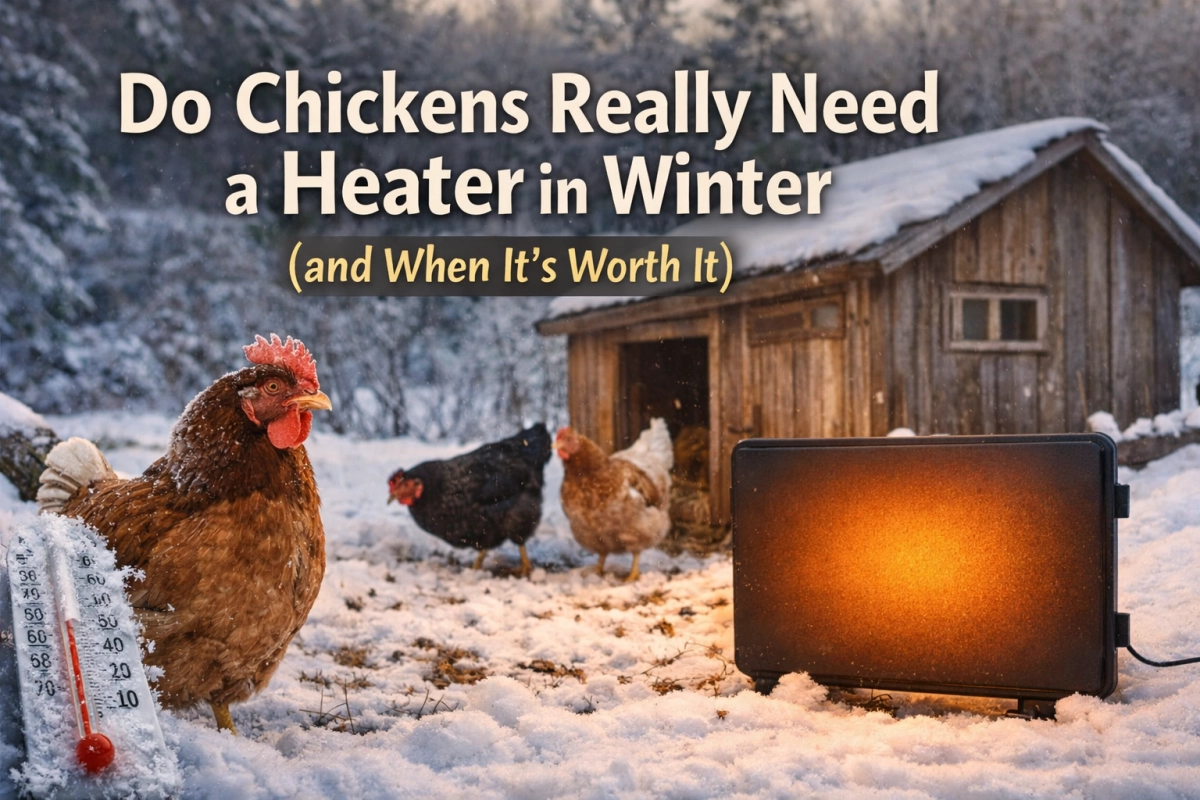
Most backyard flocks get through winter without a heater. I know the cold can feel scary. But the main job is not to turn the coop into a living room. The main job is to keep the coop dry, keep wind off the birds, and let damp air leave the coop.
This guide helps you decide, not guess. I break it down by age and by risk. I will show you when extra heat can help and when it can backfire. If you want a simple place to compare heater styles before you buy anything, start with these chicken coop heater options.
Newly feathered chicks 0–6+ weeks: brooder heat requirements and the brooder vs coop heat difference
New chicks are different. They need brooder heat. They do not need a heated coop. A brooder gives a warm spot at chick level. Chicks can walk closer or farther away. That choice keeps them safer.
Most guides use the same simple plan. Start warm. Then drop the heat a little each week. Let chick behavior tell you if you are right.
Brooder temperature schedule (common practice; adjust to behavior and your setup):
|
Chick age |
Target brooder temp (°F) |
What you should see |
Too cold (signs) |
Too hot (signs) |
|---|---|---|---|---|
|
Week 1 |
90–95 |
Evenly spread, active |
Huddling under heat, peeping loudly |
Edging away, panting |
|
Week 2 |
85–90 |
Exploring, eating |
Piling together |
Lethargy, wings spread |
|
Week 3 |
80–85 |
Comfortable clustering |
Huddling, slow growth |
Avoiding heat zone |
|
Week 4 |
75–80 |
Mostly feathering in |
Huddling at night |
Listless, excessive drinking |
|
Week 5+ |
Reduce ~5°F/week until ambient and fully feathered |
Normal activity |
Persistent piling |
Persistent avoidance of warm area |
-
Penn State Extension and the University of Maine both suggest about 90–95°F in week 1, then about 5°F less each week. Chick behavior should be the final check.
-
Once chicks are fully feathered and doing well at room temperature, they can leave the brooder. In winter, do not move half-feathered birds into a cold, damp coop.
Brooder vs coop heat, clarified
-
A brooder is a small warm zone. Chicks can choose it or leave it.
-
Heating a whole coop is different. It can trap moisture if ventilation is not right. That can raise frostbite risk later.
-
For older birds in winter, dry air and good airflow matter more than a warm room.
Pullets ≈6–20 weeks: acclimation first, heat rarely
Pullets are fully feathered, but they are still growing. Most pullets do fine without heat if they are healthy and your coop stays dry. Your job is to help them get used to winter the right way.
-
A dry coop with steady airflow can handle cold better than a damp “warm” coop.
-
Most guides do not give a hard pullet temperature cut-off. That makes sense. Coops and weather are not the same from one yard to the next.
-
I only think about extra heat when conditions stack up: strong wind at roost height, wet bedding, birds that look run down, or a harsh cold snap.
-
Watch the birds. If pullets keep piling hard at night, fix drafts and moisture first. If combs look pale or gray after a cold night, treat that as a warning.
-
For general winter coop priorities, Ohio State University’s backyard chicken winter fact sheet (2018) and UNH Extension’s winter care article (2024) both focus on dryness, airflow, and draft control.
I get why people want to “just add heat.” But a warm coop can hold more moisture. Then that wet air hits freezing temps and you get frostbite problems. A heated coop can also make a bigger shock when birds step outside.
Adults 20+ weeks: when heat is and isn’t worth it
Healthy adult chickens handle cold better than most people expect. The big troublemakers are wet air and wind that hits them on the roost.
Here is a calm way to decide:
-
Start at “around freezing.” Check the coop at night and at dawn. Make sure bedding stays dry. Make sure there is no draft blowing on the birds.
-
Keep ventilation high. You want damp air out. You do not want wind on the birds.
-
Think about extra heat only in harder cases. That can be a long cold snap, very low temps with harsh wind, or birds that are weak, old, sick, or small.
-
If you add heat, keep it mild and local. You are taking the edge off. You are not trying to make a warm room.
Evidence touchpoints you can trust
-
The University of Arkansas Extension says you can consider added heat when temps drop below about 35°F. It also points people toward safer choices than bare bulbs and toward better placement.
-
UNH Extension repeats a simple point. Mature birds usually do not need heat. Dry air and good ventilation prevent many winter problems.
-
USDA APHIS links frostbite risk to moisture in freezing weather. Wet, unventilated coops make frostbite more likely.
Practical setup for adults
-
Roosts: Use flat 2×4 lumber (wide side up). Birds can cover their toes under their body.
-
Vents: Put exhaust high (ridge or upper gables). Keep intake openings above roost height so you do not blow on the birds.
-
Litter: Keep bedding dry and deep enough to help with cold floors. Fix water spills fast.
-
Water: If water keeps freezing, use a safe heated base and place water away from where birds sleep. That helps keep humidity down.
Ventilation, moisture, and preventing frostbite on chicken combs
I treat ventilation as winter insurance. I want moist air out. I do not want wind on the birds. That balance keeps combs and toes safer than a hot coop ever will.
-
Placement: Put exhaust vents high near the roofline or ridge. Let warm, wet air rise and leave.
-
Air in: Add openings above roost height and on the calm side of the coop. That helps fresh air enter without a direct draft.
-
Simple checks: If you see water on windows, smell ammonia, or feel wet bedding, the coop is holding moisture. Open high vents more and fix the wet spot.
-
Roost design: Flat 2×4 roosts help birds cover toes. Do not use metal perches in winter.
-
Wind control: Block wind at bird height. Seal cracks that blow right on the roost. Keep roosts away from openings.
-
Water and bedding: Keep waterers away from sleeping spots. Fix leaks. Stir or replace wet bedding fast. USDA APHIS calls out the moisture and frostbite link.
-
Extension practice notes: The University of Minnesota’s cold-weather care page (2022) describes roof vents and protected openings that move air while blocking drafts.
Behavioral red flags for frostbite risk
-
Look for ice crystals on comb tips at dawn. Watch for pale or gray patches on combs and wattles. Notice birds tucking feet for a long time. When you see these signs, fix moisture and wind first. Do not rush to blast heat.
Safe heating options and fire-risk mitigation
If you decide heat is worth it, safety has to lead. Coops hold dust, feathers, and dry bedding. That mix can burn fast. Bare high-watt bulbs over litter are a common way people lose a coop.
Safer approaches
-
Radiant heat panels or plates: Use UL-listed units when you can. Mount them solid. Place them where birds can choose to step closer or farther away.
-
Low-wattage enclosed heaters: Only use units that fit utility or farm use. Keep them away from bedding and away from pecking.
Electrical safety checklist (summarized from NFPA guidance)
-
Use a GFCI outlet and outdoor-rated cords.
-
Mount heaters so they cannot fall into bedding.
-
Do not chain extension cords together.
-
Keep plugs and joins off the floor and away from water.
-
Run cords where birds cannot peck them.
-
Use a thermostat so heat does not run nonstop. A simple control can solve this pain point for many keepers, like this heater thermostat.
-
For general precautions, see NFPA’s chicken-coop fire and electrical safety notes (2023) and the NFPA coop safety tip sheet.
Pro tip: Heat is the last step, not the first. I always fix drafts and moisture before I plug anything in.
Regional guidance for a mixed U.S. readership
Winter looks different in every yard. A windy hill feels colder than a calm valley. A wet coastal winter bites different than a dry inland one. Use these as starting points, then adjust to what your coop does.
-
Northern tier (Upper Midwest, Northern New England, Northern Rockies): Plan for long stretches of hard cold and nasty wind. Focus on wind blocks, dry litter, and steady high ventilation. I only add mild heat for weak birds or during long, brutal cold snaps. The University of Minnesota’s guidance (2022) lines up with these basics.
-
Temperate and interior zones (Mid-Atlantic, inland Northwest, elevations): Many coops do fine without heat when they stay dry and calm. Put your effort into draft control at roost height and keeping damp air moving out up high. UNH Extension’s winter care article (2024) supports this approach.
-
Mild coastal South and much of the West: Heat is rarely needed. Focus on keeping bedding dry and the coop predator-safe. Let winter sun help when you can, but keep airflow above the birds.
One line to remember: wind on the roost is your enemy, and ventilation above the roost is your friend.
FAQ
Q: Do chickens need heat in winter? A: Most healthy adult birds do not. They do best in a dry, draft-free coop with steady ventilation up high. I only think about mild, local heat during harsh cold snaps, for weak birds, or when a coop cannot block wind at roost height. UAEX and UNH Extension both stress dryness and airflow first.
Q: What temperature is too cold for chickens at night? A: There is no one number that fits every flock and every coop. Start by checking your coop around freezing. Then watch for wet air, drafts, and ice. I only move to mild heat during single-digit cold, harsh wind, or when birds are weak.
Q: Is wind chill a factor for chickens? A: Yes, if wind reaches roost height. Wind pulls heat fast and raises frostbite risk. Block drafts at bird level and keep ventilation high. If you want a simple explanation of wind chill, the National Weather Service has a clear overview.
Q: How do I prevent frostbite on combs and wattles? A: Keep the coop dry. Vent the moist air out up high. Stop drafts on the birds. Keep bedding dry. Use flat 2×4 roosts so birds can cover toes. USDA APHIS warns that moisture in freezing weather drives frostbite risk.
Q: Are heat lamps safe in coops? A: Usually not. Bare high-watt bulbs near bedding are a common fire risk. If you need warmth, use safer mounted options and safe wiring. NFPA safety guidance covers the main rules.
Q: When do chicks stop needing a brooder? A: When they are fully feathered and doing well at room temperature. Many guides start around 90–95°F in week 1 and drop about 5°F each week. Penn State and UMaine both describe that step-down plan.
Resources and further reading
-
University of Arkansas Extension — Backyard poultry cold-weather guidance (2024)
-
UNH Extension — How to care for backyard chickens in winter (2024)
-
USDA APHIS — Biosecurity Workbook (moisture and frostbite warning) (2024)
-
University of Minnesota Extension — Caring for chickens in cold weather (2022)
-
NFPA — DIY chicken coop fire and electrical safety and coop safety tip sheet (PDF)
-
Penn State Extension — Brooding of Domestic Fowl (2023)
-
University of Maine Extension — Bulletin #2221: Starting Chicks (2020)
-
If you want more detail on picking a heater, read this chicken coop heater guide.
-
If you want a simple safety walk-through, use this safe use checklist.
A calm plan beats a cold snap. Check your coop for wet bedding and drafts this week. Make your “if it gets really cold” plan now. Then you will know when mild heat is worth it and when your birds will do better with dry air and steady ventilation.


0 Comments