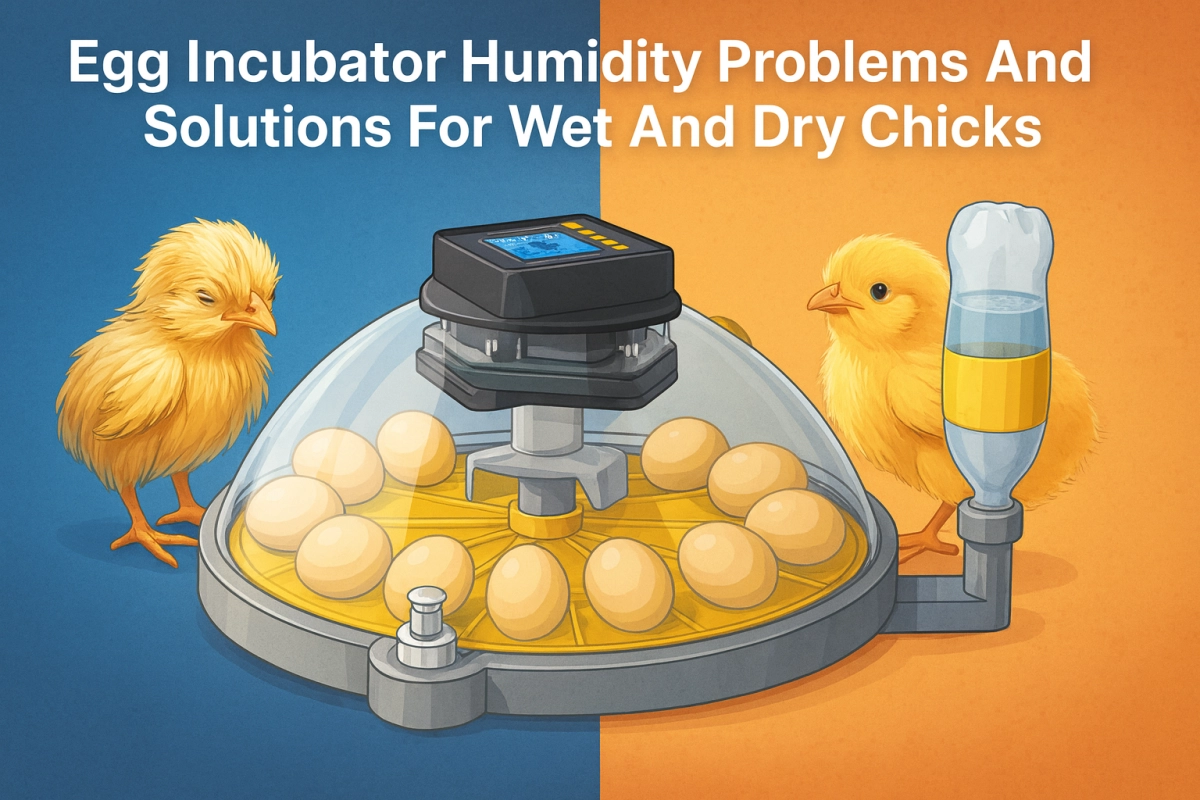
Humidity problems in your egg incubator can leave chicks too wet or too dry and can even stop eggs from hatching at all. You may ask why some eggs never pip, why chicks get stuck in the shell, or why they seem weak after hatch. When you manage humidity well, you help chicks develop correctly and hatch strong. The right humidity lets eggs lose water at a steady rate and allows air cells to grow to the right size. The table below shows how low, moderate, and high humidity levels typically affect hatch rates and chick condition:
|
Humidity Level |
Impact on Hatchability |
Impact on Chick Weight |
|---|---|---|
|
High humidity (above about 65–70% RH) |
Hatch rates may drop; more wet or sticky chicks |
Chicks can be heavier at hatch and slower to dry |
|
Moderate humidity (around 45–55% RH) |
Supports good hatch rates when temperature is correct |
Helps chicks dry and fluff normally |
|
Low humidity (below about 40% RH) |
Hatch rates may drop; more late dead-in-shell chicks |
Chicks tend to be small, weak, or “shrink-wrapped” |
You can fix most humidity problems with simple checks, small adjustments, and good record-keeping.
Key Takeaways
-
Humidity control is critical for strong chick growth. Correct humidity helps eggs lose enough water and supports normal air cell development.
-
For standard chicken eggs, keep relative humidity around 45–55% for most of incubation. Raise it to about 65–75% for the last three days (“lockdown”) to help chicks hatch.
-
Check if eggs lose weight. Eggs should lose roughly 10–13% of their starting weight before hatch. If eggs lose too much or too little, there is a humidity problem.
-
Look for wet chicks. Wet chicks have small air cells and sticky shells. This usually means humidity was too high.
-
Look for dry chicks. Dry chicks have tough membranes and big air cells. This usually means humidity was too low.
-
Use a calibrated hygrometer to check humidity often. Accurate readings help you hold the right conditions.
-
Write down humidity, egg weight, and air cell size in a hatch log. This helps you find patterns and make hatching better next time.
-
Change humidity quickly if you see problems. Add water if humidity is low. Remove water and increase airflow if humidity is high.
Egg Incubator Humidity Basics
Why Humidity Matters
You need to understand why humidity plays a key role in your egg incubator. Humidity levels control how much water eggs lose during incubation. This water loss shapes the air cell inside each egg. The air cell must reach the right size so chicks can breathe and hatch easily. If you keep humidity too high, eggs do not lose enough water. If you keep humidity too low, eggs lose too much water. Both problems can harm egg development and lower hatch rates.
-
Humidity levels influence water loss from eggs. This process helps create a healthy air cell for the embryo’s lungs.
-
Moderate humidity early in incubation keeps eggs from drying out too fast.
-
Controlled humidity in later stages lets eggs lose enough weight for proper air cell growth.
-
Good humidity control prevents dehydration and supports strong chicks.
Recommended Humidity Ranges
You should follow clear humidity ranges for each stage of incubation. These ranges help you meet the humidity needs of chicken eggs and support healthy chick development. The table below shows commonly recommended starting points for chicken eggs:
|
Incubation Phase |
Recommended Humidity Range |
|---|---|
|
First 18 days |
45 to 55 percent |
|
Last 3 days (lockdown) |
65 to 75 percent |
Keep humidity reasonably steady within these ranges. Use a reliable hygrometer to check levels often. If you see the humidity drop or rise outside the target range, adjust water trays or ventilation in your incubator. Stable humidity helps eggs lose the right amount of water and supports a smooth hatch.
Weight Loss and Air Cell Growth
Egg weight loss and air cell growth give you clues about humidity control. Eggs should lose about 10–13 percent of their weight by the time chicks hatch. If eggs lose too much weight, humidity is too low. If eggs lose too little, humidity is too high. You can track weight loss by weighing a sample of eggs every few days. You can also candle eggs to check air cell size.
|
Study |
Findings |
|---|---|
|
Van der Pol et al. (2013) |
Low humidity increases egg weight loss and reduces hatchability. |
|
Bruzual et al. (2000) |
Humidity below certain thresholds can lower chick weight at hatch. |
|
El-Hanoun et al. (2012) |
Humidity needs change with flock age and affect hatchability traits. |
|
BMC Veterinary Research |
Water loss rates between about 9.1% and 18.5% are critical for healthy chicks. |
You can use these findings as general guides to judge if your humidity levels are on track. Watch for steady air cell growth and proper weight loss. These signs show that your egg incubator is meeting the needs of developing chicks.
Humidity Problems: Wet Chicks vs. Dry Chicks
Wet Chicks: Symptoms and Causes
When humidity is too high, you will see some signs. Wet chicks have trouble hatching and show clear problems. Watch for these issues:
-
The air cell inside the egg is smaller. This means less oxygen for the chick.
-
Chicks hatch late and have trouble getting out.
-
Mold and bacteria can grow and cause sickness.
-
Water drops form on the incubator walls or eggs.
-
Eggs feel wet or sweaty, which makes hatching hard.
-
Chicks look sticky or covered in egg material.
-
Chicks struggle to break out of the shell.
-
Fewer eggs hatch than you expect.
Too much humidity makes extra water build up. This shrinks the air cell and makes it hard for chicks to breathe and move. You might see water drops inside the incubator. This means humidity is too high. Eggs may not hatch right because of these problems.
Wet chicks happen for a few main reasons:
|
Factor |
Effect on Hatching |
|
|---|---|---|
|
Temperature |
100°F |
Helps eggs develop the right way |
|
Relative Humidity |
Around 45–55% for most of incubation, 65–75% at lockdown |
Prevents eggs from losing or holding too much water |
|
Oxygen Concentration |
>20% |
Gives embryos enough air to breathe |
|
Carbon Dioxide Level |
<0.5% |
Reduces the risk of poor air quality |
|
Air Movement |
12 cubic feet/min |
Moves air around eggs for better breathing |
If humidity stays too high, eggs hold too much water. This makes eggs swell and air cells get smaller. Chicks might hatch late or not hatch at all.
Dry Chicks: Symptoms and Causes
Dry chicks have different problems. You might see chicks stuck in their shells or with hard, dry coverings. These issues happen when humidity is too low.
Big, hard bellies, navels that do not close, tired chicks, red spots above their beaks, red hocks, and short fluff on their heads all show humidity problems. Check the temperature if you see these signs.
Low humidity makes eggs lose water too fast. The air cell gets too big and the membrane gets tough. Chicks can get stuck and have trouble hatching. Dry chicks look weak and may not stand or move well.
Why Humidity Problems Increase Mortality
Humidity problems can make more chicks die. Both high and low humidity hurt egg growth and hatching. You need to keep humidity in the right range for healthy chicks.
|
Factor |
Impact on Chick Mortality |
|---|---|
|
Dehydration |
Adequate humidity stops chicks from drying out, which is important. |
|
Proper Growth |
The best humidity for chicken eggs (around 45–55% RH during most of incubation) helps chicks grow well. |
|
Healthy Development |
Good humidity supports healthy development and lowers stress. |
|
Airborne Infection Risk |
Right humidity lowers the chance of infection problems. |
Keeping humidity near the middle of the recommended chicken range (about 45–55% RH) stops chicks from drying out and helps them grow. Too much humidity can cause belly problems and infections, which makes more chicks die. Too little humidity dries chicks out and makes them weak. Watch humidity closely to avoid these problems and help more chicks hatch.
Diagnosing Dry Chicks in the Egg Incubator
Signs During Incubation
You can spot dry chicks early by watching for changes in your eggs and humidity levels. Use these steps to check for warning signs:
-
Candle your eggs every few days. Look for air cells that grow too fast or seem too large for the stage.
-
Weigh a sample of eggs every 3–4 days. If eggs lose more than about 13% of their starting weight before day 18, humidity is too low.
-
Check the membrane inside the egg. If it looks white, dry, or tough, humidity levels are not right.
-
Notice if the shell feels dry or rough. This can mean moisture is leaving the egg too quickly.
-
Watch for very dry air inside the incubator. If everything feels parched and readings stay low, humidity may be too low.
Tip: If you see tough membranes or large air cells, raise humidity levels right away. This helps prevent dry chicks and improves hatch rates.
Signs at Hatch
When chicks hatch, you can see more signs of low humidity. Use this table to help you judge if dry chicks are a problem:
|
Indicator |
Description |
|---|---|
|
Incorrect head positioning |
The chick’s head tilts or points down during pipping. |
|
Red hocks or abrasions |
Chicks show red marks or scrapes on their legs. |
|
Enlarged bellies |
Chicks have swollen bellies after hatching. |
|
Sticky chicks with debris |
Chicks come out sticky, with shell or membrane stuck to their bodies. |
|
Shrink-wrapped appearance |
Chicks look dry, with fluff stuck to their skin and trouble moving. |
If you see these signs, check your humidity readings and egg weight loss records. Dry chicks often get stuck in their shells or have trouble standing. You may notice tough membranes that make it hard for chicks to zip and break free.
Common Causes of Low Humidity
Low humidity in your egg incubator can happen for several reasons. You need to find the cause to fix the problem. Here are the most common reasons:
-
The room where you keep your incubator has very dry air. If the environment has less than 30% humidity, eggs lose moisture too fast.
-
The incubator has too much ventilation. Air moves quickly and lowers humidity levels inside.
-
Water trays inside the incubator are empty or too small. This reduces moisture and causes low humidity.
-
You open the incubator lid too often. Each time you open it, humidity drops and eggs lose more water.
-
The hygrometer or humidity sensor is not accurate. If you use a faulty sensor, you may not see the real humidity levels.
-
You use dry incubation methods in a dry climate. This can lead to eggs losing too much moisture.
Note: Always check your humidity readings with a calibrated hygrometer. Track egg weight loss and air cell size to confirm if humidity is too low.
Use this judgment table to help you decide if low humidity is the problem:
|
Symptom |
Checkpoint |
Action to Take |
|---|---|---|
|
Large air cells |
Candle eggs and compare size |
Raise humidity, add water trays |
|
Tough membranes |
Inspect during hatch |
Mist eggs lightly, increase humidity |
|
Shrink-wrapped chicks |
Look for dry, stuck fluff |
Lower ventilation, check water |
|
Red hocks or abrasions |
Examine chick legs |
Review humidity records |
|
Sticky chicks with debris |
Check for membrane on chicks |
Adjust humidity, monitor closely |
If you follow these steps, you can spot dry chicks early and fix humidity problems before hatch. Always use chicken egg standards for temperature, humidity, and weight loss targets. This helps you keep your eggs healthy and your chicks strong.
Solutions for Low Humidity
You can fix low humidity in your egg incubator by following clear steps. You need to act quickly when you see dry chicks or eggs losing moisture too fast. Use these steps to raise humidity levels and help your chicks hatch strong.
-
Check Water Trays
Fill all water trays in your incubator. Make sure the trays have enough water to increase humidity. If your trays are small, add extra containers with water inside the incubator. -
Reduce Ventilation
Close some air vents to slow down airflow. Less air movement helps keep humidity inside. Do not close all vents, because chicks need fresh air. -
Increase Room Humidity
Place a bowl of water near your incubator. You can use a humidifier in the room if the air is very dry. This helps raise humidity levels around the incubator. -
Mist Eggs Carefully
Use a spray bottle to mist eggs lightly. Only do this if you see tough membranes or shrink-wrapped chicks. Mist once and watch for changes. -
Monitor with a Calibrated Hygrometer
Use a reliable hygrometer to check humidity. Calibrate your device before each hatch. Write down readings every day. -
Track Egg Weight Loss
Weigh a sample egg every three or four days. Eggs should lose about 10 to 13 percent of their starting weight by day 18. If weight loss is too high, raise humidity. -
Limit Opening the Incubator
Open the incubator only when needed. Each time you open it, humidity drops. Plan your checks and keep the lid closed as much as possible.
Tip: Always use chicken egg standards for humidity and weight loss. Other bird species may need different levels, but chicken eggs follow the 45–55% range for most of incubation.
Use this judgment table to help you decide which solution works best:
|
Problem Detected |
What to Check |
Solution to Try |
|---|---|---|
|
Large air cells |
Candle eggs |
Add water, close some vents |
|
Tough membranes |
Inspect during hatch |
Mist eggs, raise humidity |
|
Shrink-wrapped chicks |
Look for stuck fluff |
Increase water, reduce airflow |
|
Dry incubator air |
Feel air inside incubator |
Use humidifier, add water bowls |
|
Fast egg weight loss |
Weigh eggs every few days |
Raise humidity, monitor closely |
You can solve low humidity problems by acting early. Watch humidity levels, egg weight loss, and air cell size. Make changes step by step and record what works. Your chicks will hatch better when you keep moisture and humidity in the right range.
Diagnosing Wet Chicks in the Egg Incubator
Signs During Incubation
You can find humidity problems before chicks hatch. Look for these signs in your egg incubator:
-
Candle eggs every few days. Small air cells mean humidity is too high. The air cell should grow slowly. By day 18, it should be about one-third of the egg.
-
Weigh eggs every three or four days. If eggs lose less than about 10 percent of their starting weight by day 18, moisture is not leaving fast enough.
-
Check for water drops inside the incubator. If you see drops on the walls or eggs, humidity is high.
-
Feel the eggshell. If it feels damp or sticky, moisture is building up.
-
Watch for slow embryo movement when candling. High humidity can lower oxygen inside the egg.
Tip: Use chicken egg standards for air cell size and weight loss. Other birds need different targets.
Step-by-step diagnosis during incubation:
-
Candle eggs and compare air cell size to chicken egg charts.
-
Weigh eggs and figure out how much weight they lost.
-
Look for water drops or damp spots in the incubator.
-
Write down everything you find in your hatch log.
|
Symptom |
Diagnostic Step |
Judgment/Action |
|---|---|---|
|
Small air cell |
Candle eggs, compare to chart |
Lower humidity, increase airflow |
|
Low weight loss |
Weigh eggs, calculate % loss |
Reduce water, check ventilation |
|
Condensation present |
Inspect incubator surfaces |
Remove excess water, ventilate |
|
Damp eggshells |
Feel eggshells |
Adjust humidity, dry surfaces |
Signs at Hatch
When chicks hatch, you can see more signs of high humidity:
-
Chicks look wet or sticky when they come out.
-
You find thick, yellow liquid inside the shell. This means moisture did not leave the egg.
-
Chicks have big, soft bellies.
-
Fluff sticks together in clumps and does not dry fast.
-
Some chicks die soon after pipping or cannot finish hatching.
Note: Wet chicks often have trouble breathing and moving. They may not live if you do not fix humidity.
Step-by-step diagnosis at hatch:
-
Look at chicks and see if their fluff is sticky or clumped.
-
Check for leftover liquid inside the shell.
-
Look for big or soft bellies.
-
Write down hatch times and chick health in your log.
|
Symptom |
Diagnostic Step |
Judgment/Action |
|---|---|---|
|
Wet, sticky chicks |
Observe at hatch |
Lower humidity next batch |
|
Thick liquid in shell |
Inspect after hatch |
Increase ventilation, reduce water |
|
Swollen bellies |
Examine chick abdomen |
Adjust humidity, check air cell |
|
Clumped fluff |
Look at chick feathers |
Dry incubator, monitor humidity |
Common Causes of High Humidity
You need to know why humidity gets too high in your incubator. Here are the most common causes:
-
You fill water trays too much or use extra water containers.
-
The room has high humidity, often above 60 percent.
-
You do not ventilate the incubator enough. Poor airflow traps moisture.
-
You use a broken hygrometer or do not calibrate it. This gives wrong readings.
-
You rarely let excess moisture escape when it clearly builds up.
-
You use dry incubation in a humid climate, but the room is still damp.
Tip: Always check your humidity with a calibrated hygrometer. Track egg weight loss and air cell growth to see if humidity is too high.
Step-by-step troubleshooting for high humidity:
-
Check water trays and take out extra water.
-
Measure room humidity with another device.
-
Open air vents to let more air in.
-
Calibrate your hygrometer before each hatch.
-
Candle eggs and weigh them to track air cell size and weight loss.
-
Write down all changes and results in your hatch log.
|
Cause |
Checkpoint |
Solution |
|---|---|---|
|
Overfilled water trays |
Inspect water levels |
Remove extra water |
|
High room humidity |
Measure with hygrometer |
Move incubator, use dehumidifier |
|
Poor ventilation |
Check air vents |
Open vents, increase airflow |
|
Faulty hygrometer |
Calibrate or replace |
Use reliable device |
|
Moisture build-up during lockdown |
Review hatch routine |
Ventilate briefly if needed, avoid standing condensation |
You can stop wet chicks by keeping humidity in the right range. For chicken eggs, keep humidity at 45–55 percent during incubation and 65–75 percent during lockdown. Track weight loss and air cell growth to make sure eggs lose enough moisture. If you see high humidity signs, change levels quickly to protect your hatch.
Solutions for High Humidity
You can fix high humidity in your egg incubator by taking simple steps. Always use chicken egg standards for your targets. If you see wet chicks or too much water, act fast to help your hatch.
Step-by-Step Guide to Lower Humidity:
-
Remove Extra Water
Look at all water trays in your incubator. Take out any extra water containers you find. Only fill trays to the right level for chicken eggs. -
Increase Ventilation
Open the air vents more. This lets more fresh air move inside. Good airflow helps water leave and keeps oxygen safe for chicks. -
Check Room Humidity
Use a hygrometer to check the room’s humidity. If the room is damp, move your incubator to a drier place. You can also use a dehumidifier close by. -
Calibrate Your Hygrometer
Make sure your humidity sensor is correct. Test and fix it before every hatch. Write down your readings each day to watch for changes. -
Track Egg Weight Loss
Weigh some eggs every three or four days. Eggs should lose about 10–13% of their starting weight by day 18. If eggs lose too little, lower humidity and open vents more. -
Limit Water During Lockdown
In the last three days, fill trays only to get 65–75% humidity. Do not add more water unless you see dry chicks or tough shells. -
Dry Surfaces
Wipe off any water drops from the incubator walls or eggs. This stops mold and keeps chicks safe.
Tip: Always use chicken egg standards for temperature, humidity, and weight loss. Other birds may need different levels, but chicken eggs need 45–55% for most of incubation and 65–75% for lockdown.
Judgment Table for Troubleshooting High Humidity:
|
Problem Detected |
What to Check |
Solution to Try |
|---|---|---|
|
Small air cells |
Candle eggs, compare to chart |
Open vents, reduce water |
|
Wet, sticky chicks |
Observe at hatch |
Lower humidity next batch |
|
Thick liquid in shell |
Inspect after hatch |
Increase airflow, dry surfaces |
|
Low egg weight loss |
Weigh eggs every few days |
Remove extra water, ventilate |
|
Condensation present |
Inspect incubator surfaces |
Wipe surfaces, check ventilation |
If you use these steps and the table, you can fix high humidity problems. This will help your chicks hatch strong. Write down what works for each group of eggs. This helps you do better every time.
Humidity Control and Troubleshooting in Egg Incubators
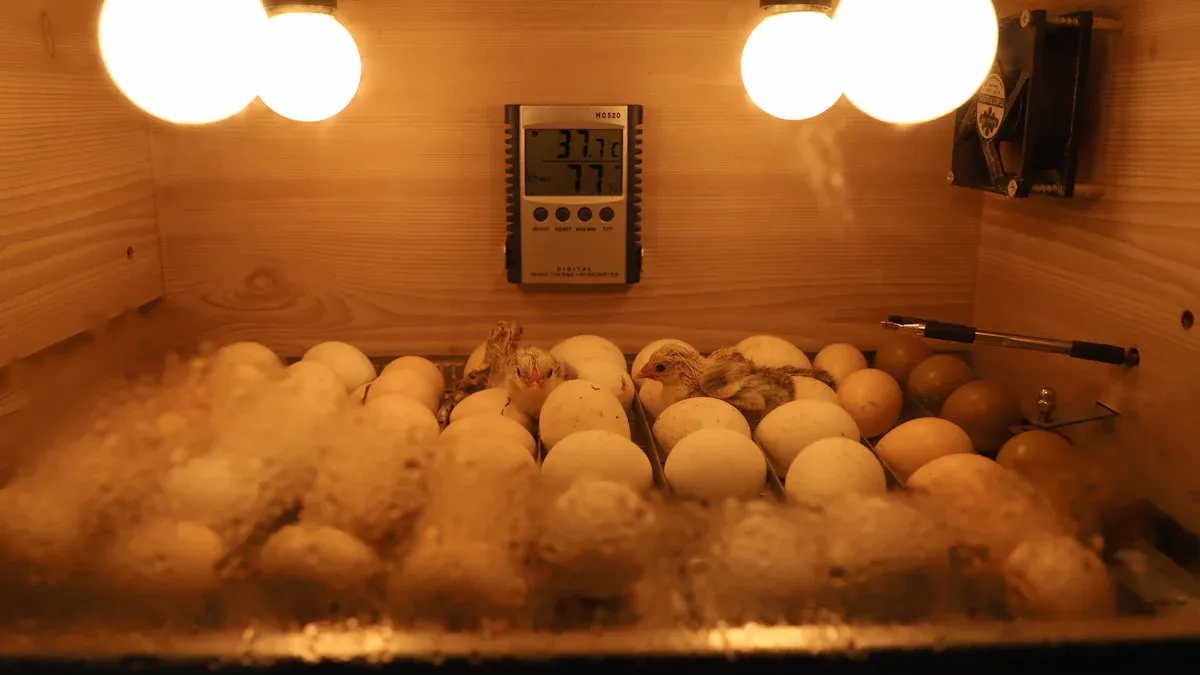
Calibrating Your Hygrometer
You need correct readings to check humidity in your incubator. If your hygrometer is not set right, you might get wrong numbers. Here are steps to set your hygrometer:
-
Mix salt and water in a small bowl. Use half a cup of salt and a quarter cup of water. The mix should be thick, not runny.
-
Put your hygrometer next to the salt bowl inside a closed plastic bag. Make sure water does not touch the hygrometer.
-
Leave the bag at room temperature all night. Do not open or move it.
-
Look at the hygrometer reading while it is still in the bag. It should show about 75% humidity. If it does not, write down the difference and correct your readings.
Tip: Try a wet bulb hygrometer for better results if you have one. Let your device warm up to room temperature before you start. If you can, check readings with a good thermometer.
Adjusting for Room Humidity
Room humidity can change how well your incubator keeps moisture steady. You need to control the air around your incubator to help keep humidity right. Here are some easy tips:
-
Put a bowl of water near your incubator if the air is dry. This helps raise room humidity.
-
Use a humidifier if the room’s humidity drops below 30%. This keeps eggs from drying out.
-
If the room is too damp, move your incubator to a dry spot or use a dehumidifier.
-
Check room humidity with another hygrometer. Write down what you see every day.
-
Change air flow by opening or closing vents. More air lowers humidity, less air keeps moisture inside.
|
Room Humidity Level |
What to Do |
What Happens |
|---|---|---|
|
Below 30% |
Add water bowls, use humidifier |
Humidity goes up, eggs stay moist |
|
30–60% |
Use normal setup, check daily |
Humidity stays fairly steady |
|
Above 60% |
Use dehumidifier, open vents |
Humidity drops, eggs lose water more easily |
Note: Always use chicken egg rules for humidity. Other birds may need different settings.
Equipment and Water Tray Tips
You can keep humidity steady with the right tools and simple tricks. Water trays help control moisture inside your incubator.
-
Fill water trays with clean water to make humidity go up. More water surface means more moisture in the air.
-
For big incubators, use a humidifier or built-in humidity system to keep conditions steady.
-
Use digital screens to watch humidity all the time. This helps you fix problems fast.
-
Change air flow by opening or closing vents. Good air flow lets moisture out when humidity is high.
-
If humidity is too high, take out some water trays or use silica gel packs to soak up extra moisture.
-
Put activated charcoal or special packs in the incubator to help control moisture if you need to.
-
Check water trays and humidity often. Write down what you find in your hatch log.
|
Equipment/Tip |
What It Does |
When to Use |
|---|---|---|
|
Water trays |
Raise humidity |
When humidity is low |
|
Humidifier |
Add moisture in big rooms |
Room humidity below 30% |
|
Ventilation |
Lower humidity, remove moisture |
Humidity above 60% |
|
Silica gel packs |
Soak up extra moisture |
Humidity too high |
|
Digital display |
Show humidity levels |
Always |
Tip: Check water trays and air vents every day. Steady humidity helps chicks hatch strong and healthy.
Using Weighing and Air Cell Tracking
You can use weighing and air cell tracking to keep humidity at the right level in your egg incubator. These two methods give you real feedback about what is happening inside each egg. They help you make smart choices for humidity control and better hatching results.
Step-by-Step Guide:
-
Start with a Sample Group
Pick 6 to 12 eggs from your batch. Write down their starting weights and give each egg a number. This helps you track changes over time. -
Weigh Eggs Regularly
Weigh your sample eggs every 3 to 4 days. Always use the same scale and weigh at the same time of day. Write down each weight in your hatch log. -
Calculate Weight Loss
Use this formula:Weight loss (%) = (Starting weight - Current weight) ÷ Starting weight × 100%By day 18, eggs should lose about 11–13% of their starting weight. This shows that humidity is helping the eggs lose water at the right speed.
-
Candle Eggs to Check Air Cells
Candle your eggs on days 7, 14, and 18. Look at the air cell size. On day 7, it should be just a bit bigger than when you started. By day 14, it should take up about one-fourth of the egg’s length. By day 18, it should be close to one-third. -
Compare Results and Adjust Humidity
If eggs lose too much weight or the air cell looks too big, humidity is too low. Add more water or close some vents. If eggs lose too little weight or the air cell is too small, humidity is too high. Remove some water or open vents for better airflow.
Tip: Always use chicken egg standards for weight loss and air cell size. Other birds may need different targets, but these numbers work well for chicken eggs.
Judgment Table for Humidity Adjustment:
|
Observation |
What It Means |
What You Should Do |
|---|---|---|
|
Weight loss > 13% by day 18 |
Humidity too low |
Add water, reduce ventilation |
|
Weight loss < 11% by day 18 |
Humidity too high |
Remove water, increase ventilation |
|
Air cell too large |
Too much water loss |
Raise humidity |
|
Air cell too small |
Not enough water loss |
Lower humidity |
You can use these steps and the table to keep humidity in the best range. Weighing and air cell tracking give you real proof that your humidity control is working. This helps you get more healthy chicks from your incubator.
Learning from Humidity Problems: Improving Your Next Hatch
Keeping Hatch Records
You can make each hatch better by writing down what happens. Good notes help you find humidity problems and fix them next time. First, set your egg incubator to the right temperature and humidity. For chicken eggs, use 99–100°F in a forced-air incubator. Keep humidity between about 45 and 55 percent. Let the incubator run for one day before you start. Let your eggs rest while you wait.
Follow these easy steps to track your hatch:
-
Weigh all your eggs together. Write the total weight in a notebook or on your computer.
-
Every three or four days, weigh the eggs again. Write down the new weight.
-
Candle the eggs around day seven. Take out eggs that are not fertile. Update your notes.
-
If eggs lose weight too fast, add water or close vents to raise humidity.
-
If eggs lose weight too slow, take away water or open vents to lower humidity.
-
Keep checking and changing things until lockdown, which is usually on day 19 to 21.
Tip: Good records help you see what works and what does not. This makes it easier to make smart choices for each hatch.
Diagnosing Where Problems Occurred
After each hatch, look at your notes to find where humidity problems happened. This helps you know why some chicks did not hatch or were weak. Use a simple table to organize what you find:
|
Step |
Description |
|---|---|
|
1 |
Break open eggs to look for humidity problems during incubation. |
|
2 |
Check eggs that did not hatch and chicks that died. Sort them into groups like infertile or early death. |
|
3 |
Share your findings with people who help with your flock or hatchery. |
|
4 |
Write down details like flock age, breed, and health. |
|
5 |
Count eggs that pipped and note why some did not hatch. |
|
6 |
List and sort everything you find for review. |
You can use this table to spot patterns, like too many wet chicks or dry chicks. This helps you fix mistakes next time.
Planning Adjustments for Next Time
When you get ready for your next hatch, use what you learned to avoid old problems. Many people see that high humidity causes swollen eggs, chick deformities, and bad hatch rates. Signs of high humidity are water drops, damp eggshells, and chicks that have trouble hatching. Try these tips to get better results:
-
Look for hidden water in the incubator and remove extra moisture.
-
Use fans to move wet air out and increase air flow.
-
Put a dehumidifier in the room if humidity stays high.
-
Keep humidity steady so embryos do not get stressed.
-
Make sure you have good air flow to balance humidity and temperature.
Peter Pownall says, "Keeping humidity right helps eggs lose weight and embryos grow the same way."
You can learn from every hatch by checking your notes and making small changes. This helps you raise healthy chicks and avoid common humidity mistakes.
Quick Reference: Humidity Troubleshooting Table
Table Fields and How to Use
You can fix most humidity problems by following easy steps. Use this quick table to check for problems, find out why they happen, and pick the best fix. The table uses chicken egg rules for all the numbers. You can print the table and keep it near your incubator for fast help during each hatch.
How to use the table:
-
Look for problems in your eggs or chicks.
-
Find the row in the table that matches your problem.
-
Read the fix and change your incubator settings.
-
Write down what you do and what happens in your hatch log.
Tip: Always use a calibrated hygrometer to check humidity. Weigh eggs every few days and candle them to watch air cell growth. Other birds may need different numbers, but chicken egg rules work for most home hatches.
Common Humidity Issues and Fixes
Here is a table you can print to help you find and fix the most common humidity problems. The table shows what to look for, when it happens, what the humidity problem is, and what you should do. This helps you keep your egg incubator at the best humidity for healthy chicks.
|
Symptom |
Hatch Stage |
Likely Humidity Issue |
What to Check |
Recommended Fix |
|---|---|---|---|---|
|
Shrink-wrapped chicks, dry fluff, tough membranes |
Hatching or after pipping |
Low humidity |
Humidity below 45%, large air cell, egg weight loss over 13% |
Add water, reduce ventilation, mist eggs if needed |
|
Wet, sticky chicks, swollen bellies, thick liquid in shell |
Hatching or after pipping |
High humidity |
Humidity above 75%, small air cell, egg weight loss under 10% |
Remove extra water, open vents, dry surfaces |
|
Both wet and dry chicks in same batch |
Any stage |
Unstable humidity |
Fluctuating readings, frequent incubator opening |
Calibrate hygrometer, limit opening, monitor closely |
|
Condensation on incubator walls |
Any stage |
High humidity |
Water drops inside, damp eggshells |
Ventilate more, remove water trays, use dehumidifier |
|
No condensation, dry air, rough eggshells |
Any stage |
Low humidity |
No water drops, dry feel inside incubator |
Add water trays, use humidifier in room |
|
Sudden changes in chick health or hatch timing |
Any stage |
Sudden humidity shifts |
Recent lid opening, rapid humidity changes |
Minimize opening, monitor with hygrometer |
📝 Note: For chicken eggs, keep humidity at 45–55% during incubation and 65–75% during lockdown. Eggs should lose 10–13% of their starting weight by day 18. If you see problems, use this table to make changes fast.
You can use this table for every hatch. It helps you find problems early and fix them before they hurt your chicks. Write down what works best for your incubator and eggs. Over time, you will get better results and more healthy chicks.
You play a key role in helping chicks hatch strong by managing humidity in your egg incubator. When you keep humidity at the right level, you support healthy development and better hatch rates.
-
Adequate humidity during hatch helps chicks break free from their shells without drying out.
-
Good humidity control stops chicks from sticking to the shell membranes.
-
Too little or too much humidity changes egg weight loss and air cell size, which makes it harder for chicks to develop and hatch correctly.
You can use troubleshooting steps and the quick-reference table to spot problems early and fix them. These tools help you:
-
Find issues that affect hatchability.
-
Use a structured approach to improve results.
-
Track performance and egg quality for each hatch.
Keep learning from each hatch. With careful monitoring and small changes, you will see more healthy chicks every time.
FAQ
What is the best humidity range for chicken eggs in an egg incubator?
You should keep humidity between 45% and 55% during incubation. Raise it to 65%–75% for the last three days. This helps eggs lose the right amount of water and supports healthy chicks.
How do I know if humidity is too low?
Check for large air cells when candling. Weigh eggs every few days. If eggs lose more than about 13% of their starting weight by day 18, humidity is probably too low. Use a judgment table to guide your next steps.
What signs show humidity is too high?
Look for small air cells, wet or sticky chicks, and thick liquid inside the shell. If eggs lose less than about 10% of their starting weight by day 18, humidity is likely too high. Adjust water trays and ventilation.
How often should I weigh eggs during incubation?
Weigh a sample group every three to four days. Record each weight and compare it to the starting weight. This helps you track water loss and adjust humidity as needed.
Can I use these humidity targets for other bird species?
Chicken egg standards work best for most home hatches. Other birds may need different humidity levels. Always check specific guidelines for each species before setting your egg incubator.
What should I do if I see both wet and dry chicks in one batch?
Calibrate your hygrometer. Limit how often you open the incubator. Monitor humidity and egg weight loss closely. Use a judgment table to find and fix unstable humidity problems.
How do I calibrate my hygrometer at home?
Place your hygrometer in a sealed bag with a bowl of wet salt. After several hours, it should read about 75% humidity. Adjust your readings based on the difference you see.
Why is tracking air cell growth important?
Air cell growth shows how much water eggs lose over time. Candle eggs on days 7, 14, and 18 and compare air cell size to standard chicken egg charts. Adjust humidity if air cells look too big or too small so eggs stay close to the target 10–13% total weight loss by day 18. Data authenticity note: The humidity ranges, weight-loss targets, and troubleshooting patterns in this article are based on widely used poultry-management practice, incubator equipment manuals, small-flock hatch logs, and summarized findings from incubation research rather than on any single study or brand. References: commercial layer and broiler management guides; incubation and hatchery technical bulletins; small-flock and homestead poultry extension publications; household guidance on egg storage and poultry handling; egg incubator user manuals and field notes from hobby and homestead hatchers.


1 Comments
It's sad to see fewer responses on a well written article