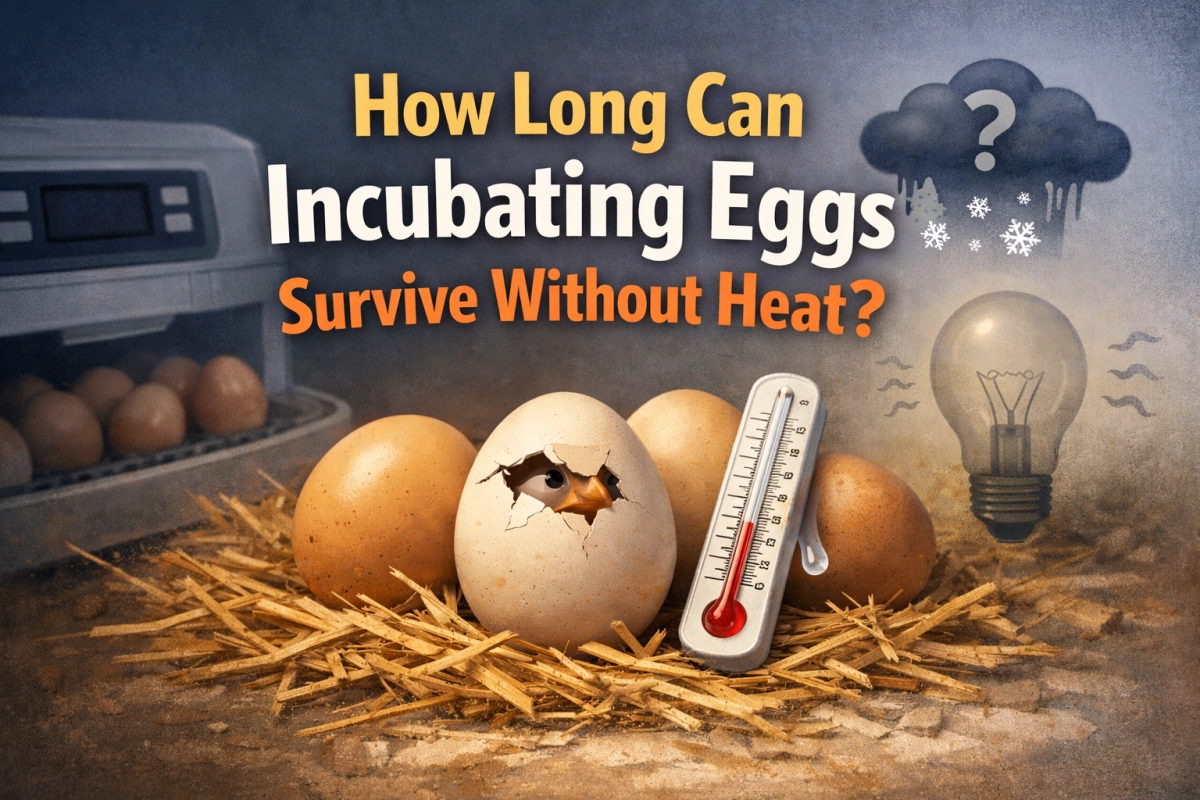
If you’re searching how long can eggs survive without heat during incubation, you’re usually dealing with a power outage, heater failure, or a sudden temperature drop. The reassuring news is that a short chill is often survivable. The big goal is simple: avoid extreme swings, especially overheating when you try to recover.
For a focused outage checklist, see: How long eggs can survive during an incubator power outage.
Quick navigation: Quick answer · First 10 minutes · Recovery · Prevention · FAQ
Quick answer: survival windows by outage length
- 0–2 hours: usually low risk if you keep the incubator closed and restore stable heat soon.
- 2–6 hours: moderate risk; many hatches still succeed with good insulation and careful recovery.
- 6–12 hours: significant risk; hatch rates often drop, but outcomes vary by day and conditions.
- 12+ hours: high risk; embryo losses become more likely, especially late in incubation.
Use these windows as decision points, not guarantees. Fertility, incubator insulation, room temperature, airflow, and incubation day all matter.
What to do in the first 10 minutes
- Keep the lid closed. Eggs cool slower than air, and opening the lid dumps heat and humidity quickly.
- Write down the start time. Outage duration drives every decision you make next.
- Stop drafts. Move the incubator away from doors/windows into the warmest stable room you have.
- Add gentle insulation. Wrap towels or blankets around the outside (keep it safe and sensible).
- Don’t overcorrect. Avoid intense direct heat that can spike temperature fast.
For the full baseline routine (setup, turning, lockdown, hatch steps), start here: Incubator Instructions (step-by-step).
After power returns: recover safely
1) Recover steadily
Return the incubator to your normal target and let it stabilize. Don’t set it higher “to catch up.” A temperature spike can do more harm than the outage itself.
2) Re-check the basics
- Temperature: confirm stability before doing anything else.
- Humidity: if the lid was opened, allow humidity to recover and stabilize.
- Turning: resume normal turning if you’re not in lockdown.
3) Expect a possible hatch delay
Cooling can pause development, so hatch timing may shift later. Stay patient and give eggs time before assuming failure.
Prevention: make the next outage boring
A calm hatch comes from a calm plan. If outages are common where you live, build a small kit and choose equipment with consistency in mind.
- A notebook (outage start time, incubation day, actions taken)
- Clean towels/blankets for safe insulation
- A battery-powered thermometer/hygrometer so you can monitor without opening
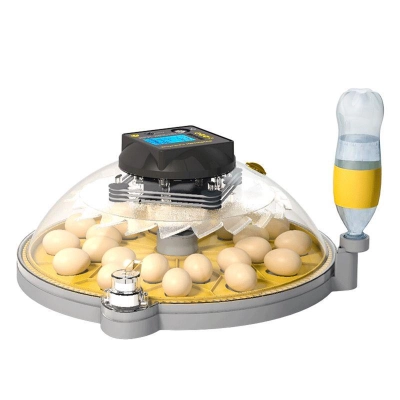
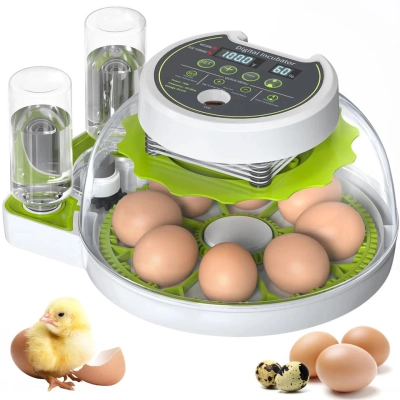
Browse incubators designed for consistent home hatching: Egg incubators (category). If you want extra peace of mind for outages, consider: 68-Egg Auto-Turn Incubator with Power Outage Protection.
FAQ
How long can incubating eggs survive without heat?
Many incubating eggs can survive a short outage (often up to about 2 hours) if you keep the incubator closed and restore stable warmth soon. Risk rises as outages extend into multiple hours, and incubation day matters—early eggs usually tolerate cooling better than eggs close to hatch.
Should I open the incubator to check the eggs during a power outage?
Usually, no. Opening the lid dumps heat and humidity quickly. Keep it closed unless you must move the incubator or take a specific safety action.
What’s the biggest mistake people make after the incubator loses heat?
Overheating during recovery. Avoid blasting the incubator with intense heat or cranking the thermostat extra high when power returns. A short cool-down is often less harmful than a temperature spike.
Will a power outage delay my hatch?
It can. Cooling may pause development, which can shift hatch timing later. Stay patient and give eggs time before assuming they failed.
Does incubation day change how I should respond?
Yes. Early eggs often handle cooling better, while late-stage eggs (near hatch) are more sensitive to chilling and humidity loss. Keep the lid closed in both cases, but prioritize warmth and humidity protection near hatch.
How can I tell if eggs survived after they were without heat?
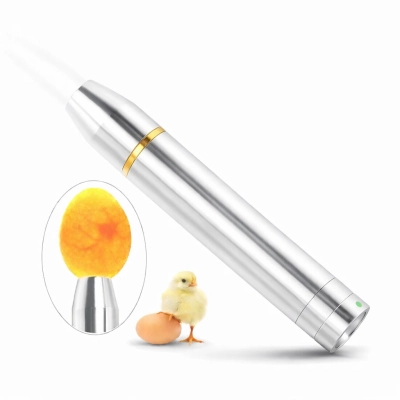
First stabilize temperature and humidity again. Then follow your normal candling schedule rather than candling immediately. Some eggs may hatch later than expected after a cool-down.


0 Comments