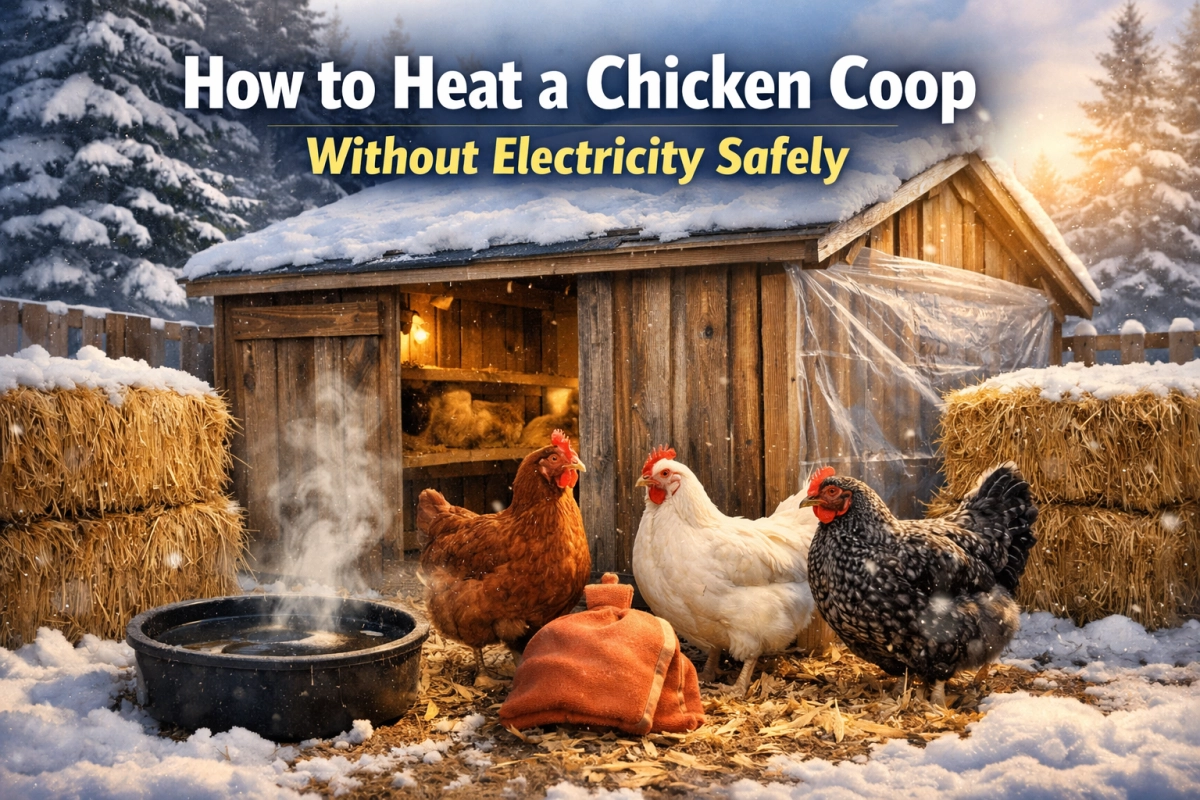
I have kept chickens through a lot of winters. I get why you do not want cords and hot bulbs in a coop. You can keep birds comfortable without power if you focus on the basics. If you want a simple place to compare safe options, start with safe chicken coop heaters.
Your chickens do not need fancy gear. Your chickens need a dry coop, calm air, and steady routines.
Key Takeaways
-
Use deep litter if you want a little extra warmth from bedding. Use dry shavings and keep adding clean layers.
-
Add insulation and stop drafts. Focus on steady, dry air instead of chasing a “warm room” feeling.
-
Block the worst wind on the cold side of the coop. Use solid panels, straw bales, or clear plastic that is tight and secure.
-
Keep ventilation open near the roof. Fresh air helps moisture leave the coop, so birds stay healthier.
-
Skip open flames and risky heaters. Choose simple, non electric steps first because they fail less.
Safe Ways to Heat Chicken Coop Without Electricity
When the cold hits, I do not try to “heat the coop.” I try to hold onto the heat the birds already make. These steps work in real backyards, and they do not ask you to run power into the coop.
Deep Litter Method for Keeping Chickens Warm
Deep litter is a good old trick. You start with a thick layer of dry pine shavings. The birds scratch, the manure mixes in, and the lower layer breaks down slowly. That slow breakdown can give off a bit of gentle warmth, and it also keeps feet off cold, wet boards.
Here is what deep litter can do for you:
|
Benefit |
Description |
|---|---|
|
Generates Heat |
The lower layer can warm up a little as it breaks down. Do not expect a space heater. Expect a steadier floor. |
|
Beneficial Microbes |
The bedding can support helpful microbes when it stays dry and balanced. |
|
Ammonia Control |
The litter can absorb moisture and reduce smell when you keep adding dry material. |
|
Entertainment |
The birds stay busy scratching, so they move more on cold days. |
You need to keep the top layer dry. You need to add fresh shavings when the surface looks packed down. You can turn the litter now and then so air gets in. You also need roof level ventilation so moisture can leave. A full clean-out is still a good idea when the pack gets too heavy or too damp.
Tip: I trust my nose. If I smell ammonia, I add dry bedding right away and I open the top vents more.
Insulation and Draft-Proofing
Insulation helps the coop hold heat. Draft proofing keeps cold wind from cutting through the roost area. You can use rigid foam behind a solid wall, or you can use straw bales as a wind break outside. You should keep all insulation out of pecking reach.
A well set up coop often feels noticeably warmer than the outside air because the birds heat it. You should seal cracks around doors and windows, but you should keep vents open near the roof so damp air can get out.
Note: I block drafts at bird level. I keep ventilation high. That mix keeps birds warm and dry.
Wind Blocks and Plastic Wrap
Wind steals heat fast. A simple wind block can do more than any gadget. Clear construction plastic can also let light in, and it can cut the bite of the wind if you pull it tight and fasten it well.
These materials can work well:
-
Straw bales
-
Wooden pallets
-
Plywood sheets
-
Tarps (though they absorb more heat and are harder to handle)
I usually block the side that faces the coldest wind. In many yards, that is the north or west side. I still leave a path for air to move out near the roof.
Tip: A loose tarp flaps and scares birds. A tight panel stays quiet and works better.
Coop Downsizing and Placement
Birds warm each other when they roost. A huge empty coop loses heat fast. If your coop is oversized, you can block off unused space for winter. You should also keep the coop on dry ground. You can use a fence, a shed, or shrubs as a wind break if you have them.
A covered run helps too. A dry run keeps feet healthier and keeps less mud coming back into the coop.
Bedding Choices: Hay and Straw
Dry bedding is your best winter tool. Straw can insulate well. Shavings can handle moisture better. Hay can get moldy, so I do not use hay unless I can keep it very dry.
-
Use a thick, dry layer so birds do not sit on cold boards.
-
Pine shavings work well when you want better moisture control.
-
Replace any wet spots fast. Wet bedding makes cold feel colder.
If you see wet corners, you should fix the leak or the splash spot. You should not just keep piling clean bedding on top of a wet mess.
Hot Water Bottles and Hand Warmers
Hot water bottles can help in a pinch. You fill them with hot water. You wrap them in a thick towel. You set them where birds cannot peck them. You will need to swap them as they cool.
Hand warmers can also help during a surprise cold snap. You should wrap them and you should keep them away from bedding. These are short term helpers, not a full winter plan.
Safety tip: I only use these when I can check the coop often. I do not leave them and forget them.
Black Rubber Bowls for Water
Water is the first thing that turns into trouble in winter. Black rubber bowls can slow freezing because they soak up sun and they do not crack like cheap plastic. They are simple and they hold up.
-
Put bowls where they get the most winter sun.
-
Check water more often on the coldest days.
This trick will not beat deep freeze weather, but it can buy you time between checks.
If you keep bedding dry and you cut the wind, you are most of the way there. Simple steps keep flocks steady all winter.
Why Safety Matters in Winter Chicken Care
I care about warmth, but I care about safety first. A coop fire can take the whole flock in minutes. Bad air can also make birds sick all winter. Safe winter care is about steady habits, not quick fixes.
Fire Hazards and Carbon Monoxide
People reach for heat lamps because they look easy. I have seen too many close calls. A lamp can fall. A bulb can shatter. Dry bedding can flash fast. Fuel heaters bring another risk because they can make carbon monoxide. Birds cannot tell you they feel dizzy. You need to prevent the problem instead of hoping you notice it in time.
Tip: I avoid sparks, flames, and fumes inside the coop. I use insulation, wind blocks, and dry bedding instead.
Moisture, Ventilation, and Health Risks
A tight coop sounds warm, but a sealed coop turns wet. Birds breathe out moisture. Droppings add more moisture. That damp air sticks to walls and roosts. Then cold air turns it into frost.
Here is what poor airflow can do:
|
Problem |
What you see in the coop |
|---|---|
|
Low ventilation |
You see condensation, you smell ammonia, and birds breathe dusty air. |
|
Gas buildup |
Eyes and noses get irritated, and birds can start sneezing or wheezing. |
-
Moist air can make frostbite more likely.
-
Ammonia can sting eyes and airways.
-
Dirty air can stress birds and invite sickness.
Good winter setup keeps vents open near the roof and blocks drafts near the floor. That setup lets wet air out and keeps roosting birds out of the wind.
Predator Risks from Poor Modifications
I also watch what winter fixes do to coop security. Loose plastic, gaps, and half nailed boards can turn into an open door for raccoons and rats. You should fasten every panel tight. You should check latches. You should make sure nothing you add for warmth makes the coop easier to break into.
Warmth matters, and fresh air matters, and strong walls matter too. A good winter coop balances all three.
Common Mistakes to Avoid When Keeping Chickens Cozy
I see the same mistakes every winter. Most of them come from rushing. A few small changes can keep your birds safer than any heater.
Unsafe Heating Devices
Heat lamps and space heaters feel like a quick win, but they bring fire risk into a box full of dry bedding. I skip them. If you truly need controlled heat for a weak bird or extreme weather, I prefer a unit that turns on only when it has to, like a thermostat controlled chicken coop heater. I still treat it as a backup, not a daily habit.
This table shows the usual risks:
|
Risky choice |
Why it causes trouble |
|---|---|
|
Heat lamps |
They can fall, break, and start a bedding fire. |
|
Extension cords |
They do not mix well with wet floors and dust. |
|
Heated water gear |
It can fail in damp spots and it can overheat or short out. |
Tip: I fix drafts and moisture first. Those fixes keep birds safer than a hot bulb.
Blocking Ventilation
People plug every crack because they want warmth. That move traps wet air. Wet air makes frost. Wet air also makes ammonia smell stronger. Birds can handle cold better than they handle damp, dirty air.
-
Keep vents open near the roof.
-
Block drafts near the floor and the roost.
Remember: dry air helps birds more than a sealed coop.
Overcrowding or Poor Coop Design
Too many birds in a tight coop makes winter harder. The air gets wet faster. Droppings build up faster. Stress goes up. A thin metal shed also swings hot and cold, so it stays damp.
-
Give birds enough room to roost without crowding.
-
Use solid walls and steady airflow, even in winter.
A simple, solid coop keeps birds calmer. Calm birds do better in cold weather.
You can get through winter without electricity. You need dry bedding. You need blocked wind at bird level. You need roof vents that stay open. Then you check the coop often and you adjust as weather changes.
-
Healthy adult chickens usually handle cold well when the coop is dry and calm.
-
Cold hardy breeds often do fine when you keep wind and moisture under control.
-
Small fixes like wind blocks and better bedding can beat big changes.
If you are still unsure, you can read Do Chickens Need Heat in Winter. If you want the bigger picture later, you can also use our Chicken Coop Heater Ultimate Guide.
FAQ
How cold is too cold for chickens in a coop without electricity?
Many healthy adult chickens handle cold weather fine without electricity. You should watch for frostbite, weak birds, and damp bedding. You should also block drafts at the roost and keep vents open up high.
Do I need to heat my chicken coop without electricity?
Most backyard flocks do not need added heat if the coop is dry and draft free. Birds warm each other when they roost. You can help them most by fixing wind, moisture, and bedding.
What is the best way to keep water from freezing in winter?
You can use black rubber bowls in the sun, and you can swap water more often on cold days. You can also carry warm water out for the morning. The goal is simple. You keep water available, and you do not let birds go thirsty.
How do I make sure winter ventilation is safe?
You keep vents open near the roof, and you keep drafts off the birds. You can test this at night. You stand where the birds roost. You should not feel wind on your face, but you should still have fresh air moving above you.
Can I use hay or straw for bedding in cold weather?
Straw can insulate well, and shavings handle moisture well. You should keep bedding dry. You should pull out any wet spots fast. Wet bedding makes cold weather harder on birds.


0 Comments