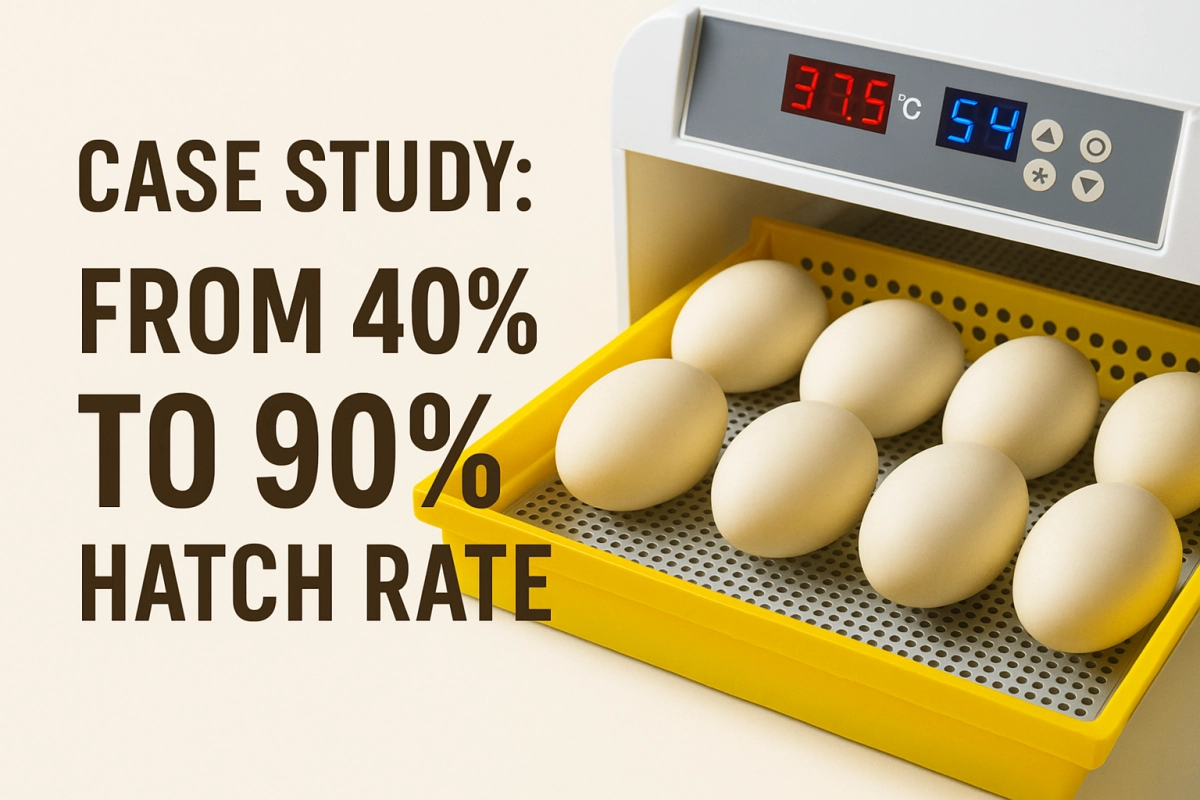
When we first began incubating Muscovy duck eggs, our results were frustratingly poor — only 4 out of 10 eggs ever hatched. After six weeks of careful testing, data tracking, and small but strategic changes, we achieved something we once thought impossible: a 90% hatch rate with healthy, vigorous ducklings.
This case study shares the exact steps we took — from identifying critical mistakes to applying simple, repeatable improvements that dramatically boosted our success.
Background: Where We Started
Like many hobby breeders, we began with enthusiasm but limited equipment. Our first setup used a small home incubator and a basic thermometer. Everything looked fine at first, yet the results told a different story: uneven temperatures, unstable humidity, and irregular egg turning.
At that time, we relied on a standard Duck Egg Incubator without digital sensors or dual-motor circulation. The temperature display read 37.5°C, but internal measurements varied from 36.8°C to 38.3°C — a difference large enough to cause developmental issues.
Out of ten fertile eggs, only four hatched. Several embryos stopped developing mid-way, while others died just before pipping. It was disappointing, but it gave us valuable clues for improvement.
Identifying the Problems
We documented every detail — daily temperature logs, humidity levels, and turning frequency — and candled the eggs at regular intervals. Over time, the problems became obvious:
-
Temperature inconsistency — hot and cold spots inside the incubator.
-
Excess humidity early on, leading to drowned embryos.
-
Manual turning that wasn’t consistent, especially at night.
These three factors alone accounted for most of our early failures.
If you’re facing similar challenges, take a look at our troubleshooting article:👉 Muscovy Duck Eggs Aren’t Hatching
That resource helped us identify what was really holding back our success.
What We Changed – Step by Step
With the data in hand, we made a series of incremental changes that, together, had a major impact on our results.
1️⃣ Temperature & Humidity Optimization
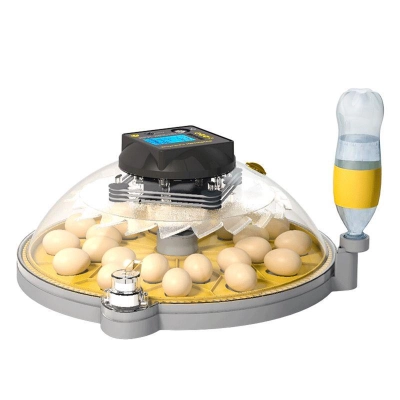
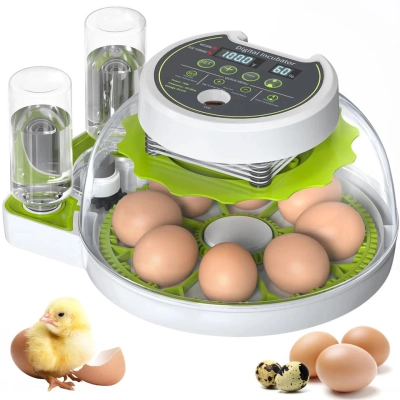
Our first big step was upgrading our equipment. We replaced the old incubator with the Chicken Duck Egg Incubator Auto Turn Dual Motor. which provided precise digital control for both temperature and humidity.
The dual-motor system maintained even airflow, keeping heat distribution within a 0.3°C variance — compared to over 1.5°C before. Humidity stayed steady between 45–50% during days 1–25, then increased to 65–70% during lockdown.
These stable conditions immediately reduced embryo death rates and improved overall hatch consistency.
2️⃣ Turning Schedule & Egg Positioning
Previously, we turned eggs manually four times a day. That sounded fine until we realized how many turns were missed overnight. The new incubator automatically rotated the eggs every two hours at a 45° angle, ensuring uniform development and preventing yolk adhesion.
We also repositioned the trays to improve airflow — eggs near the edges now received the same warmth and ventilation as those in the center.
3️⃣ Candling & Embryo Monitoring
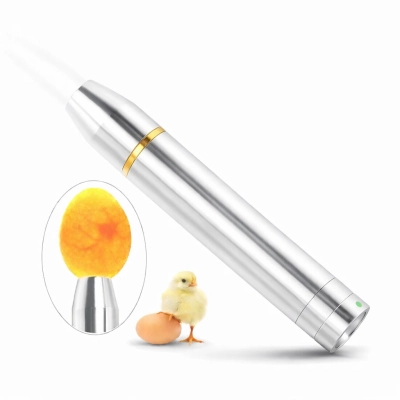
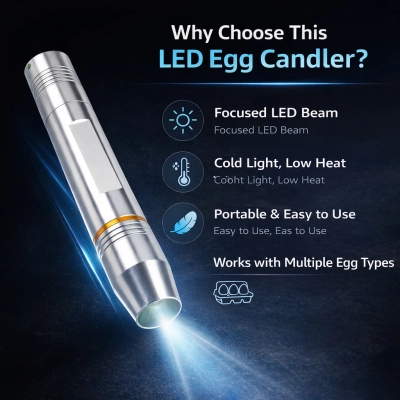
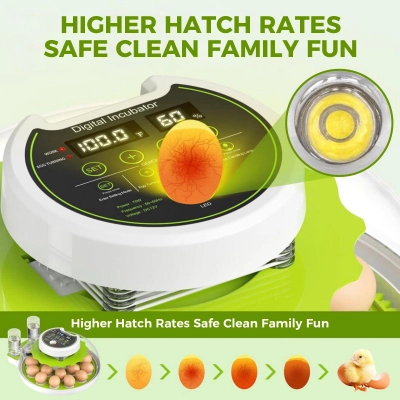
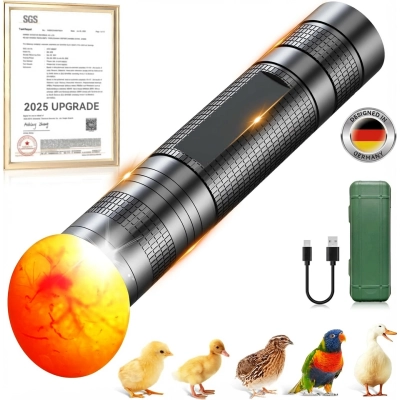
Candling was done on days 7, 14, 21, and 28, with photos and weight notes each time.
This allowed us to detect infertile or stalled embryos early and fine-tune humidity levels for the rest.
Interestingly, eggs in the middle tray developed slightly faster — confirming how airflow uniformity affects incubation speed.
Regular candling not only kept us informed but also minimized the risk of contamination from spoiled eggs.
Results: From 40% to 90% in Six Weeks
After six weeks of disciplined monitoring and controlled adjustments, our numbers spoke for themselves:
| Week | Average Hatch Rate | Notes |
|---|---|---|
| 1–2 | 40% | Manual turning, no humidity control |
| 3–4 | 65% | Introduced new incubator |
| 5–6 | 90% | Stable environment, automated rotation |
Not only did the hatch rate soar, but the ducklings were stronger, livelier, and more uniform in size. They dried faster after hatching, and their survival rate during brooding exceeded 95%.
For more practical advice on optimizing hatch success, read:👉 Improve Muscovy Duck Egg Hatch Rate
Lessons Learned & Key Takeaways
After reviewing three full incubation batches, here are the insights that made the biggest difference:
✅ 1. Temperature precision matters more than you think
Even a half-degree variation can delay or damage embryo development.
✅ 2. Humidity should rise gradually
Low humidity early supports air cell growth; high humidity near lockdown prevents shrink-wrapping.
✅ 3. Automatic turning removes human error
Every 2–3 hours is ideal. Consistency is crucial for healthy embryos.
✅ 4. Keep records
Logs, photos, and humidity data reveal trends emotions can’t. Data-driven incubation always performs better.
✅ 5. Reliable equipment pays for itself
Switching to the dual-motor incubator eliminated 70% of our preventable losses. The investment was worth every cent.
Conclusion
Our journey from 40% to 90% hatch rate wasn’t magic — it was the result of consistency, attention to detail, and reliable tools.
With a stable environment, smart monitoring, and dependable equipment like the Chicken Duck Egg Incubator Auto Turn Dual Motor. any backyard breeder can achieve professional-level results.
Stay patient, track your data, and keep improving — your next hatch could be your best one yet.

0 Comments