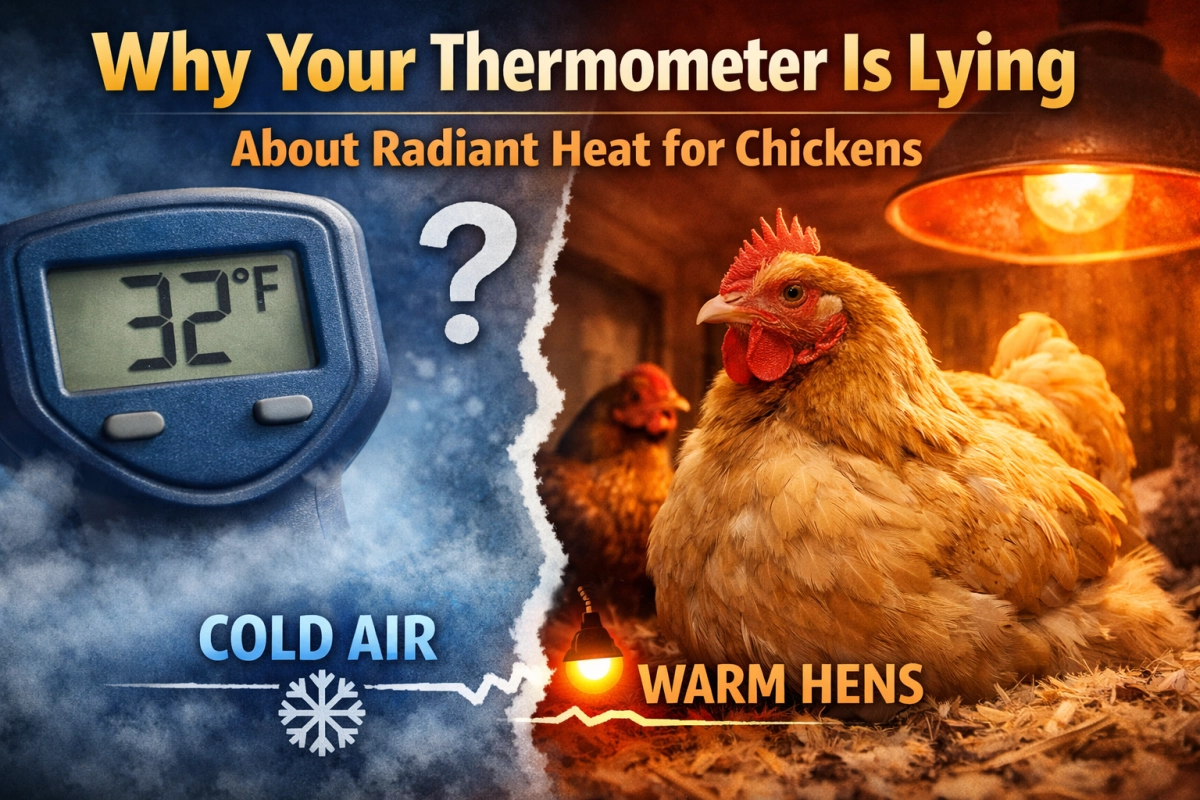
You can turn on a coop heater and still see the same number on your air thermometer. You can also see your hens walk over, settle down, and look calm. That is not a failure. That is radiant heat doing its job. If you want the full picture, start with our chicken coop heating options guide and then use the simple checks in this post.
Key Takeaways
-
Most coop thermometers read the air. They do not show the warmth your birds get from radiant heat.
-
You can test a heater with no tools. You can use your hand and your eyes.
-
Radiant heat warms birds and surfaces first. The air can stay cool and your flock can still feel fine.
-
Thermometer placement matters. Drafts and sun can ruin a reading.
-
Your chickens tell you the truth. Calm birds and relaxed posture beat a single number.
How to Test Coop Heater for Real Results
You want proof that the heater is helping your flock. You do not need lab gear. You need checks that match what a chicken feels at perch and floor level.
Quick 3-Minute Test Without Tools
This is the fast check we use on a cold morning. It takes three minutes.
-
Step into the coop and crouch down to bird height.
-
Hold the back of your hand where a chicken can stand near the heater. Do not touch the heater.
-
Move your hand to a spot farther away at the same height.
-
Feel the change. A steady, quiet warmth near the heater means it is working.
Tip:
10-Minute IR Thermometer Test
If you like numbers, an infrared thermometer can help. It reads surface warmth. Surface warmth is where radiant heat shows up first.
-
Let the heater run for about ten minutes.
-
Aim the IR thermometer at what your chickens touch, like a perch, bedding, or a wall near the heater.
-
Take a reading in the warm zone and then take one in a cooler spot at the same height.
-
Compare the two spots. You want the warm zone to be clearly warmer on surfaces.
-
Use the air thermometer only as a reference, not as the final verdict.
Here is a quick look at why surface temperature matters more than air temperature for your flock:
|
Measurement Type |
Description |
Impact on Chicken Comfort |
|---|---|---|
|
Surface temperature |
How warm perches, bedding, and nearby walls feel |
Shows radiant warmth your birds can use |
|
Air temperature |
The air number your coop thermometer shows |
Helpful, but it can miss radiant heat |
Note:
15-Minute Before-and-After Check
Use this when you want a clearer before-and-after picture. It is still simple. It just adds time.
-
Before you turn the heater on, note the air reading and a surface reading in the warm zone.
-
Take the same two readings in a cooler zone at the same height.
-
Turn the heater on and wait about fifteen minutes.
-
Repeat the same readings in the same spots.
-
Look for a surface jump in the warm zone and a calmer flock around that area.
Tip:
Common Testing Errors to Avoid
These mistakes make good heaters look bad.
|
Error Type |
Description |
|---|---|
|
Thermometer in a draft |
Moving air cools the sensor fast, so the number looks low. |
|
Thermometer too high |
Heat and cold layer in a coop. Your birds live lower down. |
|
Judging by air only |
Radiant heaters show up on surfaces and on bird behavior first. |
Tip:
When you test the right way, you stop guessing. You can feel the change near the heater. You can also see it in how your birds settle. If you want this style of steady warmth, a flat radiant heater plate is built for that kind of comfort zone.
Radiant Heat vs Ambient Heat Explained
How Radiant Heat Warms Surfaces
Here is the plain truth. Radiant heat warms what it hits. That includes feathers, perches, bedding, and the birds themselves. The air can lag behind, and the flock can still feel better right away.
-
That is why you often see birds spread out near a panel instead of piling up in one tight ball. They can make their own comfort choice.
-
What poultry research supports is simple: birds change surface temperature and behavior fast when conditions change.
-
With radiant heat, the warmest spots are near the heater and on nearby surfaces.
-
Chickens use that. They step in and out of the warm zone as they like.
Radiant heat does not need to warm all the air. It just needs to reach the surfaces your flock touches. You see your chickens spread out on a warm spot. That’s radiant heat in action.
Let’s look at what studies show about radiant heat and surface temperatures in poultry houses:
|
What researchers look at |
What it tells you in a coop |
|---|---|
|
Surface temperature |
It shifts with stress and with comfort, so it is a useful check with radiant heat. |
|
Behavior and posture |
Huddling, tight clustering, and stillness can point to cold stress. |
|
Heat loss in cold air |
Birds burn more energy to stay warm when the space is below their comfort level. |
|
Feathered areas vs bare areas |
Combs, wattles, and feet change faster than feathered areas. |
|
Breathing and activity |
A calm, steady bird is often in a better spot than a bird that looks tense or restless. |
Why Air Thermometers Miss Radiant Heat
An air thermometer reads the air right around its sensor. That is it. It does not read the warm perch under a bird. It does not read the warm feathers on a calm hen. If the sensor sits in a draft, it will underread a radiant setup.
You can also get the opposite problem. A thermometer in direct sun or right in the line of a panel can overread. So placement matters. And your birds still matter more.
Sun on Your Skin Analogy
Think about a bright winter day. The air stays sharp. The sun still feels good on your face. That is radiant heat. Your coop panel works the same way on a smaller scale.
Tip:
Why Thermometers Stay Flat Even When It’s Warm
Placement Mistakes That Skew Readings
Most wrong readings come from where the thermometer hangs. A corner, a door gap, or a leaky window will pull the number down. A spot in sun or right above a heater will push it up. You want a middle spot at bird height, away from drafts.
Airflow and Ventilation Effects
Air moves in every coop. It should. Fresh air keeps birds healthy. But moving air can fool a thermometer faster than it chills a feathered bird, especially when birds are tucked in and out of the wind.
Good ventilation matters. It helps with moisture and ammonia. You still want to keep drafts off the roost.
If you want a steadier reading, keep the sensor out of direct airflow. Pick a spot that feels still, not stuffy.
Surfaces and Chicken Comfort
Chickens feel warmth through their bodies and feet. Surfaces matter. A radiant heater warms perches and nearby walls. The air can stay cool. If your birds spread out and look relaxed, that is the story.
Signs Your Chickens Feel the Heat
Comfort Cues to Watch For
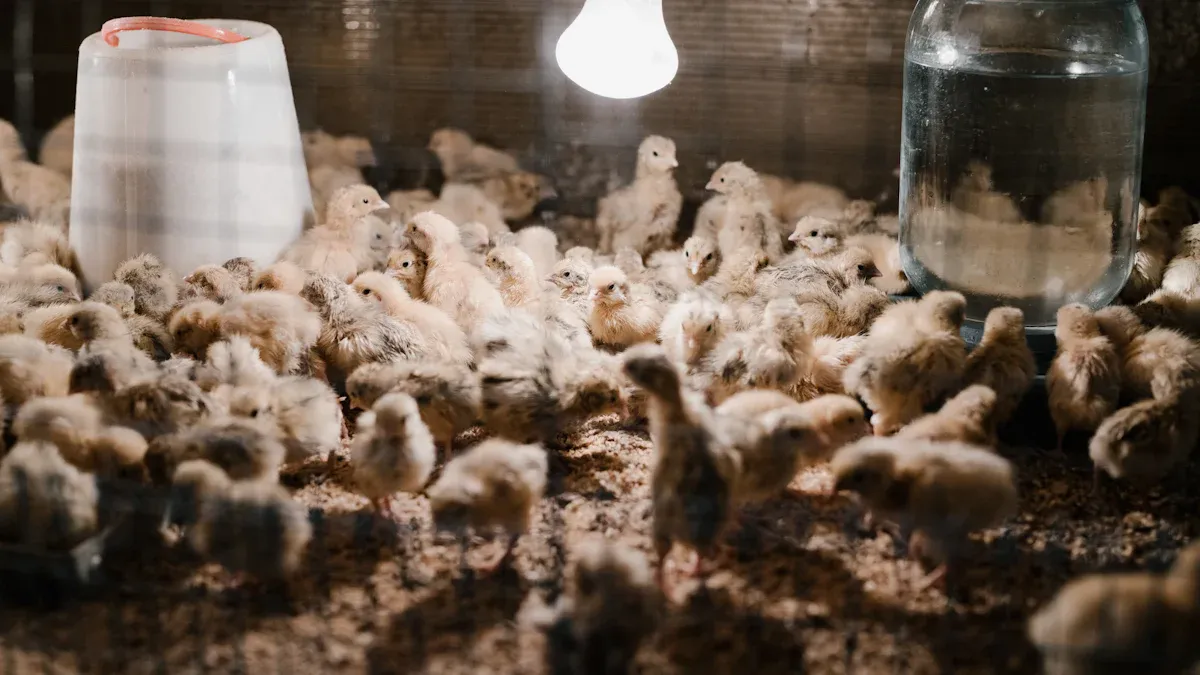
You do not need fancy tools to read a flock. You just need to watch. Comfort shows up in small, steady ways.
-
When you see this mix of calm and normal activity, you can trust your setup more than a single air reading.
-
Breathing stays calm and quiet.
-
Wings stay tucked in.
-
Birds still get up to eat, drink, and scratch.
-
The coop sounds normal, not sharp and loud.
-
Combs and feet look normal for your flock, not stiff and cold.
-
Droppings stay normal for your birds.
You can trust these comfort cues. Studies show that chicken vocalizations and body language match their thermal comfort level. When you see your flock acting calm and content, you know they are in the comfort range.
Tip:
Cold Stress Warning Signs
Cold stress has a look. You can catch it early if you know what to watch for.
|
If you see these signs, check drafts first. Then check heater placement and the warm zone size. |
What it can mean |
|---|---|
|
Tight huddling |
Birds are trying to share heat and they cannot find a warm zone. |
|
Shivering |
Birds are working hard to keep warm. |
|
Cold feet or comb |
Surfaces may be too cold or drafts may be hitting the roost. |
|
Low activity |
Birds may be conserving energy and avoiding cold areas. |
If you see your chickens huddling together, shivering, or avoiding cold spots, they are not in their comfort zone. You may need to adjust your heater or check for drafts. Remember, comfort means your chickens do not show these warning signs.
-
Your flock gives early signals. You will spot problems sooner by watching behavior than by chasing perfect numbers.
Placement and Safety Tips for Accurate Readings
Best Mounting and Clearance Practices
If you want a thermometer to be useful, hang it where your birds live. Keep it away from direct drafts. Keep it away from direct radiant blast. You want a fair spot, not a hot spot or a cold spot.
|
If you like remote checks, a simple sensor can help. It is still not the whole story in a radiant coop, but it can warn you about sudden changes. |
Description |
|---|---|
|
Height |
Place it near bird level, around where they stand and roost. |
|
Sun and light |
Keep it out of direct sun and bright reflections. |
|
Airflow |
Avoid vents, door gaps, and windy corners. |
|
Nearby surfaces |
Do not press it against a wall or a warm panel. |
|
Consistency |
Use the same spot each time so you can compare days. |
You can also use smart sensors that send data to your phone. These tools let you check the coop temperature from anywhere. Some even track humidity and send alerts if things get too hot or cold.
Tip:
Ventilation Without Chilling Birds
You want fresh air and dry bedding. You also want no wind on the birds. That balance keeps winter problems down.
-
Let air enter high and leave high, not across the roost.
-
Block direct wind, but keep a path for stale air to escape.
-
Watch for wet bedding and frost on walls. Those are moisture clues.
-
Adjust openings when the wind shifts.
Note:
Common Mistakes to Avoid
These habits keep your setup safer and your readings more honest.
-
A simple routine keeps surprises down. It also keeps you from chasing the wrong problem.
-
Keep heaters away from loose bedding and anything that can touch the hot side.
-
Check cords, plugs, and mounts often, especially after storms.
-
Do a quick look each week. Small shifts add up.
If you want extra peace of mind, try a digital system that tracks temperature and humidity. Some models send alerts to your phone if something goes wrong.
Safety first. A steady setup is better than a hot setup.
Now you know why an air thermometer can mislead you in a radiant coop. It reads the air. Your birds feel the surfaces and the radiant warmth. Use the quick checks. Watch your flock. That is how you keep winter simple. If you want to compare setups, see different types of coop heaters.
-
Chickens do best when they have a dry coop, no drafts on the roost, and a warm zone they can choose.
-
If you see cold stress signs, fix drafts and moisture first, then adjust heat.
You are not chasing a perfect number. You are keeping real birds comfortable. We are with you. 🐔
FAQ
Why does my coop thermometer show a low temperature even when my chickens look warm?
Your thermometer reads the air. A radiant heater warms birds and nearby surfaces first. If your flock looks calm and chooses the warm zone, the heater is doing its job.
Where should I place my thermometer for the best reading?
Place it at bird height and out of drafts. Keep it out of direct sun and away from the direct line of the heater. Use the same spot each time so the numbers stay comparable.
How can I tell if my coop heater is working without special tools?
Crouch to bird height and use the back of your hand near the heater without touching it. Then watch your birds. If they settle near the warm spot and stop huddling tight, the heater is working.
What’s the difference between radiant heat and ambient heat?
Radiant heat warms what it hits, like feathers, perches, and bedding. Ambient heat warms the air across the whole coop. With radiant heat, the air number may stay low while the birds feel better.
Do I need to raise the whole coop’s air temperature for my chickens to stay warm?
No. Your chickens need a warm zone and a dry, draft-free roost. Radiant heat lets them step into comfort when they want it.




0 Comments