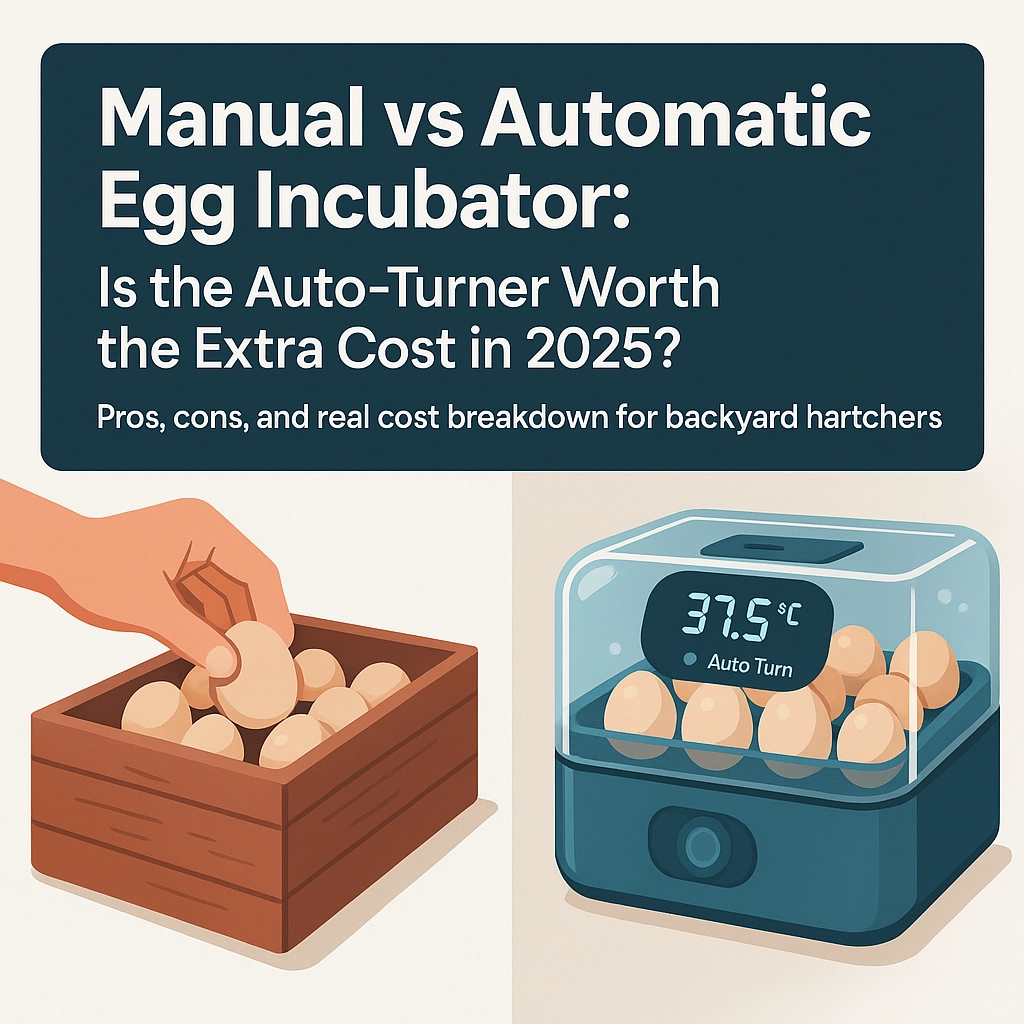
If you want reliable results when you hatch chicken eggs, an automatic egg incubator with an auto-turner often makes a noticeable difference. The machine takes care of turning each egg on a schedule, which saves time, cuts down on human error, and helps keep hatch rates high. Incubated eggs need to be turned several times a day so chicks can develop and hatch properly. Many small-scale users find that automatic egg incubator models deliver better hatch outcomes with less daily effort. Before you decide, think about how much time you have, your budget, and how many eggs you plan to hatch in each batch.
Key Takeaways
-
Automatic egg incubators save time by turning the eggs for you on a regular schedule. This reduces missed turns and keeps conditions more consistent, which usually supports better hatch rates.
-
Manual incubators cost less up front but demand more hands-on work. You must check temperature and humidity more often and remember to turn eggs by hand several times a day.
-
The right incubator for you depends on your budget, how many eggs you want to hatch, and how much daily time you can realistically commit. Automatic incubators are often the better choice for busy families and classrooms.
-
Eggs need steady temperature and humidity to hatch well. Automatic incubators with digital controls tend to hold these conditions more stable than basic manual models.
-
Paying extra for an automatic incubator or add-on turner can lead to more chicks from the same number of eggs. Over several batches, the higher hatch rate can effectively pay back the added cost.
Manual vs Automatic Egg Incubator: Key Differences
When you choose an incubator for chicken eggs, it helps to understand how manual and automatic egg incubator models differ. Those differences affect how much work you do, how easy the incubator is to use, and how consistent your hatch results are.
Temperature and Humidity Control
Eggs need the right temperature and humidity for the full incubation period. With a manual incubator, you usually rely on a glass thermometer and adjust the settings yourself. You also watch humidity and add water when levels drop. This gives you direct control but requires frequent checks and careful attention.
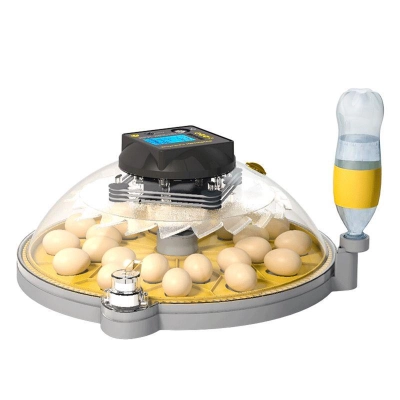
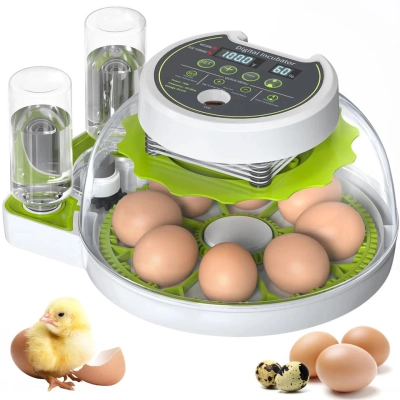
Automatic egg incubator models use digital controls to hold settings within a narrow range. You set the temperature once, and the incubator keeps it steady. Most automatic egg incubator units show humidity on a screen, and some have a built-in water pump or let you add water from outside the unit. These features make it easier to keep humidity in the right range without guesswork.
Here is a simple table that shows the main design differences:
|
Feature |
Manual Incubator |
Automatic Incubator |
|---|---|---|
|
Egg Turning |
Manual |
Automatic |
|
Temperature Display |
Glass Thermometer |
Digital |
|
Additional Features |
External water top-up, antimicrobial plastics |
Auto mode, external water top-up, antimicrobial plastics, integral water pump |
Manual incubators give you flexibility and a very hands-on experience, but you need to check temperature and humidity often. Automatic egg incubators reduce those routine tasks and keep conditions more stable, which many users find easier and more forgiving.
When you compare forced-air and still-air incubators, you see more differences. Forced-air incubators use a fan to move air so temperature and humidity stay more even throughout the chamber. Still-air incubators do not have a fan. You measure temperature at the top of the eggs, and it is harder to keep conditions uniform from top to bottom.
Here is a table to help you compare:
|
Type of Incubator |
Temperature Setting |
Humidity Level |
Advantages/Disadvantages |
|---|---|---|---|
|
Forced-air incubator |
99–99.5°F |
~60–65% |
More even airflow, easier humidity control, generally higher hatch rates. |
|
Still-air incubator |
100–101°F |
~60–65% |
Simple design but harder to manage airflow; hot spots and lower hatch rates are more common. |
Many keepers say forced-air incubators give more consistent results. For example, one hobbyist reported around a 50% hatch rate with a basic still-air incubator, then close to 98% after switching to a forced-air model and dialing in the settings. Results always vary, but stories like this show how important stable temperature and airflow can be for hatching.
Auto Egg Turning vs Manual Turning
Turning eggs is a key step in hatching. During most of incubation, eggs need to be turned several times a day so the embryo does not rest in one spot and stick to the shell membrane. With a manual incubator, you gently roll each egg by hand. You also need a turning schedule—typically three to five times a day for the first eighteen days—and you must remember to follow it. Missed turns and long gaps in turning can lower hatch rates.
Automatic egg incubator models include an auto-turner that moves the eggs for you. Most automatic egg incubator units tilt or roll the eggs every hour or two. This keeps the eggs moving at a consistent angle and frequency, without you needing to open the lid or set alarms through the day and night.
Here is a table to show how user experience differs:
|
Feature |
Manual Incubators |
Automatic Incubators |
|---|---|---|
|
Ease of Use |
Very hands-on; requires a turning schedule |
Low daily effort; turning is fully automated |
|
Maintenance |
More manual steps and more frequent checks |
Fewer routine tasks once set up correctly |
|
Cost |
Lower initial cost; good for tight budgets |
Higher initial cost; saves time and effort over multiple hatches |
|
Control |
Maximum manual control, but needs more skill |
Automated control with more stable conditions |
|
Hatching Success Rate |
Can be good, but more sensitive to human error |
Often higher because conditions and turning are consistent |
Manual incubators suit people who enjoy hands-on work and have the time to manage details. Automatic egg incubators are a better match if you want steady, repeatable results with less daily work and a lower chance of missed turns or setting mistakes.
Tip: If you are busy, forgetful, or plan to hatch several batches a year, an automatic egg incubator with an auto-turner can make hatching easier and noticeably boost your success rate.
Why Egg Turning Matters in Incubators
Embryo Development and Hatch Rates
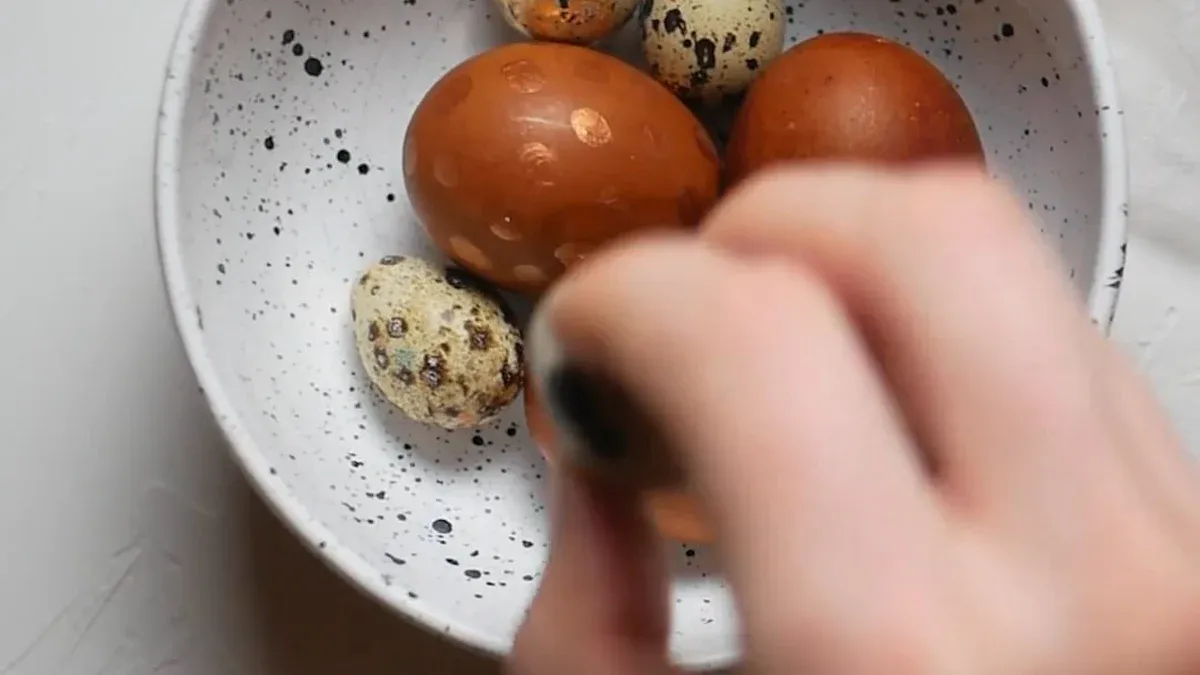
You support each egg’s development when you turn eggs regularly during incubation. Turning helps keep nutrients and fluids distributed around the embryo so it can grow evenly. It also prevents the embryo from sticking to the shell membrane, which can restrict movement and make it harder for the chick to position itself for hatch.
Good turning also supports proper blood-vessel development and gas exchange. When eggs are turned consistently, the chick is more likely to end up in the right position to pip and hatch. Poor or irregular turning increases the chance of deformities, weak chicks, and embryos that die before hatch.
Manual Turning Frequency and Risks
Eggs need to be turned several times a day through most of incubation. Studies on poultry eggs suggest that higher turning frequencies—up to around once per hour—often support better hatch rates, while very infrequent turning leads to more losses. Many home incubator guides recommend turning eggs three to five times per day as a practical minimum if you are doing it by hand.
The turning angle matters as well. Most references suggest tilting the eggs about 35° to 45° each way so the yolk and embryo move gently within the egg. If eggs are turned much less often or hardly tilted at all, hatch rates usually drop. With manual turning, you need to stick to a schedule for the first eighteen days and be realistic about whether you can keep up with it every single day.
Insufficient turning can let the yolk and embryo settle and stick to the shell, which may cause the embryo to die. In some failed eggs, post-mortem examination shows parts of the chick’s body developing in the wrong place because the embryo could not move correctly.
Auto Egg Turning: Consistency and Benefits
Auto egg turning makes it much easier to keep turning consistent. The incubator tilts or rolls the eggs at regular intervals, usually every hour or so, and at a controlled angle. You do not need to open the incubator or remember each turn, which reduces temperature and humidity swings.
Because the machine follows the same pattern every day, you get more even development across the entire batch. That usually means more hatching chicks and fewer late losses. Automatic turning also frees you from setting alarms or adjusting your schedule just to turn eggs, which is especially helpful if you work outside the home or have a busy family routine.
|
Turning Method |
Frequency (per day) |
Angle (degrees) |
Hatch Rate Impact |
|---|---|---|---|
|
Manual |
3–5 |
38–45 |
Good if schedule is consistent |
|
Automatic |
12–24 |
35–45 |
Very consistent; often the most reliable |
Cost Comparison: Manual vs Automatic Egg Incubator
When you choose an incubator, you want to know how much you will spend and what you get in return. Total cost depends on the type of incubator, which features you need, and whether you add an egg turner. The sections below break down typical price ranges and how each option affects both your budget and your hatch results.
Manual Incubator Price Range
Manual incubators are the most basic type. You control the temperature and humidity yourself and turn each egg by hand. These incubators work well if you have a smaller budget, want close involvement in the process, or plan to hatch only a few eggs at a time.
-
Most manual incubators for chicken eggs in North America cost between $40 and $80.
-
You can find these at major hatcheries and farm stores. They often include clear instructions and very simple controls.
-
Manual incubators usually do not include an egg turner. If you decide you want automatic turning later, you will add that cost separately.
You save money at first with a manual incubator, but you pay with your time. You will spend more effort checking temperature and humidity and making sure every egg is turned on schedule.
Automatic Egg Incubator Price Range
Automatic incubators are designed to make hatching easier and more consistent. They handle temperature and egg turning for you and often provide simple digital readouts for both temperature and humidity.
-
The price for a small automatic incubator (for about 9 to 22 eggs) is usually between $50 and $100, for example compact digital automatic incubators for poultry.
-
These incubators have digital controls. You set the target temperature once, and the incubator maintains it.
-
Many automatic incubators show humidity on a screen and let you add water from outside so you do not need to open the lid as often.
You pay a bit more for an automatic incubator, but you save a lot of daily work and get more stable conditions. Over multiple hatches, fewer mistakes and better hatch rates can make the extra cost feel very reasonable.
Auto Turner Attachments Cost
If you already own a manual incubator, you can often upgrade it with an egg turner attachment. The turner gently moves the eggs for you on a schedule, so you no longer need to open the incubator several times a day to roll each egg by hand.
-
Most egg turner attachments cost between $40 and $60.
-
For example, the IncuTurn automatic egg turner for HovaBator units is typically priced around $54.
-
Some incubators, like combo units that include both the incubator and a built-in egg turner, cost more overall (often around $160), but you get everything in one package.
Adding an egg turner to a manual incubator reduces your daily workload and makes your turning schedule more reliable. You still monitor temperature and humidity, but turning itself becomes automatic.
Economic Impact of Hatch Rate Differences
To judge value, it helps to look beyond price tags and think about hatch rate. Hatch rate is the percentage of eggs that develop into live, healthy chicks. Manual incubators can perform well if you are very consistent, but they are more vulnerable to missed turns and drifting settings. Automatic units and egg turners help reduce those risks.
Here is a simple example that shows how hatch rate differences can affect value over a single batch:
-
You set 12 fertile eggs in your incubator.
-
With a basic manual incubator and some missed turns or temperature swings, your real-world hatch rate might end up near 60%. You would get about 7 chicks.
-
With an automatic incubator or a manual incubator plus a good egg turner, many users report hatch rates closer to 80–85% under similar conditions. That would be around 10 chicks.
-
If each chick is worth about $7 to you, those extra 3 chicks represent roughly $21 of additional value from the automatic setup in just one hatch.
|
Incubator Type |
Cost (USD) |
Typical Hatch Rate* |
Chicks from 12 Eggs |
Value of Chicks ($7 each) |
|---|---|---|---|---|
|
Manual (no turner) |
$40–$80 |
~60% |
7 |
$49 |
|
Manual + Egg Turner |
$80–$140 |
~80% |
10 |
$70 |
|
Automatic |
$50–$100 |
~85% |
10 |
$70 |
*These percentages are typical example ranges for home and small-flock use, not guaranteed results. Real hatch rates always depend on egg quality, incubator setup, and day-to-day management.
Note: If you plan to hatch several batches in a year, the extra chicks you get from a higher hatch rate can easily pay for the cost of an automatic incubator or add-on egg turner over time.
You can see that spending a little more on an automatic incubator or egg turner can help you get more chicks from the same number of eggs. Over multiple hatches, that extra yield often saves money and gives you more consistent results.
Choosing the Best Egg Incubators for Your Needs
Budget and Time Commitment
When you shop for the best egg incubators for your home or classroom, start by being honest about your budget and your schedule. A manual incubator costs less and gives you a very hands-on project. You adjust temperature, add water as needed, and turn each egg yourself. That helps you learn and spot problems early, but it does require discipline and time.
An automatic incubator costs more but saves time and mental load. Once you set it up, it turns the eggs and holds the temperature for you. You still check on the incubator daily, but most routine work is automated. For people with work, school, or kids’ activities, that can be the difference between a fun project and a stressful one.
|
Type of Incubator |
Benefits |
Drawbacks |
|---|---|---|
|
Manual |
More affordable; great for hands-on learning; can reveal problems early |
Time-consuming; needs frequent attention; better for smaller batches |
|
Automatic |
Saves time; easier for beginners; more consistent turning and conditions |
Higher upfront cost; you still manage lockdown and hatching manually |
Batch Size and Family Involvement
Think about how many eggs you want to hatch at once and how involved your family or students will be. Most families only need 4 to 6 hens for everyday eggs. For a classroom or first-time project, smaller batches are easier to manage and observe.
-
Mini incubators: Good for 1–12 eggs, perfect for learning or small projects. Many families like compact desktop egg incubators for this type of hatch.
-
Tabletop incubators: Hold up to 130 eggs and are better for backyard breeders, larger families, or people who plan to hatch regularly.
Scenario Table: Manual vs Automatic vs Hybrid
You can use this simple guide to match your daily time and batch size with a suitable incubator type:
-
How much time can you honestly spend on the incubator every day?
-
How many eggs do you want to hatch in a typical batch?
-
Are you looking for a hands-on learning project or a mostly automated experience?
|
Daily Time Available |
Typical Hatch Size |
Incubator Recommendation |
|---|---|---|
|
30+ minutes |
1–12 eggs |
Manual incubator |
|
10–30 minutes |
1–24 eggs |
Manual incubator plus add-on turner |
|
<10 minutes |
1–130 eggs |
Small or large automatic incubator |
Tip: If your schedule is tight or you are managing a classroom, an automatic incubator is usually a better fit. If you want a hands-on science project and have the time, a manual incubator can be very rewarding.
What to Look for in an Automatic Egg Incubator
When you choose an automatic egg incubator, you want a unit that is easy to use and steady in operation. The right features make it much easier to achieve good hatches, even if you are new to incubation. Use this checklist as a starting point:
-
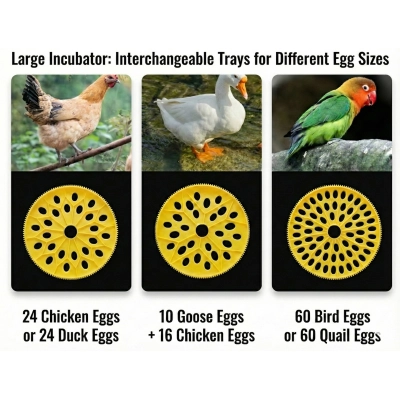
Capacity: Decide how many eggs you plan to incubate at once. Small incubators hold 9 to 12 eggs, while larger tabletop units can hold up to 130 eggs. Pick a size that matches your realistic needs.
-
Auto Egg Turning Features: Look for an incubator with an integrated automatic egg turner. A good turner rocks or turns each egg through roughly 180° over time, similar to how a broody hen moves eggs under her. That saves you time, reduces handling, and keeps development even.
Feature
Description
Automatic Egg Turner
Turns eggs through about 180° over each cycle for even growth
Mimics Natural Process
Works like birds turning eggs in their nests throughout the day
-
Fan for Air Circulation: A built-in fan helps keep air moving so temperature and humidity stay similar throughout the incubator. Forced-air units are more forgiving than still-air units, especially for beginners.
-
Digital Controls: Choose an incubator with simple digital controls. These let you set target temperature and, in some models, humidity. A clear display makes it easy to confirm settings at a glance.
-
Noise Level: Consider where you will keep the incubator. If it will sit in a living room or classroom, a quieter fan and turner will make the experience more pleasant.
-
Water Addition: Look for automatic humidity control or at least a way to add water from outside the incubator. That way, you can top up water without opening the lid and dumping heat and humidity.
Tip: For chicken eggs in a forced-air incubator, a common starting point is 99.5°F (37.5°C) with humidity around 58–60% for the first 18 days, then about 65–75% during the final three days (“lockdown”). The full incubation period is roughly 21 days.
Auto Egg Turning Features
Automatic egg turning is one of the biggest advantages of an automatic incubator. The turner keeps eggs moving at regular intervals and angles, so you are not tied to a strict turning schedule. This helps prevent embryos from sticking to the shell and supports normal growth.
-
Good automatic turners are gentle and quiet, so they do not startle chicks as they develop.
-
The turning pattern copies what a broody hen does naturally in the nest.
-
Consistent, automatic turning usually leads to better hatch rates with less effort from you.
Temperature and Humidity Controls
Steady temperature and humidity are essential for good hatching. Automated temperature and basic humidity control make that easier to achieve, especially in homes where room temperature fluctuates.
-
For forced-air incubators, set temperature close to 99.5°F (37.5°C) unless your incubator’s manual recommends slightly different settings.
-
Keep humidity around 58–60% for the first 18 days as a commonly used range for chicken eggs.
-
Raise humidity to roughly 65–75% during the last three days to support pipping and hatching.
-
Use your incubator’s manual as the final authority for fine-tuning these settings.
Cleaning and Safety Tips
A clean incubator is safer for embryos and helps your unit last longer. Warm, damp conditions let bacteria and mold grow quickly, so cleaning after each hatch is important.
Unplug the incubator and remove all removable parts. Wash trays and interior surfaces with mild soap and warm water. Many guides suggest using a weak bleach solution (about 1:100) or another incubator-safe disinfectant. Avoid harsh alcohol cleaners or putting parts in a dishwasher unless the manufacturer specifically says it is safe. Let everything dry completely before you store or reuse the incubator.
Note: Good cleaning, storage, and basic safety—such as keeping cords out of reach of children and placing the incubator on a stable surface—help protect both your chicks and your equipment.
Common Mistakes and Troubleshooting in Incubators
Overlooking Egg Turning
Skipping or irregular turning is one of the most common mistakes in manual incubation. When eggs stay in one position too long, the developing embryo can stick to the shell membranes. That can lead to early death, late-term losses, or chicks that cannot move into the right position to hatch.
Common turning mistakes include:
-
Forgetting to turn eggs, especially on busy days or overnight.
-
Not marking eggs, so you cannot easily see whether they have been turned.
-
Relying only on memory instead of using a written schedule or timer.
If you use an automatic turner, you still need to confirm that it is working properly:
-
Mark each egg lightly with a pencil before you begin so movement is easy to see.
-
Watch the turner through at least one full cycle to confirm that all egg rows move.
-
Listen for unusual noises from the turner or fan.
-
Use a surge protector or backup plan for power outages where possible.
-
Check eggs daily to make sure they are changing position as expected.
Ignoring Temperature and Humidity Accuracy
Temperature and humidity that drift far from target ranges can quietly ruin a hatch. Prolonged overheating, especially early in incubation, can stop embryos from developing. Too much or too little humidity can cause chicks to lose moisture too quickly or not lose enough, which affects air cell size and hatch timing.
Signs of temperature or humidity problems include:
-
Weak or poorly coordinated chicks at hatch.
-
Many fully formed chicks dead in the shell.
-
Chicks that look underdeveloped, overgrown, or otherwise abnormal.
You can reduce these risks by:
-
Using a reliable thermometer and hygrometer and verifying factory readings when you first set up the incubator.
-
Checking readings at least morning and evening, and after major room temperature changes.
-
Placing the incubator away from drafts, heaters, and direct sunlight so it does not have to fight room swings.
Cleaning and Hygiene Issues
Poor hygiene is another common cause of weak or failing chicks. A dirty incubator with wet, soiled trays provides ideal conditions for bacteria and mold. These can infect eggs, lower hatch rates, and spread from one batch to the next.
|
Problem |
Impact on Hatch Rate and Chick Health |
|---|---|
|
Wet, dirty incubator |
Bacteria and mold grow easily; hatch rates fall and more chicks get sick or die |
|
Poor ventilation |
Stale, damp air; more embryos die before or during hatch |
Always clean your incubator after each group of eggs. Use mild soap and a safe disinfectant, and let all parts dry before you store or use it again. Good cleaning and airflow keep both eggs and chicks safer.
Quick Reference Card: Chicken Egg Incubation Essentials
Use this section as a quick-reference card for hatching chicken eggs. You can screenshot or print it and keep it near your incubator.
Temperature, Humidity, and Turning Table
Here is a summary of common settings that work well for many home incubators. Always compare them with your specific incubator’s manual:
|
Stage |
Temperature (°F/°C) |
Humidity (% RH) |
Turning Frequency |
Turning Angle |
|---|---|---|---|---|
|
Days 1–18 |
99.5 / 37.5 |
58–60 |
Manual: 3–5 times/day |
38–45° per side |
|
Automatic: every 1–2 hours |
38–45° per side |
|||
|
Days 19–21 |
99.5 / 37.5 |
65–75 |
Stop turning |
N/A |
Note: These numbers are typical for chicken eggs in forced-air incubators. Duck, goose, and other species need different humidity and sometimes different timing.
Cost and Suitability Table
Use this table to match budget, batch size, and daily time with a suitable incubator style:
|
Incubator Type |
Cost (USD) |
Best For |
Batch Size |
Time Needed Daily |
|---|---|---|---|---|
|
Manual |
$40–$80 |
Hands-on learning, first small projects |
1–12 eggs |
30+ minutes |
|
Manual + Egg Turner |
$80–$140 |
Small families, classrooms, hobby breeders |
1–24 eggs |
10–30 minutes |
|
Automatic |
$50–$100 |
Busy users, repeated batches, larger clutches |
1–130 eggs |
<10 minutes |
Tip: Choose an incubator that matches both your budget and your daily routine. A slightly higher purchase price can be worth it if it saves time and helps you hatch more chicks successfully.
You usually get smoother hatches and less day-to-day work when you choose an automatic egg incubator with an auto-turner. These incubators help more chicks hatch by reducing missed turns and keeping conditions steady, which also makes the experience less stressful for beginners and kids.
|
Scenario |
Best Incubator Type |
|---|---|
|
Busy schedule |
Automatic |
|
Classroom project |
Automatic |
|
Small batch, hands-on learning |
Manual |
To help your eggs hatch well, keep these core points in mind:
-
Hold egg temperature close to 99.5°F in forced-air incubators unless your manual advises otherwise.
-
Keep the humidity in the recommended range for your species and day of incubation.
-
Turn each egg regularly until lockdown, or use a reliable auto-turner.
-
Clean and disinfect your incubator after every hatch so problems do not carry into the next batch.
Doing these steps consistently helps you get stronger chicks and better hatch results over time, no matter which incubator you choose.
FAQ
How often should you turn chicken eggs in an incubator?
For manual turning, most guides suggest turning chicken eggs 3 to 5 times each day. An automatic turner usually moves eggs every 1 to 2 hours in small steps. The goal is regular, gentle movement so the embryo does not rest on one side for too long.
What temperature and humidity do you need for chicken eggs?
A common starting point for chicken eggs in forced-air incubators is about 99.5°F (37.5°C). Many home users aim for roughly 58–60% humidity during days 1–18, then about 65–75% during the last three days. Always check your incubator’s manual and adjust based on your own results.
Can you open the incubator during hatching?
Try not to open the incubator during the last three days (“lockdown”). Opening it can drop humidity quickly and cause chicks to dry out and get stuck in their shells. Only open if you must fix a serious problem, and close it again as soon as you can.
Is an automatic egg turner worth the extra cost?
For many people, yes. An automatic egg turner saves time, prevents missed turns, and usually improves hatch consistency. If you plan to hatch more than one batch or you have a busy schedule, the extra cost often pays for itself in higher hatch rates and less stress.
How do you clean your incubator after hatching?
Unplug the incubator and remove all loose parts. Wash trays and smooth surfaces with mild soap and warm water. Use an incubator-safe disinfectant or a weak bleach solution if the manufacturer allows it. Rinse where needed, let everything dry completely, and then store the incubator in a cool, dry place until the next hatch.
Data authenticity note: The temperatures, humidity ranges, turning schedules, hatch-rate examples, and cost ranges in this article are based on poultry incubation textbooks, commercial incubator manuals, university and extension hatching guides, manufacturer recommendations, and aggregated hatch logs from small-scale keepers. Values are rounded to typical ranges for home and classroom use and are meant as practical starting points, not strict laboratory standards. Always follow your specific incubator’s instructions and adjust settings based on your own results.
References (no external links)
-
Standard poultry incubation and hatchery management textbooks describing temperature, humidity, and egg-turning recommendations for chicken eggs
-
Commercial egg incubator user manuals and quick-start guides covering digital controls, auto-turners, and cleaning instructions
-
Agricultural extension publications on small-flock incubation, hatch rate troubleshooting, and home incubation best practices
-
Hatch logs and case summaries from small-scale poultry keepers comparing manual vs automatic incubators and different turning schedules
-
Educational materials and classroom incubation guides outlining typical batch sizes, equipment choices, and safety considerations for students
0 Comments